
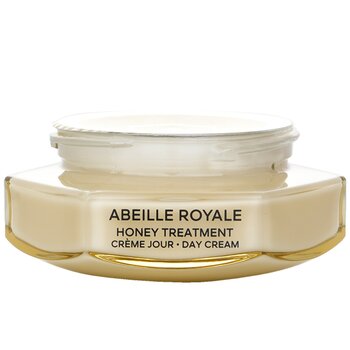

Guerlain Abeille Royale Honey Treatment Day Cream Refill
Analysis updated September 2026 · How Scout scores
At a glance
Summary
This moisturizer contains beneficial ingredients like glycerin, squalane, jojoba esters, and shea butter, which are known for their moisturizing and skin-soothing properties. However, the presence of synthetic fragrance, which can cause irritation and allergic reactions, slightly detracts from its overall safety profile. The product is moderately processed with a mix of natural and synthetic components, which influences its rating.
Key ingredients 39
SqualaneVery Good
Squalane is a highly effective emollient and natural antioxidant. It mimics the skin's natural oils, making it an excellent moisturizer. It is suitable for all skin types, including sensitive skin.
Risks
Generally considered safe with no significant risks.
Benefits
Provides deep hydration and helps to maintain skin's moisture balance.
Jojoba EstersVery Good
Jojoba Esters are derived from jojoba oil and are used as emollients. They help to moisturize and soften the skin. They are non-comedogenic and suitable for all skin types.
Risks
Very low risk of irritation or allergic reaction.
Benefits
Moisturizes and softens the skin without clogging pores.
Butyrospermum Parkii (Shea) ButterVery Good
Shea Butter is a natural fat extracted from the nuts of the shea tree. It is known for its moisturizing and anti-inflammatory properties. It is suitable for all skin types and helps to improve skin texture.
Risks
Rarely, it may cause allergic reactions in individuals with nut allergies.
Benefits
Deeply moisturizes and nourishes the skin.
Ceramide NgVery Good
Ceramide Ng is a type of lipid that helps to restore the skin barrier. It is known for its moisturizing and protective properties. It is suitable for all skin types and helps to improve skin texture.
Risks
Generally considered safe with no significant risks.
Benefits
Helps to restore and maintain the skin's natural barrier.
TocopherolVery Good
Tocopherol is a form of Vitamin E, known for its antioxidant properties. It helps to protect the skin from free radical damage. It is suitable for most skin types and can help improve skin texture.
Risks
Rarely, it may cause skin irritation in sensitive individuals.
Benefits
Provides antioxidant protection and helps to improve skin texture.
Palmitoyl Hexapeptide-12Very Good
Palmitoyl Hexapeptide-12 is a peptide used for its anti-aging properties. It helps to improve skin elasticity and reduce the appearance of fine lines. It is suitable for most skin types and can help to improve skin texture.
Risks
Generally considered safe with no significant risks.
Benefits
Helps to improve skin elasticity and reduce signs of aging.
GlycerinGood
Glycerin is a humectant that attracts moisture to the skin, helping to keep it hydrated. It is widely used in skincare for its moisturizing properties. It is generally well-tolerated by most skin types.
Risks
Rarely, it may cause irritation in very sensitive skin.
Benefits
Helps maintain skin hydration and improve skin barrier function.
Royal JellyGood
Royal Jelly is a nutrient-rich substance produced by bees. It is known for its moisturizing and anti-aging properties. It is suitable for most skin types and can help improve skin texture.
Risks
Potential allergen for those with bee product allergies.
Benefits
Provides hydration and may improve skin elasticity.
Mel (Honey)Good
Honey is a natural humectant and antioxidant. It helps to moisturize the skin and has soothing properties. It is suitable for most skin types and can help improve skin texture.
Risks
Potential allergen for those with bee product allergies.
Benefits
Provides hydration and has natural antibacterial properties.
Tocopheryl AcetateGood
Tocopheryl Acetate is a form of Vitamin E, known for its antioxidant properties. It helps to protect the skin from free radical damage. It is suitable for most skin types and can help improve skin texture.
Risks
Rarely, it may cause skin irritation in sensitive individuals.
Benefits
Provides antioxidant protection and helps to improve skin texture.
Sodium HyaluronateGood
Sodium Hyaluronate is a form of hyaluronic acid, known for its ability to retain moisture. It helps to hydrate the skin and improve its elasticity. It is suitable for all skin types and is highly effective in moisturizing.
Risks
Generally considered safe with no significant risks.
Benefits
Provides intense hydration and helps to plump the skin.
Hydrogenated Olive Oil UnsaponifiablesGood
This ingredient is derived from olive oil and is used as an emollient. It helps to moisturize and soften the skin. It is suitable for most skin types and helps to improve skin texture.
Risks
Minimal risk of irritation or allergic reaction.
Benefits
Provides hydration and helps to improve skin texture.
Ci 77492 (Iron Oxides)Good
Beneficial ingredient — whole-food or functional value in this product class.
Risks
Minimal risk of irritation or allergic reaction.
Benefits
Provides color and pigmentation to the product.
Glycine Soja (Soybean) OilGood
Soybean Oil is a natural oil used for its moisturizing properties. It helps to nourish and soften the skin. It is suitable for most skin types and can help to improve skin texture.
Risks
Potential allergen for those with soy allergies.
Benefits
Provides hydration and helps to improve skin texture.
Aqua (Water)Neutral
Water is a common solvent used in cosmetics to dissolve other ingredients. It helps in the application and absorption of the product. It does not provide direct benefits or risks.
Benefits
Essential for dissolving and mixing other ingredients.
C15-19 AlkaneNeutral
C15-19 Alkane is used as an emollient and solvent in cosmetics. It helps to improve the texture and spreadability of the product. It is considered safe for use in cosmetics.
Risks
Minimal risk of irritation or allergic reaction.
Benefits
Improves product texture and application.
PropanediolNeutral
Propanediol is used as a solvent and skin-conditioning agent. It helps to improve the texture and feel of the product. It is generally considered safe for use in cosmetics.
Risks
Low risk of skin irritation.
Benefits
Enhances product texture and skin feel.
Glyceryl StearateNeutral
Glyceryl Stearate is an emulsifier that helps to blend water and oils in formulations. It also acts as a skin conditioning agent. It is generally considered safe for use in cosmetics.
Risks
Minimal risk of skin irritation.
Benefits
Improves product stability and skin feel.
Peg-100 StearateNeutral
PEG-100 Stearate is an emulsifier used to stabilize formulations. It helps to improve the texture and consistency of the product. It is generally considered safe for use in cosmetics.
Risks
Potential for contamination with ethylene oxide and 1,4-dioxane.
Benefits
Enhances product stability and texture.
Polyglycerin-3Neutral
Polyglycerin-3 is used as an emulsifier and skin conditioning agent. It helps to improve the texture and feel of the product. It is considered safe for use in cosmetics.
Risks
Low risk of skin irritation.
Benefits
Improves product texture and skin feel.
C12-15 Alkyl BenzoateNeutral
C12-15 Alkyl Benzoate is used as an emollient and thickening agent. It helps to improve the texture and spreadability of the product. It is considered safe for use in cosmetics.
Risks
Minimal risk of irritation or allergic reaction.
Benefits
Enhances product texture and application.
CelluloseNeutral
Cellulose is used as a thickening agent and stabilizer in cosmetics. It helps to improve the texture and consistency of the product. It is considered safe for use in cosmetics.
Risks
Low risk of skin irritation.
Benefits
Improves product stability and texture.
Coco-Caprylate/CaprateNeutral
Coco-Caprylate/Caprate is used as an emollient and skin conditioning agent. It helps to improve the texture and feel of the product. It is considered safe for use in cosmetics.
Risks
Minimal risk of irritation or allergic reaction.
Benefits
Enhances product texture and skin feel.
Caprylyl GlycolNeutral
Caprylyl Glycol is used as a skin conditioning agent and preservative. It helps to improve the texture and feel of the product. It is considered safe for use in cosmetics.
Risks
Low risk of skin irritation.
Benefits
Enhances product texture and skin feel.
Cetyl AlcoholNeutral
Cetyl Alcohol is a fatty alcohol used as an emollient and thickening agent. It helps to improve the texture and consistency of the product. It is considered safe for use in cosmetics.
Risks
Minimal risk of irritation or allergic reaction.
Benefits
Improves product texture and application.
Stearyl AlcoholNeutral
Stearyl Alcohol is a fatty alcohol used as an emollient and thickening agent. It helps to improve the texture and consistency of the product. It is considered safe for use in cosmetics.
Risks
Minimal risk of irritation or allergic reaction.
Benefits
Enhances product texture and application.
Steareth-21Neutral
Steareth-21 is an emulsifier used to stabilize formulations. It helps to improve the texture and consistency of the product. It is generally considered safe for use in cosmetics.
Risks
Potential for contamination with ethylene oxide and 1,4-dioxane.
Benefits
Enhances product stability and texture.
Ammonium Acryloyldimethyltaurate/Vp CopolymerNeutral
This copolymer is used as a thickening and stabilizing agent in cosmetics. It helps to improve the texture and consistency of the product. It is considered safe for use in cosmetics.
Risks
Low risk of skin irritation.
Benefits
Improves product stability and texture.
TribeheninNeutral
Tribehenin is used as an emollient and thickening agent in cosmetics. It helps to improve the texture and consistency of the product. It is considered safe for use in cosmetics.
Risks
Minimal risk of irritation or allergic reaction.
Benefits
Enhances product texture and application.
Phytosteryl/Octyldodecyl Lauroyl GlutamateNeutral
This ingredient is used as an emollient and skin conditioning agent. It helps to improve the texture and feel of the product. It is considered safe for use in cosmetics.
Risks
Low risk of skin irritation.
Benefits
Enhances product texture and skin feel.
ChlorphenesinNeutral
Chlorphenesin is used as a preservative in cosmetics. It helps to prevent the growth of bacteria and mold in the product. It is considered safe for use in cosmetics at low concentrations.
Risks
Potential for skin irritation in sensitive individuals.
Benefits
Helps to maintain product integrity by preventing microbial growth.
Xanthan GumNeutral
Xanthan Gum is used as a thickening and stabilizing agent in cosmetics. It helps to improve the texture and consistency of the product. It is considered safe for use in cosmetics.
Risks
Low risk of skin irritation.
Benefits
Improves product stability and texture.
Peg-10 PhytosterolNeutral
PEG-10 Phytosterol is used as an emulsifier and skin conditioning agent. It helps to improve the texture and feel of the product. It is considered safe for use in cosmetics.
Risks
Potential for contamination with ethylene oxide and 1,4-dioxane.
Benefits
Enhances product texture and skin feel.
Sodium HydroxideNeutral
Sodium Hydroxide is used to adjust the pH of cosmetic formulations. It helps to ensure the stability and effectiveness of the product. It is considered safe for use in cosmetics at low concentrations.
Risks
Can be irritating in high concentrations.
Benefits
Helps to maintain product stability and effectiveness.
Lactic AcidNeutral
Standard formulation ingredient — neither beneficial nor harmful at typical use.
Risks
May cause irritation in sensitive skin if used in high concentrations.
Benefits
Exfoliates and helps to improve skin texture and tone.
SilicaNeutral
Silica is used as an absorbent and anti-caking agent in cosmetics. It helps to improve the texture and feel of the product. It is considered safe for use in cosmetics.
Risks
Minimal risk of irritation or allergic reaction.
Benefits
Improves product texture and helps to control oiliness.
DimethiconeBad
Occlusive silicone film-former — flagged under clean-beauty doctrine.
Risks
May cause build-up on the skin with prolonged use.
Benefits
Provides a smooth, silky feel and helps to lock in moisture.
Acrylates/C10-30 Alkyl Acrylate CrosspolymerBad
Processed additive flagged under Scout's ingredient doctrine.
Risks
Low risk of skin irritation.
Benefits
Improves product stability and texture.
Parfum (Fragrance)Very Bad
Fragrance is used to impart scent to cosmetics but can cause skin irritation and allergic reactions. It is a common allergen and can be problematic for sensitive skin. It is often criticized for its lack of transparency regarding specific components.
Risks
Potential for skin irritation and allergic reactions.
Benefits
Provides a pleasant scent to the product.
Get the full breakdown in the Scout appTake Scout shopping
Scan any product to see lab results, healthy alternatives, and your personalized analysis.
Download on theApp Store GET IT ONGoogle PlayAmazon pricing & content
Amazon price as of . Product prices and availability are accurate as of the date/time indicated and are subject to change. Any price and availability information displayed on Amazon.com at the time of purchase will apply to the purchase of this product.
CERTAIN CONTENT THAT APPEARS ON THIS SITE COMES FROM AMAZON. THIS CONTENT IS PROVIDED “AS IS” AND IS SUBJECT TO CHANGE OR REMOVAL AT ANY TIME.