
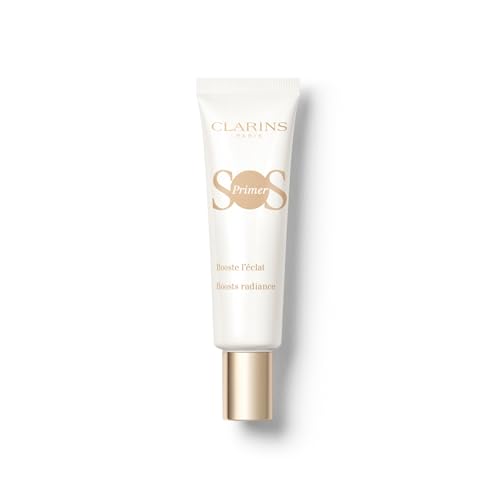


Clarins Sos Primer, 1-oz.
Analysis updated September 2026 · How Scout scores
At a glance
Summary
This primer contains beneficial ingredients like glycerin and botanical extracts that offer moisturizing and antioxidant benefits. However, the presence of alcohol and synthetic fragrance can be drying and irritating to the skin, which lowers its overall safety profile. The inclusion of PEG compounds and synthetic dyes also contributes to a moderate processing level, impacting the score negatively.
Key ingredients 41
TocopherolVery Good
Tocopherol, also known as Vitamin E, is a powerful antioxidant used in cosmetics to protect the skin from free radical damage. It is widely recognized for its skin conditioning properties.
Benefits
Provides antioxidant protection and improves skin health.
GlycerinGood
Glycerin is a humectant that attracts moisture to the skin, helping to keep it hydrated. It is widely used in skincare for its moisturizing properties.
Risks
Rarely, it can cause irritation in sensitive individuals.
Benefits
Helps maintain skin hydration and improves skin barrier function.
Caprylic/Capric TriglycerideGood
This ingredient is an emollient derived from coconut oil and glycerin. It is used to improve the spreadability and moisturizing properties of cosmetics.
Risks
Generally considered safe with no significant risks.
Benefits
Enhances skin hydration and provides a smooth application.
MicaGood
Beneficial ingredient — whole-food or functional value in this product class.
Risks
Inhalation of mica dust can be harmful, but this is not a concern in liquid formulations.
Benefits
Provides a shimmering effect and enhances the visual appeal of the product.
Marrubium Vulgare ExtractGood
Marrubium Vulgare Extract is a botanical ingredient known for its antioxidant properties. It is used to protect the skin from environmental stressors.
Benefits
Provides antioxidant protection and soothes the skin.
Laminaria Digitata ExtractGood
Laminaria Digitata Extract is derived from seaweed and is rich in minerals and vitamins. It is used for its moisturizing and soothing properties.
Benefits
Enhances skin hydration and provides soothing effects.
Kalanchoe Pinnata Leaf ExtractGood
Kalanchoe Pinnata Leaf Extract is known for its soothing and hydrating properties. It is used in cosmetics to improve skin moisture levels.
Benefits
Provides hydration and soothes irritated skin.
Chlorella Vulgaris ExtractGood
Chlorella Vulgaris Extract is rich in nutrients and antioxidants. It is used in cosmetics for its skin-protecting and rejuvenating properties.
Benefits
Provides antioxidant protection and supports skin health.
Furcellaria Lumbricalis ExtractGood
Furcellaria Lumbricalis Extract is derived from red algae and is known for its moisturizing properties. It is used to enhance skin hydration.
Benefits
Improves skin hydration and provides soothing effects.
Saccharide IsomerateGood
Saccharide Isomerate is a plant-derived moisturizer that binds to the skin to provide long-lasting hydration. It is used to improve skin moisture levels.
Benefits
Provides long-lasting hydration and improves skin texture.
Crocus Sativus Flower ExtractGood
Crocus Sativus Flower Extract, also known as saffron extract, is used for its antioxidant and skin-soothing properties. It is valued for its ability to enhance skin radiance.
Benefits
Provides antioxidant protection and enhances skin radiance.
Lapsana Communis Flower/Leaf/Stem ExtractGood
Lapsana Communis Extract is known for its antioxidant and skin-soothing properties. It is used in cosmetics to protect and calm the skin.
Benefits
Provides antioxidant protection and soothes the skin.
Maris Sal/Sea Salt/Sel MarinGood
Beneficial ingredient — whole-food or functional value in this product class.
Risks
Excessive use can lead to dryness.
Benefits
Provides minerals that can benefit the skin.
Aqua/Water/EauNeutral
Water is a common solvent used in cosmetics to dissolve other ingredients. It does not provide direct benefits or risks in cosmetic formulations.
Benefits
Acts as a solvent and helps in the application of the product.
Butylene GlycolNeutral
Butylene Glycol is used as a solvent and conditioning agent in cosmetics. It is generally considered safe for use.
Risks
May cause irritation in very sensitive skin types.
Benefits
Enhances the texture and absorption of the product.
Dicaprylyl CarbonateNeutral
Dicaprylyl Carbonate is an emollient that provides a light, non-greasy feel to the skin. It is used to improve the spreadability of products.
Benefits
Improves product texture and provides a smooth application.
SilicaNeutral
Silica is used as a thickening agent and to improve the texture of cosmetics. It is generally considered safe for topical use.
Risks
Inhalation of silica dust can be harmful, but this is not a concern in liquid formulations.
Benefits
Improves product texture and provides a matte finish.
PEG/PPG-18/18 DimethiconeNeutral
This is a silicone-based polymer used to enhance the texture and spreadability of cosmetics. It is generally considered safe for use.
Risks
May cause build-up on the skin with prolonged use.
Benefits
Improves product texture and provides a smooth application.
AlcoholNeutral
Standard formulation ingredient — neither beneficial nor harmful at typical use.
Risks
Can cause dryness and irritation, especially in sensitive skin.
Benefits
Helps in the quick drying of the product and enhances penetration of active ingredients.
CI 77891/Titanium DioxideNeutral
Titanium Dioxide is used as a pigment and UV filter in cosmetics. It is considered safe for use in non-nano form.
Risks
Inhalation of nano-sized particles can be harmful, but this is not a concern in liquid formulations.
Benefits
Provides UV protection and acts as a whitening agent.
Sodium ChlorideNeutral
Sodium Chloride is used as a thickening agent in cosmetics. It is generally considered safe for use.
Risks
Excessive use can lead to dryness.
Benefits
Helps in thickening the product and stabilizing emulsions.
Stearalkonium HectoriteNeutral
Stearalkonium Hectorite is used as a thickening agent and to stabilize emulsions in cosmetics. It is generally considered safe for use.
Benefits
Improves product stability and texture.
EthylhexylglycerinNeutral
Ethylhexylglycerin is used as a preservative and skin conditioning agent in cosmetics. It is generally considered safe for use.
Risks
May cause mild irritation in very sensitive individuals.
Benefits
Enhances the preservation of the product and conditions the skin.
Maris Aqua/Sea Water/Eau De MerNeutral
Sea Water is used for its mineral content and as a solvent in cosmetics. It is generally considered safe for use.
Benefits
Provides minerals that can benefit the skin.
Propylene CarbonateNeutral
Propylene Carbonate is used as a solvent and viscosity control agent in cosmetics. It is generally considered safe for use.
Risks
May cause mild irritation in sensitive individuals.
Benefits
Improves product texture and consistency.
SclareolideNeutral
Sclareolide is a fragrance ingredient and fixative used in cosmetics. It is generally considered safe for use.
Risks
Potential allergen for sensitive individuals.
Benefits
Enhances fragrance longevity and stability.
Aluminum HydroxideNeutral
Aluminum Hydroxide is used as a thickening agent and to improve the opacity of cosmetics. It is generally considered safe for use.
Risks
Concerns about aluminum compounds are mostly related to deodorants, not cosmetics.
Benefits
Improves product texture and opacity.
PropanediolNeutral
Propanediol is used as a solvent and skin conditioning agent in cosmetics. It is generally considered safe for use.
Risks
May cause mild irritation in sensitive individuals.
Benefits
Enhances skin hydration and improves product texture.
Phenethyl AlcoholNeutral
Phenethyl Alcohol is used as a fragrance and preservative in cosmetics. It is generally considered safe for use.
Risks
Potential allergen for sensitive individuals.
Benefits
Provides a pleasant scent and helps preserve the product.
Sodium Lauroyl GlutamateNeutral
Sodium Lauroyl Glutamate is a mild surfactant used in cosmetics. It is derived from amino acids and is generally considered safe for use.
Benefits
Provides gentle cleansing and improves product texture.
TriethoxycaprylylsilaneNeutral
Triethoxycaprylylsilane is used as a surface modifier in cosmetics. It is generally considered safe for use.
Benefits
Improves the dispersion of pigments in the product.
LysineNeutral
Lysine is an amino acid used as a conditioning agent in cosmetics. It is generally considered safe for use.
Benefits
Improves skin texture and hydration.
Citric AcidNeutral
Citric Acid is used to adjust the pH of cosmetics and as a preservative. It is generally considered safe for use.
Risks
May cause irritation in very sensitive skin types.
Benefits
Helps maintain product stability and pH balance.
Magnesium ChlorideNeutral
Magnesium Chloride is used as a stabilizer and to enhance the texture of cosmetics. It is generally considered safe for use.
Benefits
Improves product stability and texture.
CI 42090/Blue 1Neutral
Blue 1 is a synthetic dye used to add color to cosmetics. It is approved for use in cosmetics by regulatory agencies.
Risks
Potential allergen for sensitive individuals.
Benefits
Provides vibrant color to the product.
DimethiconeBad
Occlusive silicone film-former — flagged under clean-beauty doctrine.
Risks
May cause build-up on the skin with prolonged use.
Benefits
Improves texture and spreadability of the product.
Disodium EDTABad
Processed additive flagged under Scout's ingredient doctrine.
Risks
May cause irritation in sensitive skin types.
Benefits
Improves product stability by binding metal ions.
Sodium BenzoateBad
Synthetic preservative that can form benzene in the presence of vitamin C.
Risks
May cause irritation in very sensitive individuals.
Benefits
Helps preserve the product and extend its shelf life.
Potassium SorbateBad
Synthetic preservative — flagged in daily-use products.
Risks
May cause irritation in very sensitive individuals.
Benefits
Helps preserve the product and extend its shelf life.
Parfum/FragranceVery Bad
Fragrance is used to add scent to cosmetics but can cause allergic reactions and irritation. It is often a mixture of various chemicals.
Risks
Potential allergen and irritant, especially for sensitive skin.
Benefits
Enhances the sensory experience of the product.
CI 19140/Yellow 5Very Bad
Heavily flagged ingredient class under Scout's doctrine.
Risks
Potential allergen for sensitive individuals.
Benefits
Provides vibrant color to the product.
Get the full breakdown in the Scout appTake Scout shopping
Scan any product to see lab results, healthy alternatives, and your personalized analysis.
Download on theApp Store GET IT ONGoogle PlayAmazon pricing & content
Amazon price as of . Product prices and availability are accurate as of the date/time indicated and are subject to change. Any price and availability information displayed on Amazon.com at the time of purchase will apply to the purchase of this product.
CERTAIN CONTENT THAT APPEARS ON THIS SITE COMES FROM AMAZON. THIS CONTENT IS PROVIDED “AS IS” AND IS SUBJECT TO CHANGE OR REMOVAL AT ANY TIME.