
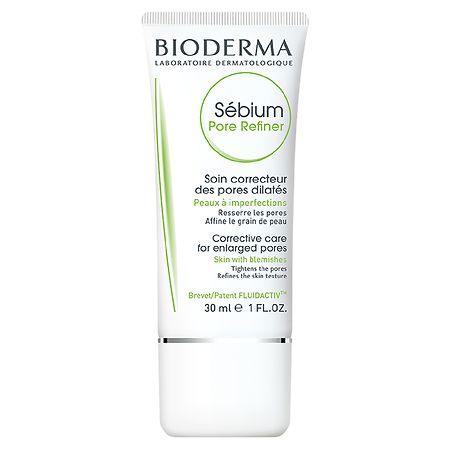


Bioderma Sebium Pore Refiner Cream - 1 fl oz: Noncomedogenic Moisturizing Treatment for Oily & Combination Skin
Analysis updated August 2026 · How Scout scores
At a glance
Summary
This moisturizer contains beneficial ingredients like glycerin, salicylic acid, and mushroom extract, which are known for their hydrating and pore-refining properties. However, the presence of mineral oil raises concerns due to potential contamination risks, and the inclusion of fragrance can cause irritation or allergic reactions in sensitive individuals. The product's formulation includes synthetic polymers and silicones, indicating a moderate level of processing.
Key ingredients 33
Salicylic AcidVery Good
Salicylic Acid is a beta hydroxy acid known for its exfoliating and acne-fighting properties. It helps in unclogging pores and reducing acne breakouts. It is effective and beneficial for oily and acne-prone skin.
Risks
May cause dryness or irritation if overused.
Benefits
Effective in exfoliating and reducing acne breakouts.
GlycerinGood
Glycerin is a humectant that attracts moisture to the skin, helping to keep it hydrated. It is a well-known ingredient for its moisturizing properties. It is safe and beneficial for all skin types.
Risks
Generally considered safe with no significant risks.
Benefits
Excellent for moisturizing and hydrating the skin.
Fomes Officinalis (Mushroom) ExtractGood
This extract is known for its astringent properties, helping to tighten pores and improve skin texture. It is derived from natural sources and is beneficial for oily skin. It is considered safe and effective in cosmetics.
Benefits
Helps tighten pores and improve skin texture.
Ginkgo Biloba Leaf ExtractGood
Ginkgo Biloba Leaf Extract is known for its antioxidant and anti-inflammatory properties. It helps in protecting the skin from environmental damage and reducing inflammation. It is beneficial for maintaining healthy skin.
Benefits
Provides antioxidant protection and reduces inflammation.
Caprylic/Capric TriglycerideGood
Caprylic/Capric Triglyceride is derived from coconut oil and glycerin. It is used as an emollient and helps in moisturizing and smoothing the skin. It is considered safe and beneficial for all skin types.
Benefits
Moisturizes and smooths the skin effectively.
Aqua/Water/EauNeutral
Water is a common solvent used in cosmetics to dissolve other ingredients. It helps in the application and absorption of the product. It does not have any direct benefits or risks.
Benefits
Essential for dissolving and mixing other ingredients.
Methyl Methacrylate CrosspolymerNeutral
This ingredient is used as a film-forming agent to provide a smooth texture. It helps in improving the feel of the product on the skin. It is generally considered safe for use in cosmetics.
Risks
May cause irritation in sensitive individuals.
Benefits
Improves texture and application of the product.
Dipropylene GlycolNeutral
Dipropylene Glycol is used as a solvent and humectant in cosmetics. It helps in retaining moisture and improving the spreadability of the product. It is generally safe for use in cosmetics.
Risks
Potential for mild irritation in sensitive skin.
Benefits
Helps in moisture retention and product spreadability.
CyclopentasiloxaneNeutral
Cyclopentasiloxane is a silicone used to provide a silky texture and improve spreadability. It evaporates quickly, leaving a smooth feel on the skin. It is considered safe for use in cosmetics.
Risks
May cause buildup on the skin with prolonged use.
Benefits
Provides a smooth, silky texture and improves spreadability.
CyclohexasiloxaneNeutral
Similar to Cyclopentasiloxane, this silicone provides a smooth texture and enhances spreadability. It is used for its lightweight feel and quick evaporation. It is generally safe for use in cosmetics.
Risks
Potential for skin buildup with prolonged use.
Benefits
Enhances texture and spreadability of the product.
Butylene GlycolNeutral
Butylene Glycol is used as a solvent and conditioning agent in cosmetics. It helps in improving the texture and moisture content of the product. It is generally safe for use in cosmetics.
Risks
Potential for mild irritation in sensitive skin.
Benefits
Improves texture and moisture content of the product.
Sodium PolyacrylateNeutral
Sodium Polyacrylate is used as a thickening agent and film-former in cosmetics. It helps in improving the texture and stability of the product. It is generally considered safe for use in cosmetics.
Risks
May cause irritation in sensitive individuals.
Benefits
Improves texture and stability of the product.
Dodecyl GallateNeutral
Dodecyl Gallate is an antioxidant used to protect the product from oxidation. It helps in maintaining the stability and shelf life of the product. It is generally considered safe for use in cosmetics.
Risks
Potential for mild irritation in sensitive skin.
Benefits
Protects the product from oxidation and extends shelf life.
MannitolNeutral
Mannitol is a sugar alcohol used as a humectant and moisturizer in cosmetics. It helps in retaining moisture and improving the texture of the product. It is generally considered safe for use in cosmetics.
Benefits
Helps retain moisture and improve product texture.
XylitolNeutral
Xylitol is a sugar alcohol used as a humectant and moisturizer in cosmetics. It helps in retaining moisture and improving the texture of the product. It is generally considered safe for use in cosmetics.
Benefits
Helps retain moisture and improve product texture.
RhamnoseNeutral
Rhamnose is a sugar molecule used for its potential anti-aging properties. It helps in improving skin elasticity and reducing the appearance of wrinkles. It is generally considered safe for use in cosmetics.
Benefits
May improve skin elasticity and reduce wrinkles.
FructooligosaccharidesNeutral
Fructooligosaccharides are used as humectants and prebiotics in cosmetics. They help in retaining moisture and supporting the skin's microbiome. They are generally considered safe for use in cosmetics.
Benefits
Help retain moisture and support skin microbiome.
Laminaria Ochroleuca ExtractNeutral
This extract is derived from algae and is known for its soothing and moisturizing properties. It helps in calming the skin and providing hydration. It is generally considered safe for use in cosmetics.
Benefits
Soothes and moisturizes the skin.
SilicaNeutral
Silica is used as an absorbent and anti-caking agent in cosmetics. It helps in controlling oil and improving the texture of the product. It is generally considered safe for use in cosmetics.
Risks
Inhalation of fine silica particles can be harmful.
Benefits
Controls oil and improves product texture.
Trideceth-6Neutral
Trideceth-6 is used as an emulsifier and surfactant in cosmetics. It helps in mixing oil and water-based ingredients. It is generally considered safe for use in cosmetics.
Risks
May cause mild irritation in sensitive skin.
Benefits
Helps in emulsifying and stabilizing the product.
C30-45 Alkyl Cetearyl Dimethicone CrosspolymerNeutral
This ingredient is used as a thickening agent and texture enhancer in cosmetics. It helps in providing a smooth and creamy texture. It is generally considered safe for use in cosmetics.
Benefits
Enhances texture and provides a creamy feel.
Lauryl Peg/PPG-18/18 MethiconeNeutral
This ingredient is used as an emulsifier and surfactant in cosmetics. It helps in mixing oil and water-based ingredients. It is generally considered safe for use in cosmetics.
Risks
May cause mild irritation in sensitive skin.
Benefits
Helps in emulsifying and stabilizing the product.
Pentylene GlycolNeutral
Pentylene Glycol is used as a solvent and humectant in cosmetics. It helps in retaining moisture and improving the texture of the product. It is generally considered safe for use in cosmetics.
Benefits
Helps retain moisture and improve product texture.
1, 2-HexanediolNeutral
1, 2-Hexanediol is used as a solvent and preservative in cosmetics. It helps in improving the stability and shelf life of the product. It is generally considered safe for use in cosmetics.
Benefits
Improves stability and extends shelf life of the product.
PEG/PPG-18/18 DimethiconeNeutral
This ingredient is used as an emulsifier and surfactant in cosmetics. It helps in mixing oil and water-based ingredients. It is generally considered safe for use in cosmetics.
Risks
May cause mild irritation in sensitive skin.
Benefits
Helps in emulsifying and stabilizing the product.
Caprylyl GlycolNeutral
Caprylyl Glycol is used as a skin conditioning agent and preservative in cosmetics. It helps in improving the texture and stability of the product. It is generally considered safe for use in cosmetics.
Benefits
Improves texture and stability of the product.
Sodium HydroxideNeutral
Sodium Hydroxide is used to adjust the pH of cosmetics. It helps in maintaining the stability and effectiveness of the product. It is generally considered safe when used in small amounts.
Risks
Can be irritating in high concentrations.
Benefits
Helps maintain product stability and effectiveness.
Citric AcidNeutral
Citric Acid is used to adjust the pH and as a preservative in cosmetics. It helps in maintaining the stability and effectiveness of the product. It is generally considered safe for use in cosmetics.
Risks
May cause irritation in sensitive skin.
Benefits
Helps maintain product stability and effectiveness.
DimethiconeBad
Occlusive silicone film-former — flagged under clean-beauty doctrine.
Risks
May cause skin buildup or clog pores in some individuals.
Benefits
Provides a protective barrier and smooth application.
Mineral Oil (Paraffinum Liquidum)Bad
Processed additive flagged under Scout's ingredient doctrine.
Risks
May clog pores and cause breakouts in acne-prone skin.
Benefits
Prevents moisture loss and provides a protective barrier.
Propylene GlycolBad
Processed additive flagged under Scout's ingredient doctrine.
Risks
May cause irritation in sensitive skin.
Benefits
Helps retain moisture and improve product texture.
Disodium EDTABad
Processed additive flagged under Scout's ingredient doctrine.
Benefits
Improves stability and extends shelf life of the product.
Fragrance (Parfum)Very Bad
Fragrance is used to impart scent to cosmetics but can be a common irritant. It may cause allergic reactions or skin sensitivity in some individuals. It is generally considered a negative ingredient due to potential irritation.
Risks
Can cause allergic reactions and skin irritation.
Benefits
Provides a pleasant scent to the product.
Get the full breakdown in the Scout appTake Scout shopping
Scan any product to see lab results, healthy alternatives, and your personalized analysis.
Download on theApp Store GET IT ONGoogle PlayAmazon pricing & content
Amazon price as of . Product prices and availability are accurate as of the date/time indicated and are subject to change. Any price and availability information displayed on Amazon.com at the time of purchase will apply to the purchase of this product.
CERTAIN CONTENT THAT APPEARS ON THIS SITE COMES FROM AMAZON. THIS CONTENT IS PROVIDED “AS IS” AND IS SUBJECT TO CHANGE OR REMOVAL AT ANY TIME.