
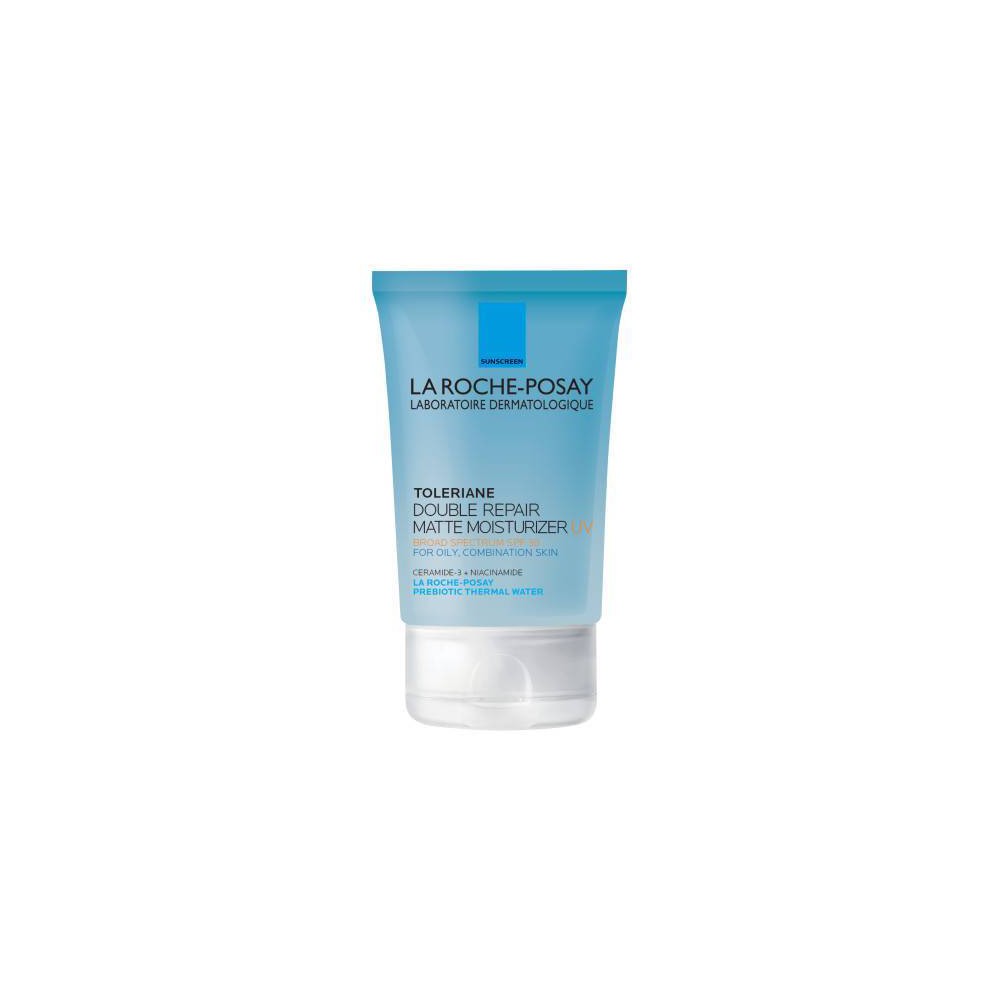

La Roche Posay Toleriane Double Repair Matte Moisturizer For Oily & Combination Skin - SPF 30: Fragrance-Free, Oil-Free, Deep Hydration, Anti-Acne
Analysis updated August 2026 · How Scout scores
At a glance
Summary
This moisturizer contains beneficial ingredients like niacinamide, ceramide-3, and sodium hyaluronate, which provide hydration and support skin health. However, the presence of fragrance, which can be an irritant and allergen, detracts from its overall safety profile. The product is processed, which limits its score, but it still offers a range of skin-beneficial components.
Key ingredients 18
Ceramide-3Very Good
Ceramide-3 is a lipid that helps restore the skin barrier and retain moisture. It is essential for maintaining healthy skin. It is particularly beneficial for dry and sensitive skin types.
Risks
Generally considered safe with no significant risks.
Benefits
Enhances skin barrier function and retains moisture.
GlycerinGood
Glycerin is a humectant that attracts moisture to the skin, helping to keep it hydrated. It is widely used in skincare for its moisturizing properties. It is considered safe and beneficial for most skin types.
Risks
Rarely, it may cause irritation in sensitive individuals.
Benefits
Helps to maintain skin hydration and improve skin barrier function.
NiacinamideGood
Niacinamide is a form of Vitamin B3 that is known for its anti-inflammatory and skin-soothing properties. It helps improve skin texture and tone. It is beneficial for acne-prone and sensitive skin.
Risks
High concentrations may cause mild irritation.
Benefits
Reduces inflammation, improves skin texture, and strengthens the skin barrier.
La Roche-Posay Prebiotic Thermal WaterGood
This thermal water is rich in minerals and has soothing and antioxidant properties. It helps calm irritated skin and provides hydration. It is beneficial for sensitive skin.
Benefits
Soothes and hydrates the skin, providing antioxidant benefits.
Caprylic/Capric TriglycerideGood
This ingredient is derived from coconut oil and glycerin, providing emollient properties. It helps to moisturize and soften the skin. It is lightweight and non-greasy, making it suitable for oily skin.
Risks
Rarely, it may cause irritation in sensitive individuals.
Benefits
Moisturizes and softens the skin without leaving a greasy residue.
Sodium HyaluronateGood
Sodium Hyaluronate is a form of hyaluronic acid that provides intense hydration by attracting moisture to the skin. It helps to plump and smooth the skin. It is beneficial for all skin types, especially dry and aging skin.
Risks
Generally considered safe with no significant risks.
Benefits
Deeply hydrates and plumps the skin, reducing the appearance of fine lines.
TocopherolGood
Tocopherol, or Vitamin E, is an antioxidant that helps protect the skin from free radical damage. It also has moisturizing and anti-inflammatory properties. It is beneficial for maintaining healthy skin.
Risks
Rarely, it may cause irritation or allergic reactions.
Benefits
Protects against environmental damage and moisturizes the skin.
WaterNeutral
Water is a common solvent used in cosmetics to dissolve other ingredients. It helps in the application and absorption of the product. It does not provide any direct benefits or risks.
Benefits
Acts as a solvent and helps in the application of the product.
Cetearyl AlcoholNeutral
Cetearyl Alcohol is a fatty alcohol used as an emollient and thickener in cosmetics. It helps to stabilize and improve the texture of formulations. It is considered safe and non-irritating.
Risks
Generally safe, but may cause irritation in very sensitive skin.
Benefits
Improves texture and stability of cosmetic formulations.
Ceteareth-20Neutral
Ceteareth-20 is an emulsifier that helps blend oil and water-based ingredients. It improves the consistency and spreadability of products. It is generally considered safe for use in cosmetics.
Risks
May cause irritation in sensitive skin or if used in high concentrations.
Benefits
Enhances product consistency and spreadability.
EthylhexylglycerinNeutral
Ethylhexylglycerin is used as a preservative and skin conditioning agent. It enhances the efficacy of other preservatives and provides mild moisturizing benefits. It is generally considered safe for use in cosmetics.
Risks
May cause mild irritation in sensitive skin.
Benefits
Enhances preservative efficacy and provides mild moisturizing benefits.
Sodium HydroxideNeutral
Sodium Hydroxide is used to adjust the pH of cosmetic formulations. It is effective in small amounts to ensure product stability. It is generally considered safe when used in low concentrations.
Risks
Can be irritating in high concentrations.
Benefits
Helps maintain the stability and efficacy of cosmetic formulations.
Citric AcidNeutral
Citric Acid is used to adjust the pH and as a mild exfoliant in cosmetics. It helps to maintain product stability and improve skin texture. It is generally considered safe when used appropriately.
Risks
May cause irritation in sensitive skin or if used in high concentrations.
Benefits
Improves skin texture and maintains product stability.
ChlorphenesinNeutral
Chlorphenesin is a preservative used to prevent microbial growth in cosmetics. It is effective in low concentrations and helps extend product shelf life. It is generally considered safe for use in cosmetics.
Risks
May cause irritation or allergic reactions in sensitive individuals.
Benefits
Prevents microbial growth, ensuring product safety and longevity.
DimethiconeBad
Occlusive silicone film-former — flagged under clean-beauty doctrine.
Risks
May cause breakouts in acne-prone skin due to occlusive properties.
Benefits
Provides a smooth texture and helps retain moisture.
PhenoxyethanolBad
Processed additive flagged under Scout's ingredient doctrine.
Risks
May cause irritation or allergic reactions in sensitive individuals.
Benefits
Prevents microbial growth, extending the shelf life of products.
Disodium EDTABad
Processed additive flagged under Scout's ingredient doctrine.
Risks
May cause irritation in sensitive skin.
Benefits
Stabilizes formulations and enhances product efficacy.
Fragrance (Parfum)Very Bad
Fragrance is used to impart scent to cosmetics but can be a common irritant and allergen. It may cause skin irritation or allergic reactions, especially in sensitive individuals. It is often criticized for its potential to cause adverse skin reactions.
Risks
Potential to cause skin irritation and allergic reactions.
Benefits
Provides a pleasant scent to the product.
Processing
Processed Foods
Get the full breakdown in the Scout appTake Scout shopping
Scan any product to see lab results, healthy alternatives, and your personalized analysis.
Download on theApp Store GET IT ONGoogle PlayAmazon pricing & content
Amazon price as of . Product prices and availability are accurate as of the date/time indicated and are subject to change. Any price and availability information displayed on Amazon.com at the time of purchase will apply to the purchase of this product.
CERTAIN CONTENT THAT APPEARS ON THIS SITE COMES FROM AMAZON. THIS CONTENT IS PROVIDED “AS IS” AND IS SUBJECT TO CHANGE OR REMOVAL AT ANY TIME.