
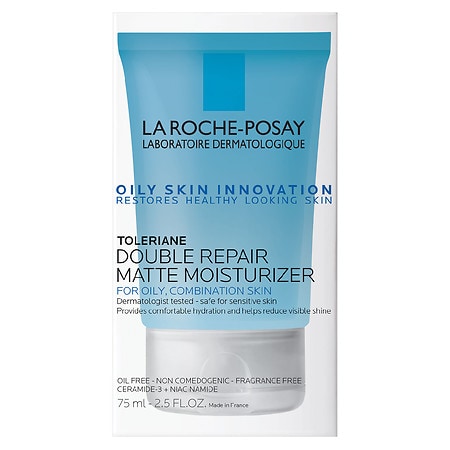
La Roche-Posay Toleriane Facial Fluid - 1.35 oz
Summary
This moisturizer contains beneficial ingredients like shea butter and squalane, which are known for their moisturizing properties. However, it also includes synthetic emulsifiers and preservatives such as polysorbate 20 and ammonium polyacryloyldimethyl taurate, which slightly lower its score due to their processed nature. The absence of harsh chemicals or known endocrine disruptors is a positive aspect, but the presence of synthetic components prevents it from achieving a top-tier rating.
At a glance
Key ingredients 18
Glycerin
Glycerin is a humectant that attracts moisture to the skin, helping to keep it hydrated. It is commonly used in skincare products due to its ability to improve skin barrier function. It is generally well-tolerated and suitable for sensitive skin.
Risks
There are minimal risks associated with glycerin, though it can cause irritation in very rare cases.
Benefits
Glycerin helps maintain skin hydration and improves skin texture.
Butyrospermum Parkii Butter/Shea Butter
Shea butter is a natural fat extracted from the nuts of the shea tree, known for its moisturizing properties. It is rich in vitamins and fatty acids, making it an excellent emollient for dry skin. Shea butter is often used to soothe and condition the skin.
Risks
Shea butter is generally safe, but it may cause allergic reactions in individuals with nut allergies.
Benefits
It deeply moisturizes the skin and provides anti-inflammatory benefits.
Squalane
Squalane is a stable, saturated hydrocarbon that mimics the skin's natural oils, providing lightweight hydration. It is non-comedogenic and suitable for all skin types, including sensitive skin. Squalane helps to lock in moisture and improve skin elasticity.
Risks
Squalane is considered safe with a low risk of irritation or allergic reactions.
Benefits
It enhances skin hydration and has antioxidant properties.
Aqua/Water/Eau
Water is a universal solvent used as a base in many skincare formulations. It helps dissolve other ingredients and provides a medium for them to be absorbed by the skin. Water is essential for maintaining skin hydration.
Risks
There are no significant risks associated with water in skincare products.
Benefits
It hydrates the skin and helps in the absorption of other beneficial ingredients.
Butylene Glycol
Butylene glycol is a conditioning agent that helps to retain moisture in the skin. It also acts as a solvent, improving the texture and spreadability of skincare products. It is generally considered safe for use in cosmetics.
Risks
In rare cases, it may cause mild irritation or allergic reactions.
Benefits
It enhances skin hydration and improves product texture.
Propanediol
Propanediol is a glycol that acts as a solvent and humectant in skincare products. It helps to improve the absorption of other ingredients and provides a smooth application. It is derived from corn sugar and is considered a safer alternative to propylene glycol.
Risks
Propanediol is generally safe, but it may cause irritation in sensitive individuals.
Benefits
It enhances skin hydration and improves product formulation.
Pentylene Glycol
Pentylene glycol is a synthetic humectant that helps to retain moisture in the skin. It also has antimicrobial properties, which can enhance the preservation of skincare products. It is commonly used to improve the texture and feel of formulations.
Risks
It is generally safe, but may cause irritation in sensitive skin types.
Benefits
It provides hydration and helps preserve the product.
Polysorbate 20
Polysorbate 20 is an emulsifier that helps to mix oil and water-based ingredients in formulations. It is derived from sorbitol, a sugar alcohol, and is used to stabilize products. It is considered safe for use in cosmetics.
Risks
It may cause mild irritation in some individuals.
Benefits
It stabilizes formulations and improves product consistency.
Zea Mays Starch/Corn Starch
Corn starch is a natural thickening agent used to improve the texture of skincare products. It absorbs excess oil and provides a matte finish, making it suitable for oily skin types. It is derived from corn and is generally considered safe.
Risks
There is a low risk of irritation, but it may cause allergic reactions in individuals with corn allergies.
Benefits
It absorbs oil and provides a smooth, matte finish.
Salvia Miltiorrhiza Root Extract
Salvia Miltiorrhiza Root Extract is a botanical ingredient known for its antioxidant properties. It helps to protect the skin from environmental stressors and reduce signs of aging. It is derived from the root of the red sage plant.
Risks
It is generally safe, but may cause irritation in sensitive individuals.
Benefits
It provides antioxidant protection and helps reduce signs of aging.
Glyceryl Acrylate/Acrylic Acid Copolymer
This copolymer is used as a film-forming agent to provide a smooth, even application of skincare products. It helps to improve the texture and longevity of formulations. It is considered safe for use in cosmetics.
Risks
There is a low risk of irritation, but it is generally well-tolerated.
Benefits
It enhances product texture and application.
Sphingomonas Ferment Extract
Sphingomonas Ferment Extract is a biotechnologically derived ingredient known for its moisturizing and skin-conditioning properties. It helps to improve skin texture and hydration. It is derived from the fermentation of a specific type of bacteria.
Risks
It is generally safe, but may cause irritation in sensitive individuals.
Benefits
It enhances skin hydration and improves texture.
Ammonium Polyacryloyldimethyl Taurate
This ingredient is a thickening agent used to improve the texture and stability of skincare products. It helps to create a smooth, gel-like consistency. It is considered safe for use in cosmetics.
Risks
There is a low risk of irritation, but it is generally well-tolerated.
Benefits
It stabilizes formulations and improves texture.
Hydroxyacetophenone
Hydroxyacetophenone is an antioxidant and preservative used to enhance the stability of skincare products. It helps to protect the formulation from degradation and provides skin-soothing benefits. It is considered safe for use in cosmetics.
Risks
It is generally safe, but may cause irritation in sensitive individuals.
Benefits
It provides antioxidant protection and enhances product stability.
Caprylyl Glycol
Caprylyl glycol is a skin-conditioning agent that helps to retain moisture and improve the texture of skincare products. It also has antimicrobial properties, which can enhance the preservation of formulations. It is considered safe for use in cosmetics.
Risks
It is generally safe, but may cause irritation in sensitive skin types.
Benefits
It provides hydration and helps preserve the product.
Citric Acid
Citric acid is an alpha hydroxy acid (AHA) used to adjust the pH of skincare products. It also provides mild exfoliation, helping to improve skin texture and tone. It is derived from citrus fruits and is generally considered safe.
Risks
It may cause irritation or sensitivity, especially in high concentrations.
Benefits
It helps to exfoliate the skin and improve texture.
Trisodium Ethylenediamine Disuccinate
This ingredient is a chelating agent used to stabilize formulations by binding metal ions. It helps to improve the efficacy and shelf life of skincare products. It is considered safe for use in cosmetics.
Risks
There is a low risk of irritation, but it is generally well-tolerated.
Benefits
It stabilizes formulations and enhances product efficacy.
Acetyl Dipeptide-1 Cetyl Ester
Acetyl Dipeptide-1 Cetyl Ester is a peptide used for its skin-conditioning and anti-aging properties. It helps to improve skin elasticity and reduce the appearance of fine lines. It is considered safe for use in cosmetics.
Risks
It is generally safe, but may cause irritation in sensitive individuals.
Benefits
It enhances skin elasticity and reduces signs of aging.
Processing
Processed Foods
Get the full breakdown in the Scout app
Scan any product to see lab results, healthy alternatives, and your personalized analysis.
Download on theApp Store