
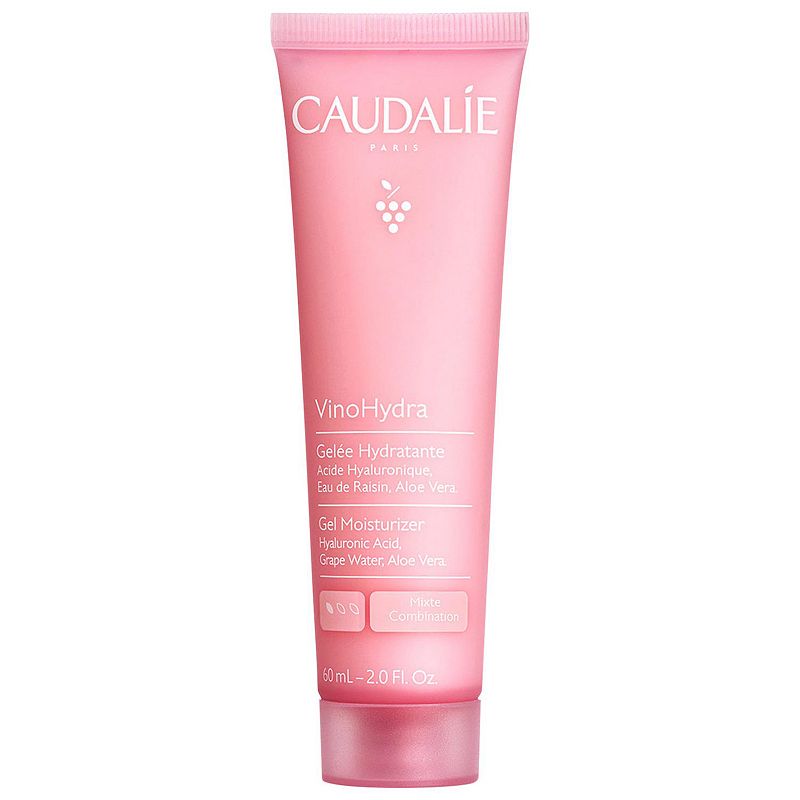

Caudalie VinoHydra Gel Moisturizer with Hyaluronic Acid & Aloe Vera, Size: 0.34 FL Oz, None
Analysis updated September 2026 · How Scout scores
At a glance
Summary
This moisturizer contains several beneficial ingredients such as glycerin, squalane, and sodium hyaluronate, which are known for their hydrating and soothing properties. However, the presence of benzyl alcohol and synthetic fragrance can be problematic, as they may cause irritation or allergic reactions in sensitive individuals. The overall formulation is relatively clean, but the inclusion of these potentially irritating ingredients affects its overall safety profile.
Key ingredients 26
ALOE BARBADENSIS LEAF JUICE POWDERVery Good
Aloe vera leaf juice powder is known for its soothing and hydrating properties. It is derived from the aloe plant and is used to calm and moisturize the skin. It is considered safe and beneficial for most skin types.
Risks
There are minimal risks associated with aloe vera, though it may cause irritation in very sensitive skin.
Benefits
Aloe vera helps to soothe and hydrate the skin, providing relief from irritation.
GLYCERINGood
Glycerin is a humectant that attracts moisture to the skin, helping to keep it hydrated. It is widely used in skincare products for its moisturizing properties. It is considered safe and effective for most skin types.
Risks
There are minimal risks associated with glycerin, though it may cause irritation in very sensitive skin.
Benefits
Glycerin helps to maintain skin hydration and improve skin barrier function.
VITIS VINIFERA (GRAPE) FRUIT WATERGood
Grape fruit water is rich in antioxidants and helps to soothe and hydrate the skin. It is derived from grapes and is considered a natural ingredient. It is beneficial for its soothing and antioxidant properties.
Risks
There are minimal risks associated with grape fruit water, though it may cause irritation in very sensitive skin.
Benefits
Grape fruit water provides antioxidant benefits and helps to soothe and hydrate the skin.
SQUALANEGood
Squalane is a highly effective emollient and natural antioxidant. It is derived from olives and helps to moisturize and protect the skin. It is considered safe and beneficial for most skin types.
Risks
There are minimal risks associated with squalane, though it may cause irritation in very sensitive skin.
Benefits
Squalane helps to moisturize the skin and provides antioxidant protection.
CAPRYLIC/CAPRIC TRIGLYCERIDEGood
Caprylic/capric triglyceride is an emollient derived from coconut oil and glycerin. It helps to moisturize and condition the skin. It is considered safe and effective for most skin types.
Risks
There are minimal risks associated with caprylic/capric triglyceride, though it may cause irritation in very sensitive skin.
Benefits
Caprylic/capric triglyceride helps to moisturize the skin and improve product spreadability.
VITIS VINIFERA (GRAPE) JUICEGood
Grape juice is rich in antioxidants and helps to soothe and hydrate the skin. It is derived from grapes and is considered a natural ingredient. It is beneficial for its soothing and antioxidant properties.
Risks
There are minimal risks associated with grape juice, though it may cause irritation in very sensitive skin.
Benefits
Grape juice provides antioxidant benefits and helps to soothe and hydrate the skin.
SODIUM HYALURONATEGood
Sodium hyaluronate is a powerful humectant that attracts and retains moisture in the skin. It is a salt form of hyaluronic acid and is highly effective in hydrating the skin. It is considered safe and beneficial for most skin types.
Risks
There are minimal risks associated with sodium hyaluronate, though it may cause irritation in very sensitive skin.
Benefits
Sodium hyaluronate helps to deeply hydrate the skin and improve skin elasticity.
HELIANTHUS ANNUUS (SUNFLOWER) SEED OILGood
Sunflower seed oil is a natural emollient that helps to moisturize and condition the skin. It is rich in essential fatty acids and vitamin E, providing antioxidant benefits. It is considered safe and beneficial for most skin types.
Risks
There are minimal risks associated with sunflower seed oil, though it may cause irritation in very sensitive skin.
Benefits
Sunflower seed oil helps to moisturize the skin and provides antioxidant protection.
TOCOPHEROLGood
Tocopherol, also known as vitamin E, is a powerful antioxidant that helps to protect the skin from free radical damage. It is used in cosmetic formulations for its skin conditioning and antioxidant properties. It is considered safe and beneficial for most skin types.
Risks
There are minimal risks associated with tocopherol, though it may cause irritation in very sensitive skin.
Benefits
Tocopherol helps to protect the skin from oxidative stress and improve skin health.
AQUA/WATER/EAUNeutral
Water is a universal solvent used in many cosmetic formulations. It acts as a base for the product and helps dissolve other ingredients. It is generally considered safe and non-reactive.
Risks
There are no significant risks associated with water in cosmetic formulations.
Benefits
Water helps to hydrate the skin and is essential for the formulation of the product.
ISOSTEARYL ISOSTEARATENeutral
Isostearyl isostearate is an emollient that helps to soften and smooth the skin. It is used in formulations to improve texture and spreadability. It is generally considered safe for use in cosmetics.
Risks
There are minimal risks associated with isostearyl isostearate, though it may cause irritation in very sensitive skin.
Benefits
Isostearyl isostearate helps to improve skin texture and provides a smooth application.
OCTYLDODECYL MYRISTATENeutral
Octyldodecyl myristate is an emollient that helps to improve the texture and feel of the product. It is used to enhance the spreadability of formulations. It is generally considered safe for use in cosmetics.
Risks
There are minimal risks associated with octyldodecyl myristate, though it may cause irritation in very sensitive skin.
Benefits
Octyldodecyl myristate helps to improve product texture and provides a smooth application.
MICROCRYSTALLINE CELLULOSENeutral
Microcrystalline cellulose is used as a thickening agent and stabilizer in cosmetic formulations. It helps to improve the texture and consistency of the product. It is generally considered safe for use in cosmetics.
Risks
There are minimal risks associated with microcrystalline cellulose, though it may cause irritation in very sensitive skin.
Benefits
Microcrystalline cellulose helps to stabilize formulations and improve product texture.
XANTHAN GUMNeutral
Xanthan gum is a natural thickening agent used to stabilize and thicken cosmetic formulations. It is derived from fermented sugars and is considered safe for use in cosmetics. It helps to improve the texture and consistency of the product.
Risks
There are minimal risks associated with xanthan gum, though it may cause irritation in very sensitive skin.
Benefits
Xanthan gum helps to stabilize formulations and improve product texture.
CARBOMERNeutral
Carbomer is a synthetic polymer used to thicken and stabilize cosmetic formulations. It helps to improve the texture and consistency of the product. It is generally considered safe for use in cosmetics.
Risks
There are minimal risks associated with carbomer, though it may cause irritation in very sensitive skin.
Benefits
Carbomer helps to stabilize formulations and improve product texture.
CELLULOSE GUMNeutral
Cellulose gum is a natural thickening agent used to stabilize and thicken cosmetic formulations. It is derived from plant fibers and is considered safe for use in cosmetics. It helps to improve the texture and consistency of the product.
Risks
There are minimal risks associated with cellulose gum, though it may cause irritation in very sensitive skin.
Benefits
Cellulose gum helps to stabilize formulations and improve product texture.
CAPRYLYL GLYCOLNeutral
Caprylyl glycol is a humectant and skin conditioning agent used in cosmetic formulations. It helps to moisturize the skin and improve product stability. It is generally considered safe for use in cosmetics.
Risks
There are minimal risks associated with caprylyl glycol, though it may cause irritation in very sensitive skin.
Benefits
Caprylyl glycol helps to moisturize the skin and improve product stability.
SODIUM HYDROXIDENeutral
Sodium hydroxide is used to adjust the pH of cosmetic formulations. It is a strong alkali that is used in very small amounts to neutralize acids. It is generally considered safe when used in low concentrations.
Risks
Sodium hydroxide can be irritating in high concentrations, but it is typically used in very low amounts in cosmetics.
Benefits
Sodium hydroxide helps to balance the pH of formulations, ensuring product stability.
SODIUM PHYTATENeutral
Sodium phytate is used as a chelating agent in cosmetic formulations. It helps to stabilize the product by binding metal ions. It is generally considered safe for use in cosmetics.
Risks
There are minimal risks associated with sodium phytate, though it may cause irritation in very sensitive skin.
Benefits
Sodium phytate helps to stabilize formulations and improve product shelf life.
CITRIC ACIDNeutral
Citric acid is used to adjust the pH of cosmetic formulations. It is a natural acid derived from citrus fruits and is considered safe for use in cosmetics. It helps to balance the pH and improve product stability.
Risks
Citric acid can be irritating in high concentrations, but it is typically used in very low amounts in cosmetics.
Benefits
Citric acid helps to balance the pH of formulations, ensuring product stability.
DEHYDROACETIC ACIDNeutral
Dehydroacetic acid is used as a preservative in cosmetic formulations. It helps to prevent the growth of microorganisms and extend the shelf life of the product. It is generally considered safe for use in cosmetics.
Risks
There are minimal risks associated with dehydroacetic acid, though it may cause irritation in very sensitive skin.
Benefits
Dehydroacetic acid helps to preserve the product and prevent microbial contamination.
SODIUM CARBOXYMETHYL BETA-GLUCANNeutral
Sodium carboxymethyl beta-glucan is used as a skin conditioning agent in cosmetic formulations. It helps to moisturize and soothe the skin. It is generally considered safe for use in cosmetics.
Risks
There are minimal risks associated with sodium carboxymethyl beta-glucan, though it may cause irritation in very sensitive skin.
Benefits
Sodium carboxymethyl beta-glucan helps to moisturize and soothe the skin, improving skin comfort.
BENZYL ALCOHOLBad
Benzyl alcohol is used as a preservative and solvent in cosmetic formulations. It can cause skin irritation and allergic reactions in some individuals. It is considered safe in low concentrations but can be problematic for sensitive skin.
Risks
Benzyl alcohol can cause skin irritation and allergic reactions, particularly in sensitive individuals.
Benefits
Benzyl alcohol acts as a preservative, helping to extend the shelf life of the product.
SODIUM BENZOATEBad
Synthetic preservative that can form benzene in the presence of vitamin C.
Risks
There are minimal risks associated with sodium benzoate, though it may cause irritation in very sensitive skin.
Benefits
Sodium benzoate helps to preserve the product and prevent microbial contamination.
POTASSIUM SORBATEBad
Synthetic preservative — flagged in daily-use products.
Risks
There are minimal risks associated with potassium sorbate, though it may cause irritation in very sensitive skin.
Benefits
Potassium sorbate helps to preserve the product and prevent microbial contamination.
PARFUM (FRAGRANCE)Very Bad
Synthetic fragrance is often a blend of various chemicals and can cause skin irritation and allergic reactions. It is considered a potential endocrine disruptor and may contain phthalates. It is generally viewed negatively due to its potential health risks.
Risks
Synthetic fragrance can cause skin irritation, allergic reactions, and may contain harmful chemicals like phthalates.
Benefits
Fragrance is used to enhance the sensory experience of the product, though it offers no direct skin benefits.
Get the full breakdown in the Scout appTake Scout shopping
Scan any product to see lab results, healthy alternatives, and your personalized analysis.
Download on theApp Store GET IT ONGoogle PlayAmazon pricing & content
Amazon price as of . Product prices and availability are accurate as of the date/time indicated and are subject to change. Any price and availability information displayed on Amazon.com at the time of purchase will apply to the purchase of this product.
CERTAIN CONTENT THAT APPEARS ON THIS SITE COMES FROM AMAZON. THIS CONTENT IS PROVIDED “AS IS” AND IS SUBJECT TO CHANGE OR REMOVAL AT ANY TIME.