
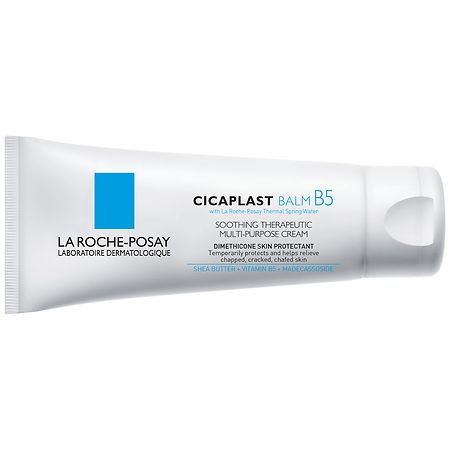
La Roche Posay Cicaplast Balm Vitamin B5 Soothing Therapeutic Cream for Dry & Irritated Skin: Moisturizing, Paraben-Free, Travel-Friendly 1.35oz
Analysis updated August 2026 · How Scout scores
At a glance
Summary
This product contains beneficial ingredients such as shea butter, panthenol, and Centella Asiatica extract, which are known for their moisturizing and soothing properties. However, the presence of phenoxyethanol, a preservative that can cause irritation in some individuals, slightly lowers its safety profile. The formulation is moderately processed, which affects the overall score, but the absence of major harmful chemicals and the inclusion of skin-beneficial ingredients contribute positively.
Key ingredients 34
Butyrospermum Parkii (Shea) ButterVery Good
Shea Butter is a natural fat extracted from the nuts of the shea tree, known for its moisturizing and anti-inflammatory properties. It is rich in vitamins and fatty acids, making it beneficial for skin health. It is highly regarded for its ability to soothe and nourish dry skin.
Risks
Rarely, it may cause allergic reactions in individuals with nut allergies.
Benefits
Deeply moisturizes and nourishes the skin, providing anti-inflammatory benefits.
PanthenolVery Good
Panthenol, also known as Vitamin B5, is a moisturizing agent that helps improve skin hydration and elasticity. It is known for its soothing and healing properties, making it ideal for irritated skin. It is widely used in skincare for its beneficial effects.
Risks
There are minimal risks associated with panthenol.
Benefits
Enhances skin hydration and promotes healing of irritated skin.
Centella Asiatica Leaf ExtractVery Good
Centella Asiatica is a plant extract known for its soothing and healing properties. It is rich in antioxidants and helps to improve skin hydration and elasticity. It is highly regarded for its ability to calm irritated skin.
Risks
There are minimal risks associated with Centella Asiatica.
Benefits
Soothes and heals the skin, providing antioxidant benefits.
MadecassosideVery Good
Madecassoside is a compound derived from Centella Asiatica, known for its anti-inflammatory and healing properties. It helps to soothe and repair damaged skin. It is highly beneficial for sensitive and irritated skin.
Risks
There are minimal risks associated with madecassoside.
Benefits
Soothes and repairs the skin, providing anti-inflammatory benefits.
TocopherolVery Good
Tocopherol, also known as Vitamin E, is a powerful antioxidant that helps protect the skin from free radical damage. It is widely used in skincare for its moisturizing and anti-aging properties. It is highly beneficial for maintaining healthy skin.
Risks
There are minimal risks associated with tocopherol.
Benefits
Protects the skin from oxidative stress and provides moisturizing benefits.
GlycerinGood
Glycerin is a humectant that attracts moisture to the skin, improving hydration. It is widely used in skincare for its moisturizing properties. It is considered safe and beneficial for most skin types.
Risks
There are minimal risks associated with glycerin.
Benefits
Helps to hydrate and maintain the skin's moisture balance.
Zinc GluconateGood
Zinc Gluconate is used for its anti-inflammatory and soothing properties. It helps to reduce redness and irritation in the skin. It is considered beneficial for sensitive and acne-prone skin.
Risks
There are minimal risks associated with zinc gluconate.
Benefits
Reduces redness and soothes irritated skin.
WaterNeutral
Water is a common solvent used in cosmetics to dissolve other ingredients. It helps in the application and absorption of the product. It does not provide direct benefits or risks.
Risks
There are no significant risks associated with water in cosmetics.
Benefits
Water aids in the hydration and delivery of active ingredients.
Hydrogenated PolyisobuteneNeutral
Hydrogenated Polyisobutene is a synthetic emollient used to provide a smooth application. It is generally considered safe for use in cosmetics. It does not have significant benefits or risks.
Risks
There are no significant risks associated with this ingredient.
Benefits
It helps in providing a smooth texture and application.
Zea Mays (Corn) StarchNeutral
Corn Starch is used as a thickening agent in cosmetics. It helps to absorb excess oil and provides a matte finish. It is generally considered safe and non-irritating.
Risks
There are no significant risks associated with corn starch.
Benefits
Helps to absorb oil and provides a smooth texture.
PropanediolNeutral
Propanediol is a glycol used as a solvent and skin-conditioning agent. It enhances the absorption of other ingredients. It is considered safe for use in cosmetics.
Risks
There are no significant risks associated with propanediol.
Benefits
Improves the absorption and efficacy of active ingredients.
Butylene GlycolNeutral
Butylene Glycol is a conditioning agent that helps retain moisture in the skin. It is commonly used in cosmetics for its ability to improve texture and spreadability. It is generally considered safe for use.
Risks
There are no significant risks associated with butylene glycol.
Benefits
Helps to retain moisture and improve product texture.
Cetyl PEG/PPG-10/1 DimethiconeNeutral
This is a silicone-based emulsifier that helps blend water and oil components in formulations. It provides a smooth application and enhances product stability. It is generally considered safe for use in cosmetics.
Risks
There are no significant risks associated with this ingredient.
Benefits
Improves product stability and application.
TrihydroxystearinNeutral
Trihydroxystearin is used as a thickening agent in cosmetics. It helps to stabilize emulsions and improve texture. It is considered safe for use in skincare products.
Risks
There are no significant risks associated with trihydroxystearin.
Benefits
Stabilizes emulsions and enhances product texture.
Polymnia Sonchifolia Root JuiceNeutral
This ingredient is used for its moisturizing properties and ability to improve skin texture. It is derived from the yacon plant and is considered safe for use in cosmetics. It does not have significant benefits or risks.
Risks
There are no significant risks associated with this ingredient.
Benefits
Provides moisture and improves skin texture.
Manganese GluconateNeutral
Manganese Gluconate is used for its antioxidant properties and ability to support skin health. It is generally considered safe for use in cosmetics. It does not have significant benefits or risks.
Risks
There are no significant risks associated with manganese gluconate.
Benefits
Provides antioxidant support for skin health.
Alpha-Glucan OligosaccharideNeutral
This ingredient is used for its prebiotic properties, helping to support the skin's natural microbiome. It is considered safe for use in cosmetics. It does not have significant benefits or risks.
Risks
There are no significant risks associated with this ingredient.
Benefits
Supports the skin's natural microbiome.
SilicaNeutral
Silica is used as a thickening agent and to improve the texture of cosmetics. It is generally considered safe for use in skincare products. It does not have significant benefits or risks.
Risks
There are no significant risks associated with silica.
Benefits
Improves product texture and stability.
Aluminum HydroxideNeutral
Aluminum Hydroxide is used as a thickening agent and to improve product stability. It is generally considered safe for use in cosmetics. It does not have significant benefits or risks.
Risks
There are no significant risks associated with aluminum hydroxide.
Benefits
Enhances product stability and texture.
Magnesium SulfateNeutral
Magnesium Sulfate is used as a thickening agent and to improve product texture. It is generally considered safe for use in cosmetics. It does not have significant benefits or risks.
Risks
There are no significant risks associated with magnesium sulfate.
Benefits
Improves product texture and stability.
MannoseNeutral
Mannose is a sugar used for its moisturizing properties and ability to improve skin texture. It is considered safe for use in cosmetics. It does not have significant benefits or risks.
Risks
There are no significant risks associated with mannose.
Benefits
Provides moisture and improves skin texture.
Capryloyl GlycineNeutral
Capryloyl Glycine is used for its antimicrobial properties and ability to support skin health. It is generally considered safe for use in cosmetics. It does not have significant benefits or risks.
Risks
There are no significant risks associated with capryloyl glycine.
Benefits
Supports skin health with antimicrobial properties.
Vitreoscilla FermentNeutral
Vitreoscilla Ferment is used for its skin-conditioning properties and ability to support the skin's microbiome. It is considered safe for use in cosmetics. It does not have significant benefits or risks.
Risks
There are no significant risks associated with vitreoscilla ferment.
Benefits
Supports the skin's microbiome and conditioning.
Citric AcidNeutral
Citric Acid is used to adjust the pH of cosmetics and as an exfoliant. It is generally considered safe for use in skincare products. It does not have significant benefits or risks.
Risks
May cause irritation in sensitive skin if used in high concentrations.
Benefits
Helps to adjust pH and provides mild exfoliation.
Trisodium Ethylenediamine DisuccinateNeutral
This ingredient is used as a chelating agent to improve product stability. It is considered safe for use in cosmetics. It does not have significant benefits or risks.
Risks
There are no significant risks associated with this ingredient.
Benefits
Improves product stability by binding metal ions.
LactobacillusNeutral
Lactobacillus is used for its probiotic properties and ability to support the skin's microbiome. It is considered safe for use in cosmetics. It does not have significant benefits or risks.
Risks
There are no significant risks associated with lactobacillus.
Benefits
Supports the skin's microbiome with probiotic properties.
Acetylated Glycol StearateNeutral
This ingredient is used as an emulsifier and thickening agent in cosmetics. It is generally considered safe for use in skincare products. It does not have significant benefits or risks.
Risks
There are no significant risks associated with this ingredient.
Benefits
Improves product texture and stability.
MaltodextrinNeutral
Maltodextrin is used as a binding agent and to improve product texture. It is considered safe for use in cosmetics. It does not have significant benefits or risks.
Risks
There are no significant risks associated with maltodextrin.
Benefits
Improves product texture and stability.
Pentylene GlycolNeutral
Pentylene Glycol is used as a humectant and solvent in cosmetics. It helps to retain moisture and improve product texture. It is generally considered safe for use.
Risks
There are no significant risks associated with pentylene glycol.
Benefits
Helps to retain moisture and improve product texture.
Polyglyceryl-4 IsostearateNeutral
This ingredient is used as an emulsifier to blend oil and water components in formulations. It is considered safe for use in cosmetics. It does not have significant benefits or risks.
Risks
There are no significant risks associated with this ingredient.
Benefits
Improves product stability and application.
Pentaerythrityl Tetra-Di-T-Butyl HydroxyhydrocinnamateNeutral
This ingredient is used as an antioxidant to stabilize formulations and prevent oxidation. It is considered safe for use in cosmetics. It does not have significant benefits or risks.
Risks
There are no significant risks associated with this ingredient.
Benefits
Stabilizes formulations and prevents oxidation.
Titanium DioxideNeutral
Titanium Dioxide is used as a pigment and UV filter in cosmetics. It provides sun protection and is considered safe for use in skincare products. It does not have significant benefits or risks.
Risks
There are no significant risks associated with titanium dioxide.
Benefits
Provides UV protection and acts as a pigment.
DimethiconeBad
Occlusive silicone film-former — flagged under clean-beauty doctrine.
Risks
May cause buildup on the skin, potentially leading to clogged pores.
Benefits
Provides a smooth application and helps retain moisture.
PhenoxyethanolBad
Phenoxyethanol is a preservative used to prevent microbial growth in cosmetics. It is effective but can cause irritation in some individuals, especially in high concentrations. It is considered a moderate risk ingredient.
Risks
May cause skin irritation and allergic reactions in sensitive individuals.
Benefits
Prevents microbial growth, extending the shelf life of products.
Get the full breakdown in the Scout appTake Scout shopping
Scan any product to see lab results, healthy alternatives, and your personalized analysis.
Download on theApp Store GET IT ONGoogle PlayAmazon pricing & content
Amazon price as of . Product prices and availability are accurate as of the date/time indicated and are subject to change. Any price and availability information displayed on Amazon.com at the time of purchase will apply to the purchase of this product.
CERTAIN CONTENT THAT APPEARS ON THIS SITE COMES FROM AMAZON. THIS CONTENT IS PROVIDED “AS IS” AND IS SUBJECT TO CHANGE OR REMOVAL AT ANY TIME.