
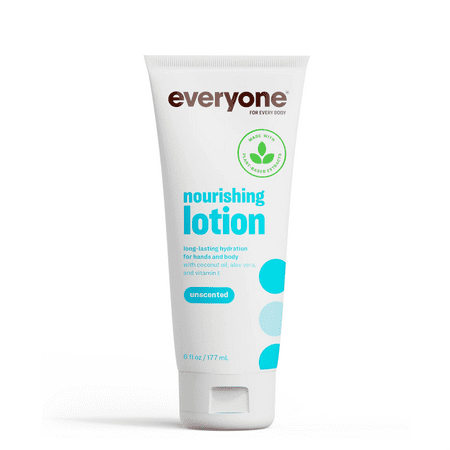


Everyone 3-in-1 Lotion Tube Unscented 6 Oz.
Analysis updated August 2026 · How Scout scores
At a glance
Summary
This lotion contains a mix of beneficial natural ingredients like coconut oil, sesame seed oil, and aloe vera, which are known for their moisturizing and nourishing properties. However, the presence of phenoxyethanol, a synthetic preservative that can cause irritation, slightly lowers its safety profile. The product is moderately processed, which also impacts its overall rating.
Key ingredients 24
Organic Cocos Nucifera (Coconut) OilVery Good
Coconut oil is a natural emollient that helps to moisturize and soften the skin. It contains fatty acids that are beneficial for skin health. It is often used in skincare for its nourishing properties.
Risks
Coconut oil can clog pores in some individuals, potentially leading to acne.
Benefits
It provides deep hydration and has antimicrobial properties that can benefit the skin.
Sesamum Indicum (Sesame) Seed OilVery Good
Sesame seed oil is a natural oil rich in antioxidants and fatty acids. It is known for its moisturizing and nourishing properties. It is often used in skincare for its ability to improve skin texture and elasticity.
Risks
There are minimal risks associated with sesame seed oil, though it may cause allergic reactions in some individuals.
Benefits
It provides deep hydration and helps to protect the skin from environmental damage.
TocopherolVery Good
Tocopherol, also known as Vitamin E, is a powerful antioxidant that helps to protect the skin from free radical damage. It is commonly used in skincare for its anti-aging benefits. It also helps to improve skin hydration and elasticity.
Risks
There are minimal risks associated with tocopherol.
Benefits
It supports skin health by providing antioxidant protection and improving moisture retention.
Aloe Barbadensis LeafVery Good
Aloe vera is a well-known botanical with soothing and hydrating properties. It is often used in skincare for its ability to calm irritated skin and provide moisture. It is considered safe and beneficial for all skin types.
Risks
There are minimal risks associated with aloe vera.
Benefits
It helps to soothe and hydrate the skin, making it a valuable ingredient in lotions.
Chamomilla Recutita (Matricaria) Flower ExtractVery Good
Chamomile extract is a botanical known for its soothing and anti-inflammatory properties. It is often used in skincare to calm irritated skin and reduce redness. It is considered safe and beneficial for sensitive skin.
Risks
There are minimal risks associated with chamomile extract.
Benefits
It helps to soothe and calm the skin, making it a valuable ingredient in lotions.
Calendula Officinalis Flower ExtractVery Good
Calendula extract is a botanical known for its healing and anti-inflammatory properties. It is often used in skincare to soothe and repair damaged skin. It is considered safe and beneficial for sensitive skin.
Risks
There are minimal risks associated with calendula extract.
Benefits
It helps to soothe and heal the skin, making it a valuable ingredient in lotions.
Camellia Sinensis Leaf ExtractVery Good
Green tea extract is a powerful antioxidant known for its anti-inflammatory and anti-aging properties. It is often used in skincare to protect the skin from environmental damage. It is considered safe and beneficial for all skin types.
Risks
There are minimal risks associated with green tea extract.
Benefits
It helps to protect the skin from free radical damage and improve skin health.
Vegetable GlycerinGood
Vegetable glycerin is a humectant that attracts moisture to the skin. It is derived from plant oils and is known for its hydrating properties. It is widely used in skincare for its ability to improve skin moisture levels.
Risks
There are minimal risks associated with vegetable glycerin, though it may cause irritation in very sensitive individuals.
Benefits
It helps to keep the skin hydrated and soft, making it a beneficial ingredient in lotions.
Caprylic/Capric TriglycerideGood
Caprylic/capric triglyceride is an emollient derived from coconut oil and glycerin. It is used to improve the spreadability of products. It is lightweight and non-greasy, making it suitable for all skin types.
Risks
There are minimal risks associated with caprylic/capric triglyceride.
Benefits
It provides a silky feel to the skin and helps to lock in moisture.
Cetearyl GlucosideGood
Cetearyl glucoside is a natural emulsifier derived from coconut oil and sugar. It helps to stabilize and thicken formulations. It is considered safe and effective in skincare products.
Risks
There are minimal risks associated with cetearyl glucoside.
Benefits
It enhances the texture of the lotion and ensures even distribution of ingredients.
Sorbitan OlivateGood
Sorbitan olivate is an emulsifier derived from olive oil. It helps to blend oil and water components in formulations. It is gentle on the skin and suitable for sensitive skin types.
Risks
There are minimal risks associated with sorbitan olivate.
Benefits
It contributes to the smooth application of the lotion and supports skin hydration.
Hydrolyzed Rice ProteinGood
Hydrolyzed rice protein is a plant-derived protein that helps to strengthen and condition the skin. It is known for its ability to improve skin elasticity and moisture retention. It is considered safe and beneficial for skincare.
Risks
There are minimal risks associated with hydrolyzed rice protein.
Benefits
It helps to improve skin texture and hydration, making it a valuable ingredient in lotions.
Purified WaterNeutral
Purified water is used as a solvent to dissolve other ingredients. It is a common base in lotions and cosmetics. It does not provide direct benefits or risks.
Risks
There are no significant risks associated with purified water.
Benefits
It helps in the formulation of the product by providing a medium for other ingredients.
Glyceryl StearateNeutral
Standard formulation ingredient — neither beneficial nor harmful at typical use.
Risks
There are minimal risks associated with glyceryl stearate.
Benefits
It helps to improve the texture and consistency of the lotion, enhancing its application.
Stearyl AlcoholNeutral
Stearyl alcohol is a fatty alcohol used as an emollient and thickener. It is derived from natural fats and oils. It is considered safe and non-irritating for most skin types.
Risks
There are minimal risks associated with stearyl alcohol.
Benefits
It helps to improve the texture and consistency of the lotion.
Cetyl AlcoholNeutral
Cetyl alcohol is a fatty alcohol used as an emollient and thickener. It is derived from natural fats and oils. It is considered safe and non-irritating for most skin types.
Risks
There are minimal risks associated with cetyl alcohol.
Benefits
It helps to improve the texture and consistency of the lotion.
Cetyl EstersNeutral
Cetyl esters are wax-like substances used as emollients and thickeners in skincare products. They help to improve the texture and feel of formulations. They are considered safe and non-irritating.
Risks
There are minimal risks associated with cetyl esters.
Benefits
They contribute to the smooth application and consistency of the lotion.
Xanthan GumNeutral
Xanthan gum is a natural thickening agent used to stabilize and thicken formulations. It is derived from fermented sugars. It is considered safe and non-irritating.
Risks
There are minimal risks associated with xanthan gum.
Benefits
It helps to improve the texture and consistency of the lotion.
Sodium PhytateNeutral
Sodium phytate is a chelating agent used to stabilize formulations by binding metal ions. It is derived from plant sources. It is considered safe and non-irritating.
Risks
There are minimal risks associated with sodium phytate.
Benefits
It helps to maintain the stability and efficacy of the product.
Citric AcidNeutral
Citric acid is used to adjust the pH of formulations and acts as a mild exfoliant. It is derived from citrus fruits. It is considered safe and non-irritating in small concentrations.
Risks
There are minimal risks associated with citric acid, though it may cause irritation in sensitive individuals.
Benefits
It helps to maintain the stability and efficacy of the product.
EthylhexylglycerinNeutral
Ethylhexylglycerin is a preservative and skin conditioning agent. It is often used in combination with phenoxyethanol to enhance preservative efficacy. It is considered safe and non-irritating.
Risks
There are minimal risks associated with ethylhexylglycerin.
Benefits
It helps to improve the preservation and stability of the product.
LecithinBad
Processed additive flagged under Scout's ingredient doctrine.
Risks
There are minimal risks associated with lecithin.
Benefits
It helps to keep the skin soft and smooth by enhancing moisture retention.
DimethiconeBad
Occlusive silicone film-former — flagged under clean-beauty doctrine.
Risks
There are minimal risks associated with dimethicone, though it may cause buildup on the skin over time.
Benefits
It helps to smooth and protect the skin, enhancing the feel of the lotion.
PhenoxyethanolBad
Phenoxyethanol is a synthetic preservative used to prevent microbial growth in formulations. It is effective at low concentrations but can cause irritation in some individuals. It is considered a moderate risk ingredient in skincare.
Risks
It may cause skin irritation and allergic reactions in sensitive individuals.
Benefits
It helps to preserve the product and extend its shelf life.
Get the full breakdown in the Scout appTake Scout shopping
Scan any product to see lab results, healthy alternatives, and your personalized analysis.
Download on theApp Store GET IT ONGoogle PlayAmazon pricing & content
Amazon price as of . Product prices and availability are accurate as of the date/time indicated and are subject to change. Any price and availability information displayed on Amazon.com at the time of purchase will apply to the purchase of this product.
CERTAIN CONTENT THAT APPEARS ON THIS SITE COMES FROM AMAZON. THIS CONTENT IS PROVIDED “AS IS” AND IS SUBJECT TO CHANGE OR REMOVAL AT ANY TIME.