
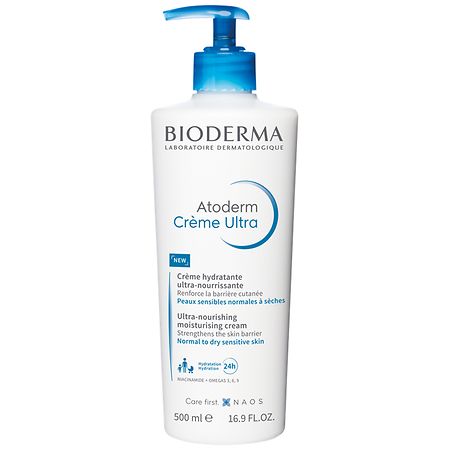
Bioderma Atoderm Ultra Cream Moisturizer - 16.9 fl oz: Deep Hydration, Noncomedogenic, Sensitive Skin, Whole Body
Analysis updated September 2026 · How Scout scores
At a glance
Summary
This moisturizer contains beneficial ingredients like glycerin, niacinamide, and sunflower seed oil, which provide hydration and skin barrier support. However, the presence of mineral oil raises concerns due to potential contamination risks, and the inclusion of synthetic polymers like sodium polyacrylate and acrylates crosspolymer indicates a higher level of processing. These factors contribute to a mixed ingredient profile, balancing beneficial components with some less desirable elements.
Key ingredients 24
TOCOPHEROLVery Good
Tocopherol, also known as Vitamin E, is a powerful antioxidant that helps to protect the skin from free radical damage. It also has moisturizing properties.
Risks
There is a minimal risk of irritation, though it is generally well-tolerated.
Benefits
It provides antioxidant protection and helps to maintain skin health.
GLYCERINGood
Glycerin is a humectant that attracts moisture to the skin, helping to keep it hydrated. It is a natural compound found in lipids and is well-tolerated by most skin types.
Risks
There are minimal risks associated with glycerin, though it can be sticky in high concentrations.
Benefits
It effectively hydrates the skin and improves skin barrier function.
BRASSICA CAMPESTRIS (RAPESEED) SEED OILGood
Rapeseed oil is a natural oil rich in omega-3 and omega-6 fatty acids. It acts as an emollient and helps to nourish and soften the skin.
Risks
There is a low risk of allergic reactions, though it is rare.
Benefits
It provides essential fatty acids that help maintain skin health and improve moisture retention.
SODIUM CITRATEGood
Beneficial ingredient — whole-food or functional value in this product class.
Risks
There are minimal risks associated with sodium citrate in cosmetics.
Benefits
It helps to maintain product stability and ensures optimal performance.
CETEARYL GLUCOSIDEGood
Cetearyl glucoside is a natural emulsifier derived from coconut oil and glucose. It helps to blend oil and water components in formulations.
Risks
There is a minimal risk of irritation, though it is generally considered safe.
Benefits
It provides a smooth texture and enhances the stability of cosmetic products.
HELIANTHUS ANNUUS (SUNFLOWER) SEED OILGood
Sunflower seed oil is a natural oil rich in linoleic acid, which helps to maintain the skin barrier and prevent moisture loss. It is an effective emollient.
Risks
There is a low risk of allergic reactions, though it is rare.
Benefits
It provides essential fatty acids that help maintain skin health and improve moisture retention.
NIACINAMIDEGood
Niacinamide, also known as Vitamin B3, is a versatile skincare ingredient known for its anti-inflammatory and brightening properties. It helps to improve skin texture and reduce the appearance of pores.
Risks
There is a minimal risk of irritation, though it is generally well-tolerated.
Benefits
It provides multiple skin benefits, including improved texture, reduced redness, and enhanced barrier function.
CAPRYLIC/CAPRIC TRIGLYCERIDEGood
Caprylic/capric triglyceride is a mixed triester derived from coconut oil and glycerin. It is used as an emollient and helps to improve the spreadability of products.
Risks
There is a minimal risk of irritation, though it is generally well-tolerated.
Benefits
It provides a lightweight, non-greasy feel and helps to lock in moisture.
LAMINARIA OCHROLEUCA EXTRACTGood
Laminaria ochroleuca extract, also known as golden seaweed extract, is rich in antioxidants and minerals. It helps to protect the skin from environmental stressors and improve hydration.
Risks
There is a low risk of allergic reactions, though it is rare.
Benefits
It provides antioxidant protection and helps to soothe and hydrate the skin.
AQUA/WATER/EAUNeutral
Water is a common solvent used in cosmetics to dissolve other ingredients. It helps in the application of the product and provides hydration. It is generally considered safe and non-irritating.
Risks
There are no significant risks associated with water in cosmetics.
Benefits
Water helps to hydrate the skin and acts as a carrier for other beneficial ingredients.
SODIUM POLYACRYLATENeutral
Sodium polyacrylate is a thickening agent used to improve the texture of cosmetic products. It helps to stabilize emulsions and provide a smooth application.
Risks
There is a potential for skin irritation in sensitive individuals.
Benefits
It enhances the texture and stability of the product, ensuring a pleasant user experience.
PENTYLENE GLYCOLNeutral
Pentylene glycol is a synthetic humectant and solvent that helps to retain moisture in the skin. It also has antimicrobial properties, which can enhance product preservation.
Risks
There is a low risk of skin irritation, particularly in sensitive skin.
Benefits
It helps to hydrate the skin and improve the shelf life of the product.
CETEARYL ALCOHOLNeutral
Standard formulation ingredient — neither beneficial nor harmful at typical use.
Risks
There is a minimal risk of irritation, though it is generally well-tolerated.
Benefits
It provides a creamy texture and helps to lock in moisture, improving skin feel.
1,2-HEXANEDIOLNeutral
1,2-Hexanediol is a synthetic preservative and humectant used to improve product stability and moisture retention. It is considered safe for use in cosmetics.
Risks
There is a low risk of irritation, particularly in sensitive skin.
Benefits
It helps to maintain product integrity and provides hydration benefits.
CAPRYLYL GLYCOLNeutral
Caprylyl glycol is a skin-conditioning agent with antimicrobial properties. It helps to improve the shelf life of cosmetic products.
Risks
There is a low risk of skin irritation, though it is generally considered safe.
Benefits
It enhances product preservation and provides moisturizing benefits.
XYLITOLNeutral
Xylitol is a sugar alcohol used as a humectant and skin-conditioning agent. It helps to retain moisture and improve skin hydration.
Risks
There is a low risk of irritation, though it is generally well-tolerated.
Benefits
It provides moisturizing benefits and helps to improve skin texture.
MANNITOLNeutral
Mannitol is a sugar alcohol used as a humectant and skin-conditioning agent. It helps to retain moisture and improve skin hydration.
Risks
There is a low risk of irritation, though it is generally well-tolerated.
Benefits
It provides moisturizing benefits and helps to improve skin texture.
RHAMNOSENeutral
Rhamnose is a naturally occurring sugar used in cosmetics for its skin-conditioning properties. It helps to improve skin texture and hydration.
Risks
There is a low risk of irritation, though it is generally considered safe.
Benefits
It provides moisturizing benefits and helps to improve skin texture.
XYLITYLGLUCOSIDENeutral
Xylitylglucoside is a sugar-derived humectant that helps to retain moisture in the skin. It is used to improve skin hydration and texture.
Risks
There is a low risk of irritation, though it is generally well-tolerated.
Benefits
It provides moisturizing benefits and helps to improve skin texture.
ANHYDROXYLITOLNeutral
Anhydroxylitol is a sugar-derived humectant that helps to retain moisture in the skin. It is used to improve skin hydration and texture.
Risks
There is a low risk of irritation, though it is generally well-tolerated.
Benefits
It provides moisturizing benefits and helps to improve skin texture.
FRUCTOOLIGOSACCHARIDESNeutral
Fructooligosaccharides are prebiotic sugars that help to support the skin's microbiome. They are used to improve skin health and hydration.
Risks
There is a low risk of irritation, though it is generally considered safe.
Benefits
They help to maintain a healthy skin microbiome and provide moisturizing benefits.
PARAFFINUM LIQUIDUM/MINERAL OIL/HUILE MINERALEBad
Processed additive flagged under Scout's ingredient doctrine.
Risks
There is a potential for clogging pores, especially in acne-prone skin.
Benefits
It provides a barrier on the skin to prevent moisture loss and is generally non-irritating.
ACRYLATES/C10-30 ALKYL ACRYLATE CROSSPOLYMERBad
Processed additive flagged under Scout's ingredient doctrine.
Risks
There is a potential for skin irritation, particularly in sensitive individuals.
Benefits
It improves the texture and application of the product, enhancing user experience.
GLUCOSEBad
Processed additive flagged under Scout's ingredient doctrine.
Risks
There is a low risk of irritation, though it is generally well-tolerated.
Benefits
It provides moisturizing benefits and helps to improve skin texture.
Get the full breakdown in the Scout appTake Scout shopping
Scan any product to see lab results, healthy alternatives, and your personalized analysis.
Download on theApp Store GET IT ONGoogle PlayAmazon pricing & content
Amazon price as of . Product prices and availability are accurate as of the date/time indicated and are subject to change. Any price and availability information displayed on Amazon.com at the time of purchase will apply to the purchase of this product.
CERTAIN CONTENT THAT APPEARS ON THIS SITE COMES FROM AMAZON. THIS CONTENT IS PROVIDED “AS IS” AND IS SUBJECT TO CHANGE OR REMOVAL AT ANY TIME.