
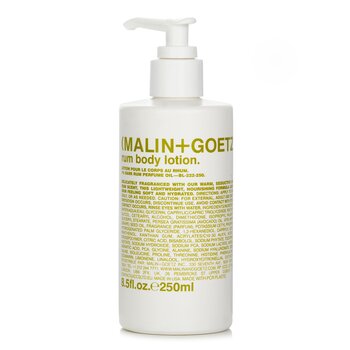


Malin+Goetz Rum Body Lotion 8.5 oz
Analysis updated June 2026 · How Scout scores
At a glance
Summary
This body lotion contains beneficial ingredients like avocado oil and grape seed oil, which provide moisturization and support skin health. However, it also includes several fragrance compounds that can cause skin irritation and allergic reactions, such as coumarin and limonene. The presence of synthetic polymers and undisclosed fragrance components further contributes to potential environmental and health concerns, impacting the overall score.
Key ingredients 42
Persea Gratissima (Avocado) OilVery Good
Avocado Oil is a nutrient-rich oil high in monounsaturated fats and vitamins A, D, and E. It provides deep moisturization and supports skin barrier function. It is known for its anti-inflammatory and antioxidant properties.
Benefits
Rich in nutrients that support skin health and provide anti-inflammatory benefits.
GlycerinGood
Glycerin is a humectant that attracts moisture to the skin, helping to maintain hydration. It is derived from natural sources and is widely used for its moisturizing properties. It is generally well-tolerated and beneficial for dry skin.
Benefits
Helps to maintain skin hydration and improve skin barrier function.
Caprylic/Capric TriglycerideGood
Caprylic/Capric Triglyceride is an emollient derived from coconut oil and glycerin. It is used to improve the spreadability of lotions and provides a lightweight, non-greasy feel. It is considered safe and beneficial for skin conditioning.
Benefits
Provides a lightweight, non-greasy moisturizing effect.
Vitis Vinifera (Grape) Seed OilGood
Grape Seed Oil is a lightweight oil rich in linoleic acid and antioxidants. It helps moisturize the skin without leaving a greasy residue. It is known for its anti-inflammatory and skin-repairing properties.
Benefits
Provides lightweight moisturization and has anti-inflammatory properties.
PanthenolGood
Panthenol, also known as provitamin B5, is a moisturizing agent that helps improve skin hydration and elasticity. It is known for its soothing and anti-inflammatory properties. It is widely used in skincare for its beneficial effects on skin health.
Benefits
Improves skin hydration and has soothing properties.
BisabololGood
Bisabolol is a natural compound derived from chamomile, known for its soothing and anti-inflammatory properties. It helps calm irritated skin and supports skin healing. It is widely used in skincare for its gentle and effective benefits.
Benefits
Provides soothing and anti-inflammatory benefits to the skin.
Tocopheryl AcetateGood
Tocopheryl Acetate is a form of Vitamin E, known for its antioxidant properties. It helps protect the skin from free radical damage and supports skin health. It is widely used in skincare for its protective and nourishing benefits.
Benefits
Provides antioxidant protection and supports skin health.
Sodium PCAGood
Sodium PCA is a natural moisturizing factor that helps maintain skin hydration. It is derived from amino acids and is known for its excellent moisture-binding properties. It is beneficial for improving skin texture and hydration.
Benefits
Helps maintain skin hydration and improve texture.
ArginineGood
Arginine is an amino acid that helps improve skin hydration and elasticity. It is known for its role in collagen production and skin repair. It is beneficial for maintaining healthy skin structure and function.
Benefits
Supports collagen production and improves skin elasticity.
GlycineGood
Beneficial ingredient — whole-food or functional value in this product class.
Benefits
Supports skin hydration and texture.
Sodium HyaluronateGood
Sodium Hyaluronate is a salt form of hyaluronic acid, known for its excellent moisture-binding properties. It helps retain moisture in the skin, improving hydration and plumpness. It is widely used in skincare for its hydrating and anti-aging benefits.
Benefits
Provides deep hydration and improves skin plumpness.
WaterNeutral
Water is a neutral ingredient primarily used as a solvent in cosmetic formulations. It helps dissolve other ingredients and provides a base for the lotion. No significant nutritional benefits identified for this ingredient.
See more about Water →Pentylene GlycolNeutral
Pentylene Glycol is a synthetic compound used as a solvent and skin-conditioning agent. It enhances the texture of the product and helps with moisture retention. It is generally considered safe for use in cosmetics.
Benefits
Helps with moisture retention and improves product texture.
Cetearyl AlcoholNeutral
Cetearyl Alcohol is a fatty alcohol used as an emulsifier and thickener in lotions. It helps stabilize formulations and provides a creamy texture. It is derived from natural sources and is generally considered safe.
Benefits
Improves texture and stability of the product.
Isopropyl PalmitateNeutral
Isopropyl Palmitate is an ester of isopropyl alcohol and palmitic acid, used as an emollient and thickening agent. It enhances the spreadability of lotions and provides a silky feel. It is generally considered safe for use in cosmetics.
Risks
May cause skin irritation in sensitive individuals.
Benefits
Enhances spreadability and provides a silky feel.
Glyceryl StearateNeutral
Glyceryl Stearate is an emulsifier that helps blend water and oil components in lotions. It is derived from glycerin and stearic acid, providing a smooth texture. It is generally considered safe and effective in cosmetic formulations.
Benefits
Helps blend water and oil components, providing a smooth texture.
Potassium Cetyl PhosphateNeutral
Potassium Cetyl Phosphate is an emulsifying agent that helps stabilize formulations. It is used to improve the texture and consistency of lotions. It is generally considered safe for use in cosmetics.
Benefits
Improves texture and consistency of the product.
Hydrogenated Palm GlycerideNeutral
Hydrogenated Palm Glyceride is used as an emollient and thickening agent in lotions. It provides a creamy texture and helps with moisture retention. It is derived from palm oil and is generally considered safe.
Risks
Concerns about sustainability and environmental impact of palm oil production.
Benefits
Provides a creamy texture and helps with moisture retention.
1,2-HexanediolNeutral
1,2-Hexanediol is a synthetic preservative and humectant used to enhance product stability. It helps prevent microbial growth and retains moisture in formulations. It is generally considered safe for use in cosmetics.
Benefits
Enhances product stability and retains moisture.
Caprylyl GlycolNeutral
Caprylyl Glycol is a skin-conditioning agent and preservative booster. It helps improve the efficacy of preservatives and provides moisturizing benefits. It is generally considered safe for use in cosmetics.
Benefits
Improves preservative efficacy and provides moisturizing benefits.
Xanthan GumNeutral
Xanthan Gum is a natural thickening agent derived from fermented sugars. It is used to stabilize and thicken formulations, providing a smooth texture. It is generally considered safe for use in cosmetics.
Benefits
Stabilizes and thickens formulations, providing a smooth texture.
Citric AcidNeutral
Citric Acid is a natural acid used to adjust the pH of cosmetic formulations. It is derived from citrus fruits and helps maintain product stability. It is generally considered safe for use in cosmetics.
Benefits
Helps maintain product stability by adjusting pH.
Sodium PhytateNeutral
Sodium Phytate is a chelating agent used to stabilize formulations by binding metal ions. It is derived from plant sources and helps improve product shelf life. It is generally considered safe for use in cosmetics.
Benefits
Improves product stability and shelf life.
Sodium HydroxideNeutral
Sodium Hydroxide is used to adjust the pH of cosmetic formulations. It is a strong alkaline compound that helps balance acidity in products. It is used in small amounts and is generally considered safe when properly formulated.
Risks
Can cause skin irritation if used in high concentrations.
Benefits
Helps balance the pH of formulations.
Sodium LactateNeutral
Standard formulation ingredient — neither beneficial nor harmful at typical use.
Benefits
Improves skin hydration and enhances barrier function.
Aspartic AcidNeutral
Aspartic Acid is an amino acid used as a conditioning agent in skincare. It helps improve skin texture and hydration. It is generally considered safe for use in cosmetics.
Benefits
Improves skin texture and hydration.
PCANeutral
PCA is a natural component of the skin's moisturizing factor, helping to maintain hydration. It is used in skincare for its moisture-binding properties. It is generally considered safe and effective for improving skin hydration.
Benefits
Helps maintain skin hydration and improve texture.
AlanineNeutral
Alanine is an amino acid used as a conditioning agent in skincare. It helps improve skin texture and hydration. It is generally considered safe for use in cosmetics.
Benefits
Improves skin texture and hydration.
SerineNeutral
Serine is an amino acid that helps improve skin hydration and texture. It is a natural component of the skin's moisturizing factor. It is generally considered safe for use in cosmetics.
Benefits
Supports skin hydration and texture.
ValineNeutral
Valine is an amino acid used as a conditioning agent in skincare. It helps improve skin texture and hydration. It is generally considered safe for use in cosmetics.
Benefits
Improves skin texture and hydration.
IsoleucineNeutral
Isoleucine is an amino acid that helps improve skin hydration and texture. It is a natural component of the skin's moisturizing factor. It is generally considered safe for use in cosmetics.
Benefits
Supports skin hydration and texture.
ProlineNeutral
Proline is an amino acid used as a conditioning agent in skincare. It helps improve skin texture and hydration. It is generally considered safe for use in cosmetics.
Benefits
Improves skin texture and hydration.
ThreonineNeutral
Threonine is an amino acid that helps improve skin hydration and texture. It is a natural component of the skin's moisturizing factor. It is generally considered safe for use in cosmetics.
Benefits
Supports skin hydration and texture.
HistidineNeutral
Histidine is an amino acid used as a conditioning agent in skincare. It helps improve skin texture and hydration. It is generally considered safe for use in cosmetics.
Benefits
Improves skin texture and hydration.
PhenylalanineNeutral
Phenylalanine is an amino acid that helps improve skin hydration and texture. It is a natural component of the skin's moisturizing factor. It is generally considered safe for use in cosmetics.
Benefits
Supports skin hydration and texture.
DimethiconeBad
Occlusive silicone film-former — flagged under clean-beauty doctrine.
Risks
May cause build-up on the skin with prolonged use.
Benefits
Provides a smooth application and helps protect the skin barrier.
Acrylates/C10-30 Alkyl Acrylate CrosspolymerBad
This ingredient is a synthetic polymer used as a thickening agent and film-former. It provides a smooth texture but is associated with microplastic concerns. It is not biodegradable and may contribute to environmental pollution.
Risks
Potential environmental impact due to non-biodegradability.
Benefits
Provides a smooth texture and stabilizes formulations.
CoumarinBad
Coumarin is a fragrance compound that can cause allergic reactions and skin irritation. It is used for its sweet scent but is associated with potential sensitization. It is regulated in cosmetics due to its allergenic potential.
Risks
May cause allergic reactions or skin irritation.
LimoneneBad
Limonene is a fragrance compound that can cause skin irritation and allergic reactions. It is used for its citrus scent but can oxidize and become a skin sensitizer. It is regulated in cosmetics due to its potential allergenic effects.
Risks
May cause skin irritation or allergic reactions.
LinaloolBad
Linalool is a fragrance compound that can cause skin irritation and allergic reactions. It is used for its floral scent but can oxidize and become a skin sensitizer. It is regulated in cosmetics due to its potential allergenic effects.
Risks
May cause skin irritation or allergic reactions.
HydroxycitronellalBad
Hydroxycitronellal is a fragrance compound that can cause allergic reactions and skin irritation. It is used for its floral scent but is associated with potential sensitization. It is regulated in cosmetics due to its allergenic potential.
Risks
May cause allergic reactions or skin irritation.
FragranceVery Bad
Fragrance is a synthetic or natural compound used to impart scent to products. It can contain allergens and irritants that may cause skin sensitivity. The specific composition is often undisclosed, leading to potential health concerns.
Risks
May cause allergic reactions or skin irritation in sensitive individuals.
Get the full breakdown in the Scout appTake Scout shopping
Scan any product to see lab results, healthy alternatives, and your personalized analysis.
Download on theApp Store GET IT ONGoogle PlayAmazon pricing & content
Amazon price as of . Product prices and availability are accurate as of the date/time indicated and are subject to change. Any price and availability information displayed on Amazon.com at the time of purchase will apply to the purchase of this product.
CERTAIN CONTENT THAT APPEARS ON THIS SITE COMES FROM AMAZON. THIS CONTENT IS PROVIDED “AS IS” AND IS SUBJECT TO CHANGE OR REMOVAL AT ANY TIME.