
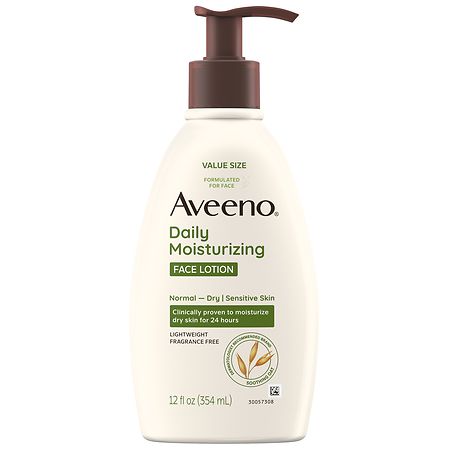

Aveeno Daily Moisture Face Lotion - 12 fl oz: Paraben-Free, Dye-Free, For Dry & Sensitive Skin, Cream
Analysis updated July 2026 · How Scout scores
At a glance
Summary
This face lotion contains beneficial ingredients like glycerin and oat kernel flour, which are known for their moisturizing properties. However, it also includes phenoxyethanol, a preservative that can be irritating to some individuals, and dimethicone, a silicone that may not be ideal for all skin types. The product is processed, which limits its score, but it remains free from parabens and synthetic dyes, making it a relatively safe choice for sensitive skin.
Key ingredients 17
Avena Sativa (Oat) Kernel FlourVery Good
Oat kernel flour is known for its soothing and anti-inflammatory properties, making it beneficial for sensitive skin. It helps to calm irritation and provides a protective barrier.
Risks
There are minimal risks, though individuals with oat allergies should avoid it.
Benefits
It soothes irritated skin and provides anti-inflammatory benefits.
GlycerinGood
Glycerin is a humectant that attracts moisture to the skin, helping to keep it hydrated. It is well-tolerated by most skin types and enhances the skin's natural barrier function.
Risks
There are minimal risks associated with glycerin, though it may cause irritation in very sensitive skin.
Benefits
Glycerin helps maintain skin hydration and improves skin barrier function.
Caprylic/Capric TriglycerideGood
This ingredient is an emollient derived from coconut oil and glycerin, providing a lightweight, non-greasy feel. It helps to moisturize and soften the skin.
Risks
There are minimal risks, though it may cause breakouts in acne-prone skin.
Benefits
It moisturizes and softens the skin without leaving a greasy residue.
WaterNeutral
Water is a common solvent used in cosmetic formulations. It helps dissolve other ingredients and provides a base for the lotion. It does not have any direct benefits or risks in skincare products.
Risks
There are no significant risks associated with water in skincare products.
Benefits
Water helps in the application and absorption of the lotion.
Dicaprylyl EtherNeutral
Dicaprylyl Ether is an emollient that provides a smooth application and a non-greasy feel. It is used to enhance the texture of skincare products.
Risks
There are no significant risks associated with dicaprylyl ether in skincare products.
Benefits
It improves the texture and spreadability of the lotion.
Cetyl AlcoholNeutral
Cetyl alcohol is a fatty alcohol used as an emollient and thickener in skincare products. It helps to stabilize formulations and improve texture.
Risks
There are minimal risks, though it may cause irritation in very sensitive skin.
Benefits
It improves the texture and stability of the lotion.
Cetearyl AlcoholNeutral
Cetearyl alcohol is a mixture of fatty alcohols used as an emollient and emulsifier. It helps to soften the skin and stabilize formulations.
Risks
There are minimal risks, though it may cause irritation in very sensitive skin.
Benefits
It softens the skin and stabilizes the lotion.
Palmitic AcidNeutral
Palmitic acid is a fatty acid used as an emollient and surfactant in skincare products. It helps to improve the texture and feel of the product.
Risks
There are minimal risks, though it may cause irritation in very sensitive skin.
Benefits
It improves the texture and feel of the lotion.
Stearic AcidNeutral
Stearic acid is a fatty acid used as an emulsifier and thickener in skincare products. It helps to stabilize formulations and improve texture.
Risks
There are minimal risks, though it may cause irritation in very sensitive skin.
Benefits
It stabilizes the lotion and improves its texture.
Caprylyl GlycolNeutral
Caprylyl glycol is a skin conditioning agent and preservative booster. It helps to improve the moisture content of the skin and enhance the efficacy of preservatives.
Risks
There are minimal risks, though it may cause irritation in very sensitive skin.
Benefits
It improves skin moisture and enhances preservative efficacy.
CarbomerNeutral
Carbomer is a thickening agent used to create gel-like textures in skincare products. It helps to stabilize formulations and improve texture.
Risks
There are minimal risks, though it may cause irritation in very sensitive skin.
Benefits
It stabilizes the lotion and improves its texture.
Ceteareth-20Neutral
Ceteareth-20 is an emulsifier used to blend oil and water-based ingredients. It helps to stabilize formulations and improve texture.
Risks
There are minimal risks, though it may cause irritation in very sensitive skin.
Benefits
It stabilizes the lotion and improves its texture.
Sodium HydroxideNeutral
Sodium hydroxide is used to adjust the pH of skincare products. It is used in very small amounts to ensure the product is safe for skin application.
Risks
In high concentrations, it can be irritating, but it is used in safe amounts in cosmetics.
Benefits
It helps to maintain the appropriate pH level of the lotion.
Sodium CitrateNeutral
Sodium citrate is used as a buffering agent to control the pH of skincare products. It helps to stabilize formulations and improve product safety.
Risks
There are minimal risks, though it may cause irritation in very sensitive skin.
Benefits
It stabilizes the lotion and maintains its pH balance.
Citric AcidNeutral
Citric acid is used to adjust the pH of skincare products and as a mild exfoliant. It helps to stabilize formulations and improve skin texture.
Risks
In high concentrations, it can be irritating, but it is used in safe amounts in cosmetics.
Benefits
It helps to maintain the appropriate pH level and can mildly exfoliate the skin.
DimethiconeBad
Occlusive silicone film-former — flagged under clean-beauty doctrine.
Risks
There are minimal risks, though it may cause breakouts in acne-prone skin.
Benefits
It provides a smooth application and helps to lock in moisture.
PhenoxyethanolBad
Phenoxyethanol is a preservative used to prevent microbial growth in cosmetics. It is considered a potential irritant and can cause allergic reactions in some individuals.
Risks
It may cause skin irritation and allergic reactions, especially in sensitive individuals.
Benefits
It helps to preserve the product and extend its shelf life.
Get the full breakdown in the Scout appTake Scout shopping
Scan any product to see lab results, healthy alternatives, and your personalized analysis.
Download on theApp Store GET IT ONGoogle PlayAmazon pricing & content
Amazon price as of . Product prices and availability are accurate as of the date/time indicated and are subject to change. Any price and availability information displayed on Amazon.com at the time of purchase will apply to the purchase of this product.
CERTAIN CONTENT THAT APPEARS ON THIS SITE COMES FROM AMAZON. THIS CONTENT IS PROVIDED “AS IS” AND IS SUBJECT TO CHANGE OR REMOVAL AT ANY TIME.