
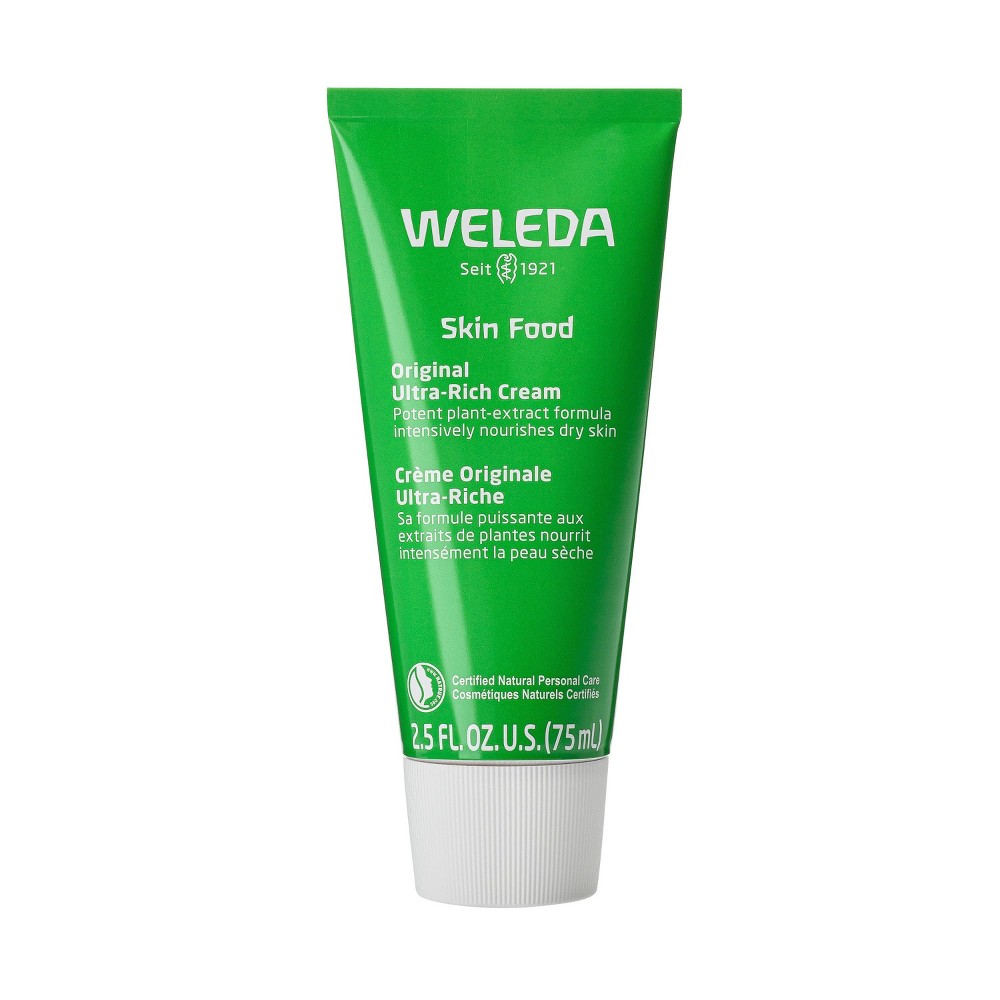
Weleda Skin Food Ultra-Rich Moisturizer Cream - 2.5 fl oz: For Dry Skin, Whole Body, Paraben-Free, Aluminum-Free
Analysis updated August 2026 · How Scout scores
At a glance
Summary
This moisturizer contains beneficial natural ingredients like sunflower seed oil, lanolin, and beeswax, which provide excellent moisturizing and protective properties. However, the presence of multiple fragrance components such as limonene, linalool, and geraniol, which can cause skin irritation, lowers its safety profile. The product is processed, and the inclusion of undisclosed fragrance compounds further impacts its overall rating.
Key ingredients 22
Helianthus Annuus (Sunflower) Seed OilVery Good
Sunflower seed oil is rich in essential fatty acids and vitamin E, which help to nourish and moisturize the skin. It is known for its emollient properties and ability to improve skin barrier function. It is a natural oil that is well-tolerated by most skin types.
Risks
There is a low risk of allergic reactions in individuals sensitive to sunflower oil.
Benefits
It provides nourishment and moisture, improving skin barrier function.
LanolinVery Good
Lanolin is a natural emollient derived from sheep's wool, known for its ability to deeply moisturize and protect the skin. It helps to prevent water loss and maintain skin hydration. It is particularly beneficial for dry and chapped skin.
Risks
Some individuals may experience allergic reactions to lanolin.
Benefits
It deeply moisturizes and protects the skin, preventing water loss.
Prunus Amygdalus Dulcis (Sweet Almond) OilVery Good
Sweet almond oil is a natural oil rich in vitamins A and E, known for its moisturizing and soothing properties. It helps to improve skin tone and texture. It is suitable for sensitive skin and helps to reduce inflammation.
Risks
There is a potential risk of allergic reactions in individuals with nut allergies.
Benefits
It moisturizes and soothes the skin, improving tone and texture.
Beeswax (Cera Alba)Very Good
Beeswax is a natural wax produced by honeybees, known for its ability to form a protective barrier on the skin. It helps to lock in moisture and protect the skin from environmental irritants. It is also known for its anti-inflammatory and antibacterial properties.
Risks
There is a low risk of allergic reactions to beeswax.
Benefits
It forms a protective barrier, locking in moisture and protecting the skin.
Chamomilla Recutita (Chamomile) Flower ExtractVery Good
Chamomile extract is known for its soothing and anti-inflammatory properties, making it ideal for sensitive and irritated skin. It contains antioxidants that help to protect the skin from environmental stressors. It is a natural botanical extract that enhances skin health.
Risks
There is a low risk of allergic reactions in individuals sensitive to chamomile.
Benefits
It soothes and protects the skin, providing anti-inflammatory benefits.
Calendula Officinalis Flower ExtractVery Good
Calendula extract is known for its healing and anti-inflammatory properties, making it beneficial for soothing irritated skin. It helps to promote skin regeneration and improve skin health. It is a natural botanical extract that enhances skin health.
Risks
There is a low risk of allergic reactions in individuals sensitive to calendula.
Benefits
It promotes healing and soothes irritated skin.
GlycerinGood
Glycerin is a humectant that attracts moisture to the skin, helping to keep it hydrated. It is widely used in skincare products for its moisturizing properties. It is suitable for all skin types and helps to improve skin barrier function.
Risks
There are no significant risks associated with glycerin.
Benefits
It attracts moisture to the skin, keeping it hydrated and improving barrier function.
Viola Tricolor (Pansy) ExtractGood
Pansy extract is known for its soothing and anti-inflammatory properties, making it beneficial for sensitive and irritated skin. It contains antioxidants that help to protect the skin from environmental damage. It is a natural botanical extract that enhances skin health.
Risks
There are no significant risks associated with pansy extract.
Benefits
It soothes and protects the skin, providing anti-inflammatory benefits.
Hydrolyzed BeeswaxGood
Hydrolyzed beeswax is a modified form of beeswax that provides emollient properties and helps to stabilize emulsions. It enhances the texture and feel of the product on the skin. It is beneficial for maintaining skin hydration.
Risks
There is a low risk of allergic reactions to beeswax.
Benefits
It provides emollient properties and stabilizes the product.
Rosmarinus Officinalis (Rosemary) Leaf ExtractGood
Rosemary leaf extract is rich in antioxidants and has anti-inflammatory properties, making it beneficial for protecting the skin from environmental damage. It helps to improve circulation and has astringent properties. It is a natural extract that enhances skin health.
Risks
There is a low risk of skin irritation in sensitive individuals.
Benefits
It protects the skin from damage and improves circulation.
ArginineGood
Arginine is an amino acid that helps to improve skin hydration and elasticity. It is used in skincare products for its moisturizing properties and ability to support collagen production. It is beneficial for maintaining healthy skin.
Risks
There are no significant risks associated with arginine.
Benefits
It improves skin hydration and supports collagen production.
WaterNeutral
Water is a common solvent used in cosmetics to dissolve other ingredients. It helps in the application and absorption of the product. It does not provide direct benefits or risks.
Risks
There are no significant risks associated with water in cosmetics.
Benefits
Water helps in the application and absorption of the product.
AlcoholNeutral
Alcohol is used in cosmetics as a solvent and to help other ingredients penetrate the skin. It can have a drying effect on the skin if used in high concentrations. In this formulation, it is likely used in small amounts to aid in product stability.
Risks
High concentrations can dry out the skin, but this is unlikely in this formulation.
Benefits
It helps other ingredients penetrate the skin and stabilizes the formulation.
Polyglyceryl-3 PolyricinoleateNeutral
Polyglyceryl-3 Polyricinoleate is an emulsifier used to blend oil and water-based ingredients. It is derived from castor oil and is considered safe for use in cosmetics. It helps to improve the texture and consistency of the product.
Risks
There are no significant risks associated with this ingredient.
Benefits
It improves the texture and consistency of the product.
Sorbitan OlivateNeutral
Sorbitan olivate is an emulsifier derived from olive oil, used to blend oil and water-based ingredients. It is considered safe and non-irritating for most skin types. It helps to improve the texture and stability of the product.
Risks
There are no significant risks associated with sorbitan olivate.
Benefits
It improves the texture and stability of the product.
Zinc SulfateNeutral
Zinc sulfate is used in cosmetics for its astringent and antimicrobial properties. It helps to reduce inflammation and can be beneficial for acne-prone skin. It is generally considered safe for topical use.
Risks
There is a low risk of skin irritation in sensitive individuals.
Benefits
It provides astringent and antimicrobial benefits, reducing inflammation.
LimoneneBad
Limonene is a fragrance component that can cause skin irritation and sensitization in some individuals. It is derived from citrus oils and is used for its pleasant scent. It can oxidize and become more irritating over time.
Risks
It can cause skin irritation and sensitization, especially when oxidized.
Benefits
It provides a pleasant citrus scent to the product.
LinaloolBad
Linalool is a fragrance component that can cause skin irritation and sensitization in some individuals. It is derived from essential oils and is used for its floral scent. It can oxidize and become more irritating over time.
Risks
It can cause skin irritation and sensitization, especially when oxidized.
Benefits
It provides a floral scent to the product.
GeraniolBad
Geraniol is a fragrance component that can cause skin irritation and sensitization in some individuals. It is derived from essential oils and is used for its rose-like scent. It can oxidize and become more irritating over time.
Risks
It can cause skin irritation and sensitization, especially when oxidized.
Benefits
It provides a rose-like scent to the product.
CitralBad
Citral is a fragrance component that can cause skin irritation and sensitization in some individuals. It is derived from citrus oils and is used for its lemon scent. It can oxidize and become more irritating over time.
Risks
It can cause skin irritation and sensitization, especially when oxidized.
Benefits
It provides a lemon scent to the product.
CoumarinBad
Coumarin is a fragrance component that can cause skin irritation and sensitization in some individuals. It is used for its sweet scent but can be problematic for sensitive skin. It can oxidize and become more irritating over time.
Risks
It can cause skin irritation and sensitization, especially when oxidized.
Benefits
It provides a sweet scent to the product.
Fragrance (Parfum)Very Bad
Fragrance is a common cause of skin irritation and allergic reactions in cosmetics. It is used to provide a pleasant scent to the product but can be problematic for sensitive skin. The exact composition of fragrance is often undisclosed, increasing the risk of irritation.
Risks
It can cause skin irritation and allergic reactions, especially in sensitive individuals.
Benefits
It provides a pleasant scent to the product.
Get the full breakdown in the Scout appTake Scout shopping
Scan any product to see lab results, healthy alternatives, and your personalized analysis.
Download on theApp Store GET IT ONGoogle PlayAmazon pricing & content
Amazon price as of . Product prices and availability are accurate as of the date/time indicated and are subject to change. Any price and availability information displayed on Amazon.com at the time of purchase will apply to the purchase of this product.
CERTAIN CONTENT THAT APPEARS ON THIS SITE COMES FROM AMAZON. THIS CONTENT IS PROVIDED “AS IS” AND IS SUBJECT TO CHANGE OR REMOVAL AT ANY TIME.