
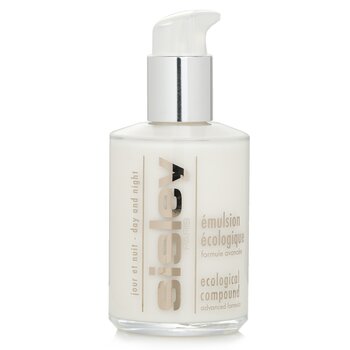
Sisley Paris Ecological Compound Advanced Formula
Analysis updated September 2026 · How Scout scores
At a glance
Summary
This product contains a variety of beneficial natural ingredients such as glycerin, sunflower seed oil, and shea butter, which are known for their moisturizing and skin-soothing properties. However, the presence of fragrance components like parfum, limonene, and benzyl benzoate, which can cause skin irritation and allergic reactions, detracts from its overall safety profile. The inclusion of these potential irritants, despite the otherwise beneficial formulation, impacts the product's rating.
Key ingredients 36
Helianthus Annuus (Sunflower) Seed OilVery Good
Sunflower seed oil is rich in essential fatty acids and vitamin E, which nourish and protect the skin. It is a natural emollient that helps to maintain the skin's barrier. It is beneficial for dry and sensitive skin.
Risks
There is a low risk of allergic reactions in individuals sensitive to sunflower oil.
Benefits
Sunflower seed oil provides antioxidant protection and improves skin hydration.
Butyrospermum Parkii (Shea) ButterVery Good
Shea butter is a natural fat extracted from the nuts of the shea tree, known for its moisturizing and anti-inflammatory properties. It is rich in vitamins A and E, which promote skin health. It is highly beneficial for dry and irritated skin.
Risks
There is a low risk of allergic reactions in individuals with nut allergies.
Benefits
Shea butter deeply moisturizes and soothes the skin.
Centella Asiatica Leaf ExtractVery Good
Centella Asiatica is a plant extract known for its soothing and healing properties. It is rich in antioxidants and promotes collagen production. It is beneficial for sensitive and damaged skin.
Risks
There is a low risk of allergic reactions in sensitive individuals.
Benefits
It helps to calm irritation and supports skin repair.
TocopherolVery Good
Tocopherol, or Vitamin E, is a powerful antioxidant that helps to protect the skin from environmental damage. It is known for its moisturizing and anti-aging properties. It is beneficial for all skin types.
Risks
There is a low risk of allergic reactions in sensitive individuals.
Benefits
It helps to protect and nourish the skin.
GlycerinGood
Glycerin is a humectant that attracts moisture to the skin, helping to keep it hydrated. It is widely used in skincare for its moisturizing properties. It enhances skin barrier function.
Risks
There are minimal risks associated with glycerin, though it may cause irritation in very sensitive skin.
Benefits
Glycerin helps maintain skin hydration and improves skin texture.
Arctium Majus Root ExtractGood
Arctium Majus, or burdock root extract, is known for its anti-inflammatory and antioxidant properties. It helps to soothe and purify the skin. It is beneficial for acne-prone and oily skin.
Risks
There is a low risk of allergic reactions in sensitive individuals.
Benefits
It helps to reduce inflammation and improve skin clarity.
Spiraea Ulmaria ExtractGood
Spiraea Ulmaria, or meadowsweet extract, is known for its astringent and anti-inflammatory properties. It helps to tighten pores and reduce redness. It is beneficial for oily and acne-prone skin.
Risks
There is a low risk of allergic reactions in sensitive individuals.
Benefits
It helps to refine pores and calm irritated skin.
Humulus Lupulus (Hops) ExtractGood
Hops extract is known for its soothing and anti-inflammatory properties. It helps to calm and condition the skin. It is beneficial for sensitive and irritated skin.
Risks
There is a low risk of allergic reactions in sensitive individuals.
Benefits
It helps to soothe and protect the skin.
Panax Ginseng Root ExtractGood
Ginseng root extract is known for its revitalizing and anti-aging properties. It helps to improve skin elasticity and reduce the appearance of fine lines. It is beneficial for mature and tired skin.
Risks
There is a low risk of allergic reactions in sensitive individuals.
Benefits
It helps to rejuvenate and energize the skin.
Equisetum Arvense ExtractGood
Equisetum Arvense, or horsetail extract, is known for its astringent and antioxidant properties. It helps to tighten pores and improve skin texture. It is beneficial for oily and acne-prone skin.
Risks
There is a low risk of allergic reactions in sensitive individuals.
Benefits
It helps to refine pores and protect the skin.
Rosmarinus Officinalis (Rosemary) Leaf ExtractGood
Rosemary leaf extract is known for its antioxidant and antimicrobial properties. It helps to protect the skin from environmental damage and reduce inflammation. It is beneficial for all skin types.
Risks
There is a low risk of allergic reactions in sensitive individuals.
Benefits
It helps to protect and purify the skin.
Glycine Soja (Soybean) Seed ExtractGood
Soybean seed extract is rich in proteins and antioxidants, which help to nourish and protect the skin. It is known for its moisturizing and anti-aging properties. It is beneficial for mature and dry skin.
Risks
There is a low risk of allergic reactions in individuals sensitive to soy.
Benefits
It helps to hydrate and rejuvenate the skin.
Glycine Soja (Soybean) OilGood
Soybean oil is rich in essential fatty acids and antioxidants, which help to nourish and protect the skin. It is known for its moisturizing and anti-aging properties. It is beneficial for mature and dry skin.
Risks
There is a low risk of allergic reactions in individuals sensitive to soy.
Benefits
It helps to hydrate and rejuvenate the skin.
Aqua/Water/EauNeutral
Water is a common solvent used in cosmetics to dissolve other ingredients. It is essential for the formulation but does not provide direct benefits or risks. It acts as a base for the product.
Risks
There are no direct risks associated with water in cosmetics.
Benefits
Water helps in the application and absorption of the product.
Isostearyl IsostearateNeutral
Isostearyl Isostearate is an emollient that helps to soften and smooth the skin. It is used to improve the texture and spreadability of the product. It is generally considered safe for use in cosmetics.
Risks
There are no significant risks associated with this ingredient.
Benefits
It enhances the texture and feel of the product on the skin.
Pentylene GlycolNeutral
Pentylene Glycol is a synthetic humectant and solvent that helps to retain moisture in the skin. It also acts as a preservative booster in formulations. It is generally considered safe for use in cosmetics.
Risks
There are minimal risks, though it may cause irritation in very sensitive skin.
Benefits
It enhances the moisturizing properties of the product.
Glyceryl Stearate CitrateNeutral
Glyceryl Stearate Citrate is an emulsifier that helps to blend oil and water components in formulations. It is derived from natural sources and is considered safe for use. It improves the stability and texture of the product.
Risks
There are no significant risks associated with this ingredient.
Benefits
It helps maintain the consistency and stability of the product.
Coco-Caprylate/CaprateNeutral
Coco-Caprylate/Caprate is an emollient derived from coconut oil and caprylic acid. It is used to enhance the spreadability and absorption of the product. It is considered safe for use in cosmetics.
Risks
There are no significant risks associated with this ingredient.
Benefits
It improves the texture and feel of the product on the skin.
Pentaerythrityl TetraisostearateNeutral
Pentaerythrityl Tetraisostearate is an emollient that helps to soften and smooth the skin. It is used to improve the texture and spreadability of the product. It is generally considered safe for use in cosmetics.
Risks
There are no significant risks associated with this ingredient.
Benefits
It enhances the texture and feel of the product on the skin.
Xanthan GumNeutral
Xanthan Gum is a natural thickening agent used to stabilize and thicken cosmetic formulations. It is derived from fermented sugars and is considered safe for use. It helps to improve the consistency of the product.
Risks
There are no significant risks associated with this ingredient.
Benefits
It helps to stabilize and thicken the product.
Butylene GlycolNeutral
Butylene Glycol is a humectant and solvent that helps to retain moisture in the skin. It also enhances the penetration of other ingredients. It is generally considered safe for use in cosmetics.
Risks
There are minimal risks, though it may cause irritation in very sensitive skin.
Benefits
It enhances the moisturizing properties of the product.
Glyceryl CaprylateNeutral
Glyceryl Caprylate is an emollient and emulsifier that helps to stabilize and soften the skin. It is derived from natural sources and is considered safe for use. It improves the texture and stability of the product.
Risks
There are no significant risks associated with this ingredient.
Benefits
It helps maintain the consistency and stability of the product.
CarbomerNeutral
Carbomer is a synthetic polymer used to thicken and stabilize cosmetic formulations. It helps to create a smooth and gel-like texture. It is considered safe for use in cosmetics.
Risks
There are no significant risks associated with this ingredient.
Benefits
It helps to stabilize and thicken the product.
EthylhexylglycerinNeutral
Ethylhexylglycerin is a preservative and skin conditioning agent. It helps to enhance the efficacy of other preservatives in the formulation. It is considered safe for use in cosmetics.
Risks
There are minimal risks, though it may cause irritation in very sensitive skin.
Benefits
It helps to preserve the product and condition the skin.
Citric AcidNeutral
Citric Acid is used to adjust the pH of cosmetic formulations. It is derived from citrus fruits and is considered safe for use. It helps to maintain the stability and efficacy of the product.
Risks
There are minimal risks, though it may cause irritation in very sensitive skin.
Benefits
It helps to maintain the pH balance of the product.
Sodium PhytateNeutral
Sodium Phytate is a chelating agent that helps to stabilize cosmetic formulations by binding metal ions. It is derived from plant sources and is considered safe for use. It helps to improve the stability of the product.
Risks
There are no significant risks associated with this ingredient.
Benefits
It helps to stabilize and preserve the product.
Sodium HydroxideNeutral
Sodium Hydroxide is used to adjust the pH of cosmetic formulations. It is a strong alkaline compound that is used in small amounts. It helps to maintain the stability and efficacy of the product.
Risks
In high concentrations, it can be irritating, but it is used in safe amounts in cosmetics.
Benefits
It helps to maintain the pH balance of the product.
Benzoic AcidNeutral
Benzoic Acid is a preservative used to prevent microbial growth in cosmetic products. It is considered safe for use in low concentrations. It helps to extend the shelf life of the product.
Risks
There are minimal risks, though it may cause irritation in very sensitive skin.
Benefits
It helps to preserve the product and prevent spoilage.
CoumarinNeutral
Coumarin is a fragrance component used to impart a sweet scent to cosmetic products. It is naturally occurring in some plants and is considered safe in low concentrations. It is used to enhance the fragrance profile of the product.
Risks
There is a low risk of allergic reactions in sensitive individuals.
Benefits
It provides a sweet scent to the product.
Potassium SorbateBad
Synthetic preservative — flagged in daily-use products.
Risks
There are minimal risks, though it may cause irritation in very sensitive skin.
Benefits
It helps to preserve the product and prevent spoilage.
Sodium BenzoateBad
Synthetic preservative that can form benzene in the presence of vitamin C.
Risks
There are minimal risks, though it may cause irritation in very sensitive skin.
Benefits
It helps to preserve the product and prevent spoilage.
LimoneneBad
Limonene is a fragrance component that can cause skin irritation and sensitization. It is a common allergen and is often criticized for its potential to cause allergic reactions. It is considered a potential irritant in skincare.
Risks
Limonene can cause allergic reactions and irritation, especially in sensitive skin.
Benefits
It provides a citrus scent to the product.
Benzyl BenzoateBad
Benzyl Benzoate is a fragrance component that can cause skin irritation and sensitization. It is a common allergen and is often criticized for its potential to cause allergic reactions. It is considered a potential irritant in skincare.
Risks
Benzyl Benzoate can cause allergic reactions and irritation, especially in sensitive skin.
Benefits
It provides a pleasant scent to the product.
CitralBad
Processed additive flagged under Scout's ingredient doctrine.
Risks
There is a low risk of allergic reactions in sensitive individuals.
Benefits
It provides a lemon scent to the product.
Benzyl AlcoholBad
Processed additive flagged under Scout's ingredient doctrine.
Risks
There are minimal risks, though it may cause irritation in very sensitive skin.
Benefits
It helps to preserve the product and improve its texture.
Parfum/FragranceVery Bad
Fragrance is used to impart scent to cosmetic products but can cause skin irritation and allergic reactions. It is a common sensitizer and is often criticized for its lack of transparency. It is considered a potential irritant in skincare.
Risks
Fragrance can cause allergic reactions and irritation, especially in sensitive skin.
Benefits
It provides a pleasant scent to the product.
Get the full breakdown in the Scout appTake Scout shopping
Scan any product to see lab results, healthy alternatives, and your personalized analysis.
Download on theApp Store GET IT ONGoogle PlayAmazon pricing & content
Amazon price as of . Product prices and availability are accurate as of the date/time indicated and are subject to change. Any price and availability information displayed on Amazon.com at the time of purchase will apply to the purchase of this product.
CERTAIN CONTENT THAT APPEARS ON THIS SITE COMES FROM AMAZON. THIS CONTENT IS PROVIDED “AS IS” AND IS SUBJECT TO CHANGE OR REMOVAL AT ANY TIME.