
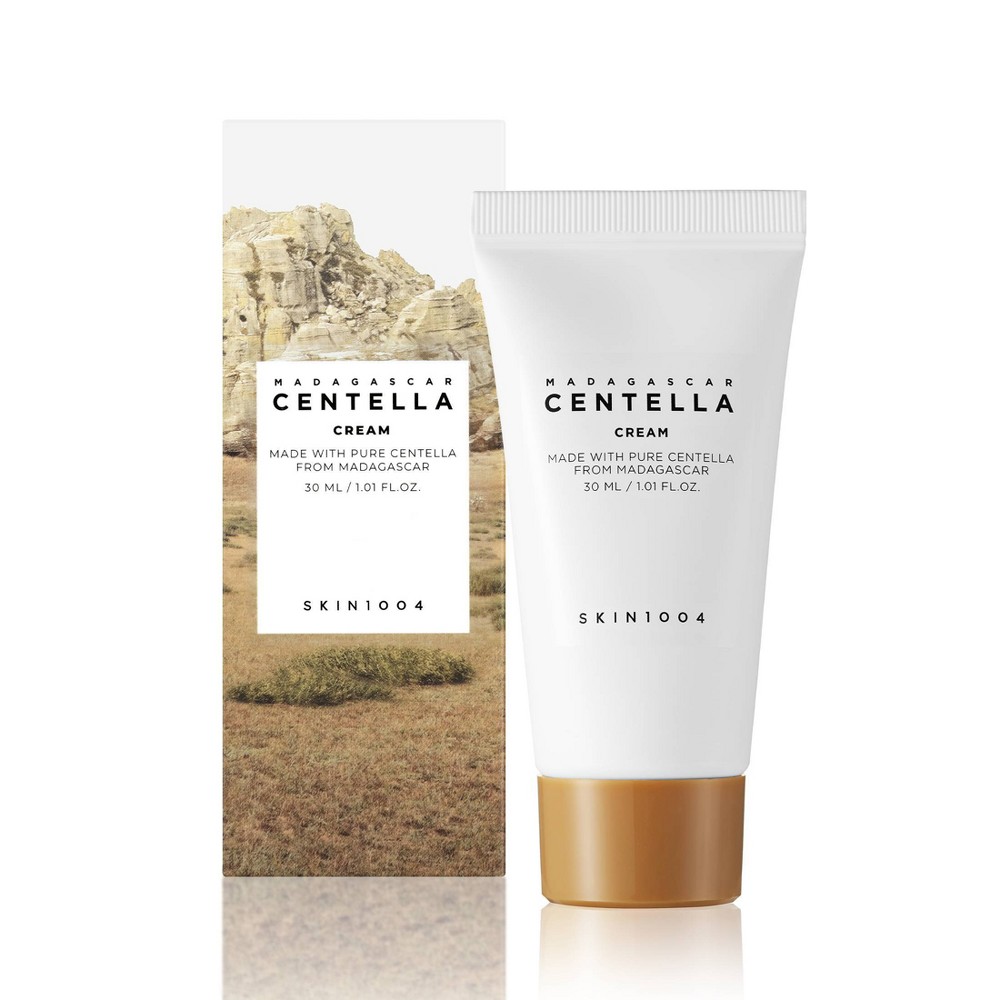

SKIN1004 Madagascar Centella Cream: Unscented Korean Skincare for Sensitive, Normal Skin - Travel Size, 30ml
Analysis updated August 2026 · How Scout scores
At a glance
Summary
This skincare product contains a variety of beneficial ingredients such as Centella Asiatica Extract, Panthenol, and Squalene, which are known for their soothing, moisturizing, and protective properties. The formula is free from harsh surfactants and synthetic fragrances, which enhances its safety profile. However, the presence of some synthetic compounds and the level of processing slightly limit its score, despite the overall clean and effective ingredient list.
Key ingredients 42
Centella Asiatica ExtractVery Good
Centella Asiatica Extract is known for its soothing and healing properties. It is often used to calm irritated skin and promote wound healing.
Risks
There are minimal risks, though allergic reactions are possible in rare cases.
Benefits
It helps reduce inflammation and supports skin repair.
PanthenolVery Good
Panthenol is a form of Vitamin B5 that acts as a moisturizer and skin conditioner. It is known for its ability to improve skin hydration and elasticity.
Risks
There are no significant risks associated with panthenol.
Benefits
It enhances skin barrier function and soothes irritated skin.
SqualeneVery Good
Squalene is a natural emollient that mimics the skin's natural oils. It is highly effective in moisturizing and protecting the skin.
Risks
There are minimal risks, though it may cause breakouts in acne-prone skin.
Benefits
It provides deep hydration and helps maintain skin suppleness.
Beta-GlucanVery Good
Beta-Glucan is known for its soothing and anti-inflammatory properties. It helps calm irritated skin and enhance skin barrier function.
Risks
There are no significant risks associated with beta-glucan.
Benefits
It soothes the skin and supports skin repair and protection.
Ceramide EOPVery Good
Ceramide EOP is a lipid that helps restore the skin barrier. It is essential for maintaining skin hydration and protection.
Risks
There are no significant risks associated with ceramides.
Benefits
It strengthens the skin barrier and improves moisture retention.
Ceramide NSVery Good
Ceramide NS is a lipid that helps restore the skin barrier. It is essential for maintaining skin hydration and protection.
Risks
There are no significant risks associated with ceramides.
Benefits
It strengthens the skin barrier and improves moisture retention.
Ceramide APVery Good
Ceramide AP is a lipid that helps restore the skin barrier. It is essential for maintaining skin hydration and protection.
Risks
There are no significant risks associated with ceramides.
Benefits
It strengthens the skin barrier and improves moisture retention.
GlycerinGood
Glycerin is a humectant that attracts moisture to the skin. It is widely used in skincare for its hydrating properties.
Risks
There are no significant risks associated with glycerin.
Benefits
It helps maintain skin hydration and improves skin barrier function.
TrehaloseGood
Trehalose is a sugar-based humectant that helps retain moisture in the skin. It is known for its ability to protect skin from dehydration.
Risks
There are no significant risks associated with trehalose.
Benefits
It provides long-lasting hydration and protects skin from environmental stress.
Dipotassium GlycyrrhizateGood
Dipotassium Glycyrrhizate is derived from licorice root and is known for its soothing and anti-inflammatory properties. It helps calm irritated skin and reduce redness.
Risks
There are minimal risks, though allergic reactions are possible in rare cases.
Benefits
It soothes the skin and helps reduce inflammation and redness.
Tranexamic AcidGood
Tranexamic Acid is used for its skin-brightening and anti-inflammatory properties. It helps reduce the appearance of dark spots and hyperpigmentation.
Risks
There are minimal risks, though it may cause irritation in sensitive skin.
Benefits
It helps even out skin tone and reduce hyperpigmentation.
Leuconostoc/Radish Root Ferment FiltrateGood
This ferment filtrate is used for its antimicrobial and moisturizing properties. It helps preserve the product and hydrate the skin.
Risks
There are minimal risks, though it may cause irritation in sensitive skin.
Benefits
It provides natural preservation and enhances skin hydration.
Sodium HyaluronateGood
Sodium Hyaluronate is a form of hyaluronic acid known for its excellent hydrating properties. It helps retain moisture and plump the skin.
Risks
There are no significant risks associated with sodium hyaluronate.
Benefits
It provides intense hydration and improves skin elasticity.
Ceramide NPGood
Ceramide NP is a lipid that helps restore the skin barrier. It is essential for maintaining skin hydration and protection.
Risks
There are no significant risks associated with ceramides.
Benefits
It strengthens the skin barrier and improves moisture retention.
PhytosphingosineGood
Phytosphingosine is a lipid that helps maintain the skin barrier and has antimicrobial properties. It supports skin health and protection.
Risks
There are minimal risks, though it may cause irritation in sensitive skin.
Benefits
It enhances skin barrier function and provides antimicrobial benefits.
Hydrogenated LecithinGood
Hydrogenated Lecithin is an emollient and emulsifier that helps improve skin hydration and texture. It supports the stability of formulations.
Risks
There are minimal risks, though it may cause irritation in sensitive skin.
Benefits
It enhances skin hydration and improves product texture.
CholesterolGood
Cholesterol is a lipid that helps maintain the skin barrier and improve hydration. It is essential for healthy skin function.
Risks
There are no significant risks associated with cholesterol.
Benefits
It strengthens the skin barrier and enhances moisture retention.
WaterNeutral
Water is a common solvent used in skincare products. It helps dissolve other ingredients and provides a base for the formulation.
Risks
There are no significant risks associated with water in skincare products.
Benefits
Water helps hydrate the skin by providing moisture.
Cetyl EthylhexanoateNeutral
Cetyl Ethylhexanoate is an emollient that helps to soften and smooth the skin. It is often used to improve the texture of skincare products.
Risks
There are minimal risks associated with this ingredient, though it may cause irritation in very sensitive individuals.
Benefits
It provides a silky feel to the skin and helps lock in moisture.
Pentylene GlycolNeutral
Standard formulation ingredient — neither beneficial nor harmful at typical use.
Risks
It may cause mild irritation in sensitive skin types.
Benefits
It improves skin hydration and enhances the efficacy of active ingredients.
PropanediolNeutral
Propanediol is a glycol that acts as a solvent and humectant in skincare products. It helps improve the texture and absorption of formulations.
Risks
It may cause mild irritation in sensitive individuals.
Benefits
It enhances the penetration of active ingredients and provides moisture.
Dipropylene GlycolNeutral
Dipropylene Glycol is a solvent and viscosity-decreasing agent. It is used to improve the spreadability of skincare products.
Risks
There are minimal risks, though it may cause irritation in sensitive skin.
Benefits
It helps improve the texture and application of products.
CyclomethiconeNeutral
Cyclomethicone is a type of silicone used to provide a silky, smooth feel. It helps improve the spreadability of products.
Risks
There are minimal risks, though it may cause build-up on the skin with prolonged use.
Benefits
It provides a smooth application and enhances the feel of the product.
1, 2-HexanediolNeutral
1, 2-Hexanediol is a synthetic preservative and moisture-binding agent. It helps stabilize formulations and retain moisture.
Risks
There are minimal risks, though it may cause irritation in sensitive skin.
Benefits
It helps preserve the product and maintain skin hydration.
Caprylyl MethiconeNeutral
Caprylyl Methicone is a silicone-based emollient that provides a silky feel. It is used to improve the texture and spreadability of products.
Risks
There are minimal risks, though it may cause build-up on the skin with prolonged use.
Benefits
It enhances the application and feel of skincare products.
C12-14 Pareth-12Neutral
C12-14 Pareth-12 is a surfactant and emulsifier used to stabilize formulations. It helps blend oil and water-based ingredients.
Risks
There are minimal risks, though it may cause irritation in sensitive skin.
Benefits
It helps maintain the stability and consistency of products.
CarbomerNeutral
Carbomer is a thickening agent used to create gel-like textures. It helps stabilize and thicken formulations.
Risks
There are minimal risks, though it may cause irritation in sensitive skin.
Benefits
It provides a smooth texture and enhances product stability.
TromethamineNeutral
Tromethamine is a pH adjuster used to maintain the stability of formulations. It helps balance the acidity of products.
Risks
There are minimal risks, though it may cause irritation in sensitive skin.
Benefits
It helps maintain the efficacy and stability of skincare products.
Ammonium Acryloyldimethyltaurate/VP CopolymerNeutral
This copolymer is used as a thickening and stabilizing agent. It helps improve the texture and consistency of products.
Risks
There are minimal risks, though it may cause irritation in sensitive skin.
Benefits
It provides a smooth texture and enhances product stability.
C30-45 Alkyl Cetearyl Dimethicone CrosspolymerNeutral
This crosspolymer is used as a thickening and stabilizing agent. It helps improve the texture and consistency of products.
Risks
There are minimal risks, though it may cause build-up on the skin with prolonged use.
Benefits
It provides a smooth texture and enhances product stability.
Xanthan GumNeutral
Xanthan Gum is a natural thickening agent used to stabilize formulations. It helps improve the texture and consistency of products.
Risks
There are minimal risks, though it may cause irritation in sensitive skin.
Benefits
It provides a smooth texture and enhances product stability.
Mentha Piperita Leaf ExtractNeutral
Mentha Piperita Leaf Extract is used for its cooling and soothing properties. It is often included for its refreshing scent and feel.
Risks
It may cause irritation or allergic reactions in sensitive skin.
Benefits
It provides a cooling sensation and can soothe irritated skin.
Zingiber Officinale Root ExtractNeutral
Zingiber Officinale Root Extract is used for its antioxidant and anti-inflammatory properties. It is often included to help soothe and protect the skin.
Risks
There are minimal risks, though it may cause irritation in sensitive skin.
Benefits
It helps reduce inflammation and provides antioxidant protection.
Butylene GlycolNeutral
Butylene Glycol is a humectant and solvent used to improve the texture and absorption of products. It helps retain moisture in the skin.
Risks
There are minimal risks, though it may cause irritation in sensitive skin.
Benefits
It enhances skin hydration and improves product spreadability.
EthylhexylglycerinNeutral
Ethylhexylglycerin is a preservative and skin-conditioning agent. It is used to enhance the efficacy of other preservatives.
Risks
There are minimal risks, though it may cause irritation in sensitive skin.
Benefits
It helps preserve the product and provides mild skin conditioning.
Coptis Chinensis Root ExtractNeutral
Coptis Chinensis Root Extract is used for its antioxidant and anti-inflammatory properties. It helps protect the skin from environmental stressors.
Risks
There are minimal risks, though it may cause irritation in sensitive skin.
Benefits
It provides antioxidant protection and helps soothe the skin.
Theobroma Cacao ExtractNeutral
Theobroma Cacao Extract is used for its antioxidant properties. It helps protect the skin from free radical damage.
Risks
There are minimal risks, though it may cause irritation in sensitive skin.
Benefits
It provides antioxidant protection and helps improve skin texture.
DextrinNeutral
Dextrin is used as a binding agent and texture enhancer. It helps improve the consistency of formulations.
Risks
There are minimal risks, though it may cause irritation in sensitive skin.
Benefits
It helps stabilize formulations and improve texture.
Biosaccharide Gum-1Neutral
Biosaccharide Gum-1 is used for its moisturizing and soothing properties. It helps improve skin hydration and comfort.
Risks
There are minimal risks, though it may cause irritation in sensitive skin.
Benefits
It provides long-lasting hydration and soothes the skin.
Cetearyl AlcoholNeutral
Cetearyl Alcohol is a fatty alcohol used as an emollient and thickener. It helps improve the texture and stability of products.
Risks
There are minimal risks, though it may cause irritation in sensitive skin.
Benefits
It provides a smooth texture and enhances product stability.
Stearic AcidNeutral
Stearic Acid is a fatty acid used as an emulsifier and thickener. It helps stabilize formulations and improve texture.
Risks
There are minimal risks, though it may cause irritation in sensitive skin.
Benefits
It provides a smooth texture and enhances product stability.
Disodium EDTABad
Processed additive flagged under Scout's ingredient doctrine.
Risks
There are minimal risks, though it may cause irritation in sensitive skin.
Benefits
It enhances product stability and shelf life.
Processing
Processed Foods
Get the full breakdown in the Scout appTake Scout shopping
Scan any product to see lab results, healthy alternatives, and your personalized analysis.
Download on theApp Store GET IT ONGoogle PlayAmazon pricing & content
Amazon price as of . Product prices and availability are accurate as of the date/time indicated and are subject to change. Any price and availability information displayed on Amazon.com at the time of purchase will apply to the purchase of this product.
CERTAIN CONTENT THAT APPEARS ON THIS SITE COMES FROM AMAZON. THIS CONTENT IS PROVIDED “AS IS” AND IS SUBJECT TO CHANGE OR REMOVAL AT ANY TIME.