



At a glance
Summary
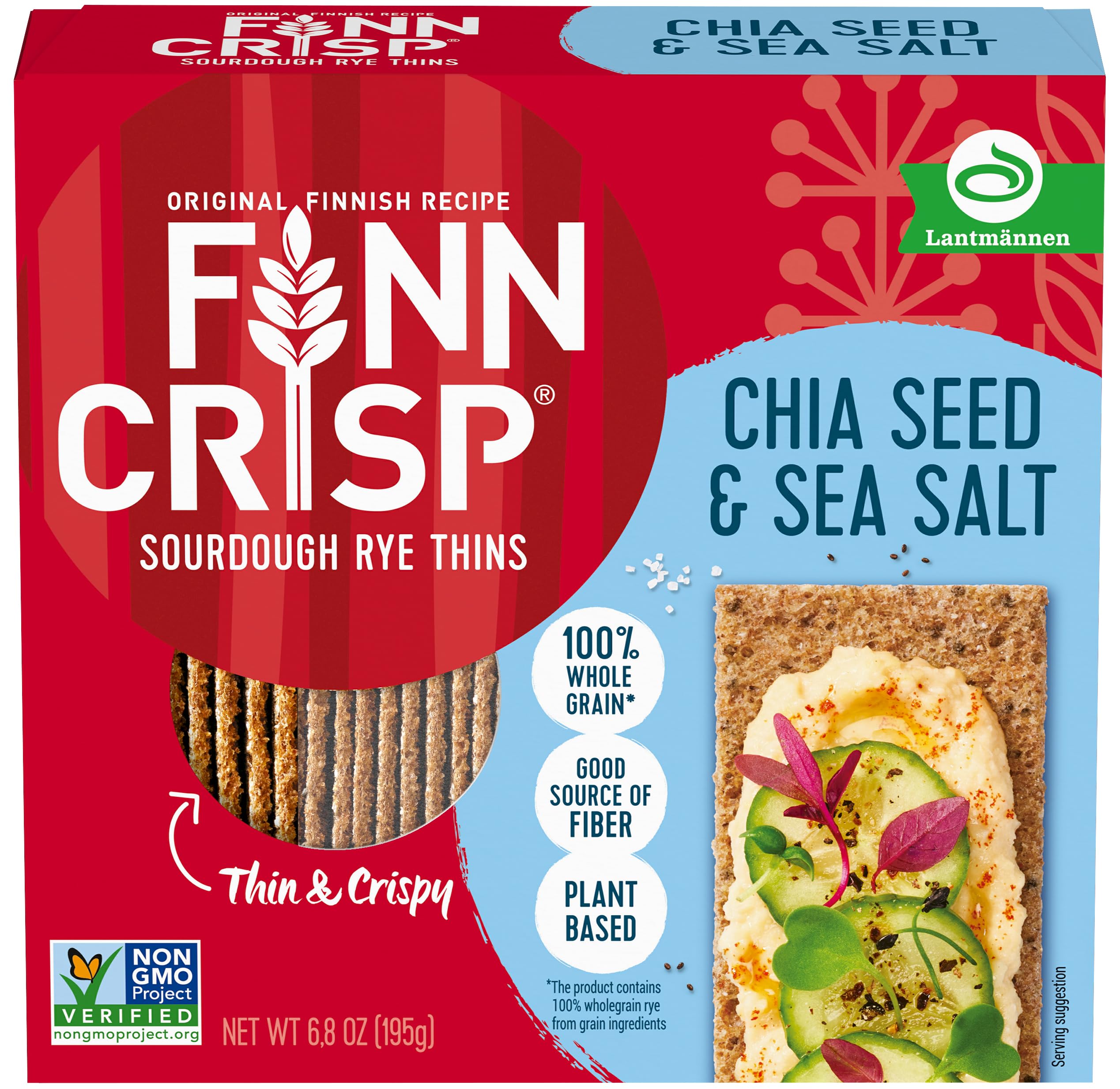
Sourdough Rye Thins are made with whole grain rye, which is a nutrient-dense ingredient rich in fiber and essential nutrients, contributing positively to digestive health. The product has a simple ingredient list with no harmful additives, but its processing level limits the score despite the clean label.
Key ingredients 5
Whole grain ryeGood
Whole grain rye is a nutrient-dense ingredient rich in fiber and essential nutrients. It is minimally processed, retaining its natural vitamins and minerals. Compared to refined grains, whole grain rye offers better digestive health benefits.
Benefits
Rich in dietary fiber, which supports digestive health and may help regulate blood sugar levels. Contains essential nutrients like magnesium and phosphorus.
FlourNeutral
Flour is a basic ingredient used in many baked goods. It provides carbohydrates and some protein but lacks the fiber and nutrients found in whole grains. The nutritional value depends on the type of flour used, with whole grain options being more beneficial.
Risks
Refined flour may contribute to blood sugar spikes if consumed in excess.
Benefits
Provides energy through carbohydrates and can be a source of protein depending on the type.
WaterNeutral
Water is a fundamental ingredient in baking, used to hydrate and bind ingredients. It is essential for the dough formation process. Water itself does not provide nutritional value but is crucial for the texture and structure of baked goods.
Benefits
Essential for hydration and plays a key role in the baking process.
SaltNeutral
Salt is used to enhance flavor and act as a preservative in baked goods. It is a common culinary ingredient but should be consumed in moderation. Excessive salt intake can lead to health issues such as high blood pressure.
Risks
High sodium intake can contribute to hypertension and cardiovascular issues.
Benefits
Enhances flavor and acts as a natural preservative in food products.
YeastNeutral
Yeast is a microorganism used in baking to leaven dough, providing texture and flavor. It is a natural ingredient that contributes to the fermentation process. Yeast itself does not have significant nutritional value but is essential for bread-making.
Benefits
Facilitates the fermentation process, contributing to the texture and flavor of baked goods.
Processing
Processed Foods
Get the full breakdown in the Scout appTake Scout shopping
Scan any product to see lab results, healthy alternatives, and your personalized analysis.
Download on theApp Store GET IT ONGoogle Play