
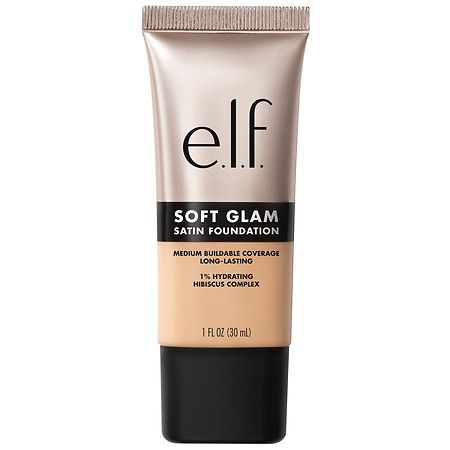


e.l.f. Soft Glam Satin Foundation - 21 Light Neutral - 1 fl oz: Paraben-Free, Vegan, Medium Coverage, Liquid Form
Analysis updated September 2026 · How Scout scores
At a glance
Summary
This foundation contains several beneficial ingredients such as glycerin, coco-caprylate/caprate, and various fruit extracts that provide moisturizing and antioxidant benefits. However, the presence of phenoxyethanol, a preservative that can cause irritation, slightly lowers the score. The product is mostly composed of safe ingredients with a few minor concerns, resulting in a balanced rating.
Key ingredients 36
GlycerinGood
Glycerin is a humectant that attracts moisture to the skin, helping to keep it hydrated. It is widely used in skincare for its moisturizing properties. It is considered safe and beneficial for most skin types.
Risks
Rarely, it may cause irritation in sensitive individuals.
Benefits
Helps to maintain skin hydration and improve skin barrier function.
Coco-Caprylate/CaprateGood
Coco-Caprylate/Caprate is an emollient derived from coconut oil and caprylic acid. It provides a silky feel and helps to soften the skin. It is considered safe and beneficial for skin conditioning.
Risks
Minimal risk of irritation or allergic reaction.
Benefits
Improves skin softness and provides a smooth application.
EthylhexylglycerinGood
Ethylhexylglycerin is a skin conditioning agent and preservative enhancer. It helps to improve the efficacy of preservatives and provides moisturizing benefits. It is considered safe and beneficial for use in cosmetics.
Risks
Low risk of irritation or allergic reaction.
Benefits
Enhances preservation and provides moisturizing benefits.
Hibiscus Sabdariffa ExtractGood
Hibiscus Sabdariffa Extract is a botanical ingredient known for its antioxidant properties. It helps to protect the skin from environmental damage and improve skin health. It is considered safe and beneficial for use in cosmetics.
Risks
Low risk of irritation or allergic reaction.
Benefits
Provides antioxidant protection and improves skin health.
Lycium Chinense Fruit ExtractGood
Lycium Chinense Fruit Extract, also known as goji berry extract, is rich in antioxidants and vitamins. It helps to protect the skin from environmental damage and improve skin health. It is considered safe and beneficial for use in cosmetics.
Risks
Low risk of irritation or allergic reaction.
Benefits
Provides antioxidant protection and improves skin health.
Psidium Guajava Fruit ExtractGood
Psidium Guajava Fruit Extract, or guava extract, is rich in antioxidants and vitamins. It helps to protect the skin from environmental damage and improve skin health. It is considered safe and beneficial for use in cosmetics.
Risks
Low risk of irritation or allergic reaction.
Benefits
Provides antioxidant protection and improves skin health.
Vaccinium Angustifolium (Blueberry) Fruit ExtractGood
Blueberry Fruit Extract is rich in antioxidants and vitamins, providing protection against environmental damage. It helps to improve skin health and appearance. It is considered safe and beneficial for use in cosmetics.
Risks
Low risk of irritation or allergic reaction.
Benefits
Provides antioxidant protection and improves skin health.
Water (Aqua)Neutral
Water is a common solvent used in cosmetics to dissolve other ingredients. It helps in the application and absorption of the product. It does not provide direct benefits or risks.
Benefits
Essential for dissolving and mixing other ingredients.
IsododecaneNeutral
Isododecane is a hydrocarbon used for its lightweight and non-greasy feel. It helps in the smooth application of the product. It is generally considered safe for use in cosmetics.
Risks
May cause mild irritation if used in high concentrations.
Benefits
Provides a lightweight, non-greasy feel to the product.
Cetyl PEG/PPG-10/1 DimethiconeNeutral
Cetyl PEG/PPG-10/1 Dimethicone is a silicone-based surfactant that helps to emulsify and stabilize formulations. It provides a smooth application and enhances the feel of the product. It is considered safe for use in cosmetics.
Risks
Potential for mild irritation in sensitive individuals.
Benefits
Improves product stability and application.
C12-15 Alkyl BenzoateNeutral
C12-15 Alkyl Benzoate is an emollient that provides a silky feel and helps to soften the skin. It is used to improve the texture and spreadability of the product. It is generally considered safe for use in cosmetics.
Risks
Low risk of irritation or allergic reaction.
Benefits
Enhances product texture and provides a smooth application.
Tridecyl TrimellitateNeutral
Tridecyl Trimellitate is an emollient that helps to soften and condition the skin. It is used to improve the texture and feel of the product. It is considered safe for use in cosmetics.
Risks
Minimal risk of irritation or allergic reaction.
Benefits
Improves skin softness and product texture.
Sorbitan SesquioleateNeutral
Sorbitan Sesquioleate is an emulsifier that helps to blend oil and water-based ingredients. It improves the stability and consistency of the product. It is generally considered safe for use in cosmetics.
Risks
Low risk of irritation or allergic reaction.
Benefits
Enhances product stability and consistency.
SilicaNeutral
Silica is used as an absorbent and anti-caking agent in cosmetics. It helps to control shine and improve the texture of the product. It is generally considered safe for use in cosmetics.
Risks
Inhalation of fine silica particles can be harmful.
Benefits
Controls shine and improves product texture.
Boron NitrideNeutral
Boron Nitride is used to improve the texture and application of cosmetics. It provides a silky feel and enhances the spreadability of the product. It is considered safe for use in cosmetics.
Risks
Minimal risk of irritation or allergic reaction.
Benefits
Improves product texture and application.
Magnesium StearateNeutral
Magnesium Stearate is used as a lubricant and anti-caking agent in cosmetics. It helps to improve the texture and consistency of the product. It is generally considered safe for use in cosmetics.
Risks
Low risk of irritation or allergic reaction.
Benefits
Enhances product texture and consistency.
Magnesium SulfateNeutral
Magnesium Sulfate is used as a bulking agent and to improve the texture of cosmetics. It helps to enhance the consistency and feel of the product. It is considered safe for use in cosmetics.
Risks
Minimal risk of irritation or allergic reaction.
Benefits
Improves product texture and consistency.
Disteardimonium HectoriteNeutral
Disteardimonium Hectorite is used as a thickening agent and to improve the texture of cosmetics. It helps to stabilize formulations and enhance the feel of the product. It is considered safe for use in cosmetics.
Risks
Low risk of irritation or allergic reaction.
Benefits
Improves product texture and stability.
PEG/PPG-15/15 DimethiconeNeutral
This ingredient is used as an emulsifier and to improve the texture of cosmetics. It helps to blend ingredients and enhance the feel of the product. It is generally considered safe for use in cosmetics.
Risks
Potential for mild irritation in sensitive individuals.
Benefits
Enhances product texture and consistency.
TrimethylsiloxysilicateNeutral
Trimethylsiloxysilicate is used to form a flexible film on the skin, providing long-lasting wear. It helps to improve the durability and application of the product. It is considered safe for use in cosmetics.
Risks
May cause mild irritation in sensitive skin types.
Benefits
Improves product durability and application.
Diisostearyl MalateNeutral
Diisostearyl Malate is an emollient that helps to soften and condition the skin. It is used to improve the texture and feel of the product. It is considered safe for use in cosmetics.
Risks
Minimal risk of irritation or allergic reaction.
Benefits
Improves skin softness and product texture.
Silica Dimethyl SilylateNeutral
Silica Dimethyl Silylate is used as a thickening agent and to improve the texture of cosmetics. It helps to enhance the consistency and feel of the product. It is considered safe for use in cosmetics.
Risks
Inhalation of fine particles can be harmful.
Benefits
Improves product texture and consistency.
Aluminum HydroxideNeutral
Aluminum Hydroxide is used as a colorant and to improve the texture of cosmetics. It helps to enhance the consistency and feel of the product. It is generally considered safe for use in cosmetics.
Risks
Low risk of irritation or allergic reaction.
Benefits
Enhances product texture and consistency.
TriethoxycaprylylsilaneNeutral
Triethoxycaprylylsilane is used as a surface modifier to improve the dispersion of pigments in cosmetics. It helps to enhance the texture and application of the product. It is considered safe for use in cosmetics.
Risks
Minimal risk of irritation or allergic reaction.
Benefits
Improves pigment dispersion and product application.
Caprylyl GlycolNeutral
Standard formulation ingredient — neither beneficial nor harmful at typical use.
Risks
Low risk of irritation or allergic reaction.
Benefits
Helps to maintain skin hydration and improve product preservation.
ErythritolNeutral
Erythritol is used as a humectant and skin conditioning agent in cosmetics. It helps to retain moisture and improve the texture of the product. It is considered safe for use in cosmetics.
Risks
Minimal risk of irritation or allergic reaction.
Benefits
Helps to maintain skin hydration and improve product texture.
Butylene GlycolNeutral
Butylene Glycol is a humectant and solvent used to retain moisture and improve product texture. It helps to enhance the application and feel of the product. It is generally considered safe for use in cosmetics.
Risks
May cause irritation in sensitive skin types.
Benefits
Helps to maintain skin hydration and improve product consistency.
HydroxyacetophenoneNeutral
Hydroxyacetophenone is an antioxidant and preservative used to enhance product stability. It helps to protect the product from degradation and improve shelf life. It is considered safe for use in cosmetics.
Risks
Low risk of irritation or allergic reaction.
Benefits
Enhances product stability and provides antioxidant protection.
Titanium Dioxide (CI 77891)Neutral
Titanium Dioxide is used as a pigment and UV filter in cosmetics. It helps to provide coverage and protect the skin from UV radiation. It is generally considered safe for use in cosmetics.
Risks
Inhalation of fine particles can be harmful.
Benefits
Provides coverage and UV protection.
Yellow Iron Oxide (CI 77492)Neutral
Yellow Iron Oxide is used as a pigment in cosmetics to provide color. It is stable and non-reactive, making it safe for use in cosmetics. It is generally considered safe for use in cosmetics.
Risks
Low risk of irritation or allergic reaction.
Benefits
Provides stable and safe color to cosmetics.
Red Iron Oxide (CI 77491)Neutral
Red Iron Oxide is used as a pigment in cosmetics to provide color. It is stable and non-reactive, making it safe for use in cosmetics. It is generally considered safe for use in cosmetics.
Risks
Low risk of irritation or allergic reaction.
Benefits
Provides stable and safe color to cosmetics.
Black Iron Oxide (CI 77499)Neutral
Black Iron Oxide is used as a pigment in cosmetics to provide color. It is stable and non-reactive, making it safe for use in cosmetics. It is generally considered safe for use in cosmetics.
Risks
Low risk of irritation or allergic reaction.
Benefits
Provides stable and safe color to cosmetics.
DimethiconeBad
Occlusive silicone film-former — flagged under clean-beauty doctrine.
Risks
May cause breakouts in acne-prone skin due to occlusive properties.
Benefits
Improves product texture and helps retain skin moisture.
Propylene GlycolBad
Processed additive flagged under Scout's ingredient doctrine.
Risks
May cause irritation in sensitive skin types.
Benefits
Helps to maintain skin hydration and improve product consistency.
Dimethicone/Vinyl Dimethicone CrosspolymerBad
Processed additive flagged under Scout's ingredient doctrine.
Risks
May cause breakouts in acne-prone skin due to occlusive properties.
Benefits
Improves product texture and application.
PhenoxyethanolBad
Phenoxyethanol is a preservative used to prevent microbial growth in cosmetics. It is effective but can cause irritation in some individuals. It is considered safe in low concentrations but has potential risks.
Risks
May cause skin irritation and allergic reactions in sensitive individuals.
Benefits
Prevents microbial growth and extends product shelf life.
Get the full breakdown in the Scout appTake Scout shopping
Scan any product to see lab results, healthy alternatives, and your personalized analysis.
Download on theApp Store GET IT ONGoogle PlayAmazon pricing & content
Amazon price as of . Product prices and availability are accurate as of the date/time indicated and are subject to change. Any price and availability information displayed on Amazon.com at the time of purchase will apply to the purchase of this product.
CERTAIN CONTENT THAT APPEARS ON THIS SITE COMES FROM AMAZON. THIS CONTENT IS PROVIDED “AS IS” AND IS SUBJECT TO CHANGE OR REMOVAL AT ANY TIME.