
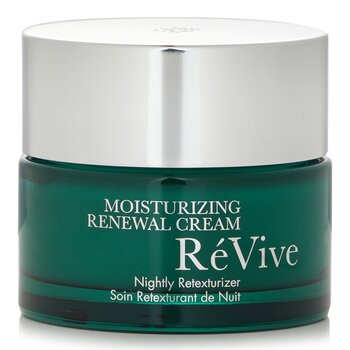

Revive Moisturizing Renewal Cream Nightly Retexturizer 1.7 oz Cream
Analysis updated August 2026 · How Scout scores
At a glance
Summary
This moisturizer contains beneficial ingredients like glycolic acid, glycerin, sunflower seed oil, and squalane, which are known for their hydrating and skin-nourishing properties. However, the presence of phenoxyethanol, a preservative that can cause irritation, slightly lowers the score. The product is moderately processed, which also impacts the overall rating.
Key ingredients 42
Helianthus Annuus (Sunflower) Seed OilVery Good
Sunflower Seed Oil is a natural oil rich in fatty acids. It helps to nourish and moisturize the skin. It is known for its anti-inflammatory properties.
Risks
Rarely, it may cause allergic reactions in sensitive individuals.
Benefits
Nourishes the skin and provides essential fatty acids.
SqualaneVery Good
Squalane is a highly effective emollient and natural antioxidant. It helps to hydrate and protect the skin. It is known for its ability to mimic the skin's natural oils.
Risks
Generally safe with minimal risk of irritation.
Benefits
Provides deep hydration and improves skin elasticity.
BisabololVery Good
Bisabolol is a natural compound known for its soothing and anti-inflammatory properties. It helps to calm irritated skin and reduce redness. It is effective in enhancing the skin's healing process.
Risks
Generally safe with minimal risk of irritation.
Benefits
Soothes and calms the skin, reducing inflammation.
AllantoinVery Good
Allantoin is known for its soothing and skin conditioning properties. It helps to calm irritated skin and promote healing. It is effective in improving skin texture and reducing redness.
Risks
Generally safe with minimal risk of irritation.
Benefits
Soothes and protects the skin, promoting healing.
Butyrospermum Parkii (Shea) ButterVery Good
Shea Butter is a natural fat known for its moisturizing and nourishing properties. It helps to soften and protect the skin. It is effective in improving skin elasticity and reducing dryness.
Risks
Generally safe with minimal risk of irritation.
Benefits
Deeply moisturizes and nourishes the skin.
Persea Gratissima (Avocado) OilVery Good
Avocado Oil is a natural oil rich in vitamins and fatty acids. It helps to nourish and moisturize the skin. It is known for its anti-inflammatory and antioxidant properties.
Risks
Rarely, it may cause allergic reactions in sensitive individuals.
Benefits
Nourishes the skin and provides essential nutrients.
Olea Europaea (Olive) Fruit OilVery Good
Olive Oil is a natural oil rich in antioxidants and fatty acids. It helps to nourish and moisturize the skin. It is known for its anti-inflammatory and healing properties.
Risks
Rarely, it may cause allergic reactions in sensitive individuals.
Benefits
Nourishes the skin and provides essential nutrients.
Glycolic AcidGood
Glycolic Acid is an alpha hydroxy acid (AHA) used for exfoliation. It helps to remove dead skin cells and improve skin texture. It is effective in reducing fine lines and improving skin tone.
Risks
Can cause irritation and sensitivity, especially in high concentrations.
Benefits
Promotes cell turnover and improves skin texture.
GlycerinGood
Glycerin is a humectant that attracts moisture to the skin. It helps to keep the skin hydrated and soft. It is widely used in skincare for its moisturizing properties.
Risks
Generally safe with minimal risk of irritation.
Benefits
Enhances skin hydration and maintains moisture balance.
Oligopeptide-24Good
Oligopeptide-24 is a peptide used for its anti-aging properties. It helps to stimulate collagen production and improve skin elasticity. It is effective in reducing the appearance of fine lines and wrinkles.
Risks
Generally safe with minimal risk of irritation.
Benefits
Promotes collagen production and reduces signs of aging.
Ascorbyl PalmitateGood
Ascorbyl Palmitate is a stable form of Vitamin C. It provides antioxidant protection and helps to brighten the skin. It is effective in reducing signs of aging and improving skin tone.
Risks
May cause mild irritation in sensitive skin.
Benefits
Brightens the skin and provides antioxidant protection.
Tocopheryl AcetateGood
Tocopheryl Acetate is a form of Vitamin E used for its antioxidant properties. It helps to protect the skin from free radical damage. It is effective in moisturizing and soothing the skin.
Risks
Generally safe with minimal risk of irritation.
Benefits
Protects the skin from oxidative stress and moisturizes.
Sodium HyaluronateGood
Sodium Hyaluronate is a form of hyaluronic acid known for its hydrating properties. It helps to retain moisture and plump the skin. It is effective in reducing the appearance of fine lines and improving skin texture.
Risks
Generally safe with minimal risk of irritation.
Benefits
Deeply hydrates the skin and improves elasticity.
TocopherolGood
Tocopherol is a form of Vitamin E used for its antioxidant properties. It helps to protect the skin from free radical damage. It is effective in moisturizing and soothing the skin.
Risks
Generally safe with minimal risk of irritation.
Benefits
Protects the skin from oxidative stress and moisturizes.
Sodium PCAGood
Sodium PCA is a natural moisturizing factor that helps to retain moisture in the skin. It enhances skin hydration and improves texture. It is effective in maintaining the skin's moisture balance.
Risks
Generally safe with minimal risk of irritation.
Benefits
Enhances skin hydration and maintains moisture balance.
Aqua (Water, Eau)Neutral
Water is a common solvent used in cosmetics to dissolve other ingredients. It helps in the application and absorption of the product. It does not have any direct benefits or risks.
Benefits
Provides a base for other ingredients to be absorbed into the skin.
Diisopropyl Dimer DilinoleateNeutral
This ingredient is used as an emollient to provide a smooth application. It helps in forming a protective barrier on the skin. It is generally considered safe for use in cosmetics.
Risks
May cause mild irritation in sensitive individuals.
Benefits
Helps to soften and smooth the skin.
Dicaprylyl MaleateNeutral
Dicaprylyl Maleate is used as a skin conditioning agent. It enhances the texture and feel of the product. It is generally well-tolerated by most skin types.
Risks
Potential for mild irritation in sensitive skin.
Benefits
Improves the texture and spreadability of the cream.
CyclopentasiloxaneNeutral
Cyclopentasiloxane is a silicone used to provide a silky texture. It helps in spreading the product evenly on the skin. It evaporates quickly, leaving a smooth feel.
Risks
May cause build-up on the skin with prolonged use.
Benefits
Provides a smooth application and enhances skin feel.
Glyceryl StearateNeutral
Glyceryl Stearate is an emulsifier that helps to blend oil and water. It improves the texture and stability of the product. It is generally considered safe for use in cosmetics.
Risks
Low risk of irritation or allergic reaction.
Benefits
Stabilizes the formulation and enhances texture.
Butylene GlycolNeutral
Butylene Glycol is a solvent and conditioning agent. It helps to improve the texture and spreadability of the product. It is generally considered safe for use in cosmetics.
Risks
May cause mild irritation in sensitive skin.
Benefits
Enhances product texture and skin feel.
Cetyl AlcoholNeutral
Cetyl Alcohol is a fatty alcohol used as an emollient and thickener. It helps to soften the skin and improve product texture. It is generally well-tolerated by most skin types.
Risks
Low risk of irritation or allergic reaction.
Benefits
Softens the skin and enhances product consistency.
Cetyl PhosphateNeutral
Cetyl Phosphate is used as an emulsifier and surfactant. It helps to stabilize the formulation and improve texture. It is generally considered safe for use in cosmetics.
Risks
Low risk of irritation or allergic reaction.
Benefits
Stabilizes the formulation and enhances texture.
Sodium HydroxideNeutral
Sodium Hydroxide is used to adjust the pH of the product. It ensures the product is at a suitable pH for skin application. It is used in very small amounts to avoid irritation.
Risks
Can cause irritation if used in high concentrations.
Benefits
Helps maintain the product's pH balance.
Isostearic AcidNeutral
Isostearic Acid is used as an emulsifier and thickener. It helps to stabilize the formulation and improve texture. It is generally considered safe for use in cosmetics.
Risks
Low risk of irritation or allergic reaction.
Benefits
Stabilizes the formulation and enhances texture.
Sclerotium GumNeutral
Sclerotium Gum is a natural thickening agent. It helps to stabilize the formulation and improve texture. It is derived from fermentation and is generally considered safe.
Risks
Low risk of irritation or allergic reaction.
Benefits
Enhances product texture and stability.
GlycolipidsNeutral
Glycolipids are used as skin conditioning agents. They help to improve the texture and hydration of the skin. They are generally considered safe for use in cosmetics.
Risks
Low risk of irritation or allergic reaction.
Benefits
Enhances skin hydration and texture.
Caprylyl GlycolNeutral
Caprylyl Glycol is used as a skin conditioning agent and preservative. It helps to improve the texture and stability of the product. It is generally considered safe for use in cosmetics.
Risks
Low risk of irritation or allergic reaction.
Benefits
Enhances product stability and skin feel.
PhytosterolsNeutral
Phytosterols are plant-derived compounds used for their skin conditioning properties. They help to improve skin texture and hydration. They are generally considered safe for use in cosmetics.
Risks
Low risk of irritation or allergic reaction.
Benefits
Enhances skin hydration and texture.
Sodium CarbonateNeutral
Sodium Carbonate is used to adjust the pH of the product. It ensures the product is at a suitable pH for skin application. It is used in very small amounts to avoid irritation.
Risks
Can cause irritation if used in high concentrations.
Benefits
Helps maintain the product's pH balance.
Glycine Soja (Soybean) OilNeutral
Soybean Oil is a natural oil used for its emollient properties. It helps to nourish and moisturize the skin. It is generally considered safe for use in cosmetics.
Risks
Rarely, it may cause allergic reactions in sensitive individuals.
Benefits
Nourishes the skin and provides essential fatty acids.
Sodium OleateNeutral
Sodium Oleate is used as an emulsifier and surfactant. It helps to stabilize the formulation and improve texture. It is generally considered safe for use in cosmetics.
Risks
Low risk of irritation or allergic reaction.
Benefits
Stabilizes the formulation and enhances texture.
Hydrogenated LecithinNeutral
Hydrogenated Lecithin is used as an emulsifier and skin conditioning agent. It helps to improve the texture and hydration of the skin. It is generally considered safe for use in cosmetics.
Risks
Low risk of irritation or allergic reaction.
Benefits
Enhances skin hydration and texture.
Myristic AcidNeutral
Myristic Acid is used as an emulsifier and surfactant. It helps to stabilize the formulation and improve texture. It is generally considered safe for use in cosmetics.
Risks
Low risk of irritation or allergic reaction.
Benefits
Stabilizes the formulation and enhances texture.
Citrus Aurantium Dulcis (Orange) Peel OilNeutral
Orange Peel Oil is used for its fragrance and potential antioxidant properties. It helps to provide a pleasant scent to the product. It is generally considered safe for use in cosmetics.
Risks
May cause photosensitivity or irritation in sensitive skin.
Benefits
Provides a pleasant fragrance and potential antioxidant benefits.
Sorbitan OleateNeutral
Sorbitan Oleate is used as an emulsifier and surfactant. It helps to stabilize the formulation and improve texture. It is generally considered safe for use in cosmetics.
Risks
Low risk of irritation or allergic reaction.
Benefits
Stabilizes the formulation and enhances texture.
Palmitic AcidNeutral
Palmitic Acid is used as an emulsifier and surfactant. It helps to stabilize the formulation and improve texture. It is generally considered safe for use in cosmetics.
Risks
Low risk of irritation or allergic reaction.
Benefits
Stabilizes the formulation and enhances texture.
Stearic AcidNeutral
Stearic Acid is used as an emulsifier and thickener. It helps to stabilize the formulation and improve texture. It is generally considered safe for use in cosmetics.
Risks
Low risk of irritation or allergic reaction.
Benefits
Stabilizes the formulation and enhances texture.
DimethiconeBad
Occlusive silicone film-former — flagged under clean-beauty doctrine.
Risks
May cause build-up on the skin with prolonged use.
Benefits
Provides a smooth application and locks in moisture.
PhenoxyethanolBad
Phenoxyethanol is used as a preservative in cosmetics. It helps to prevent microbial growth and extend the shelf life of the product. However, it can cause irritation and allergic reactions in some individuals.
Risks
Potential for skin irritation and allergic reactions.
Benefits
Prevents microbial growth and extends product shelf life.
Disodium EDTABad
Processed additive flagged under Scout's ingredient doctrine.
Risks
Low risk of irritation or allergic reaction.
Benefits
Improves product stability and prevents metal ion interference.
LimoneneBad
Processed additive flagged under Scout's ingredient doctrine.
Risks
May cause irritation or allergic reactions in sensitive skin.
Benefits
Provides a pleasant citrus fragrance.
Get the full breakdown in the Scout appTake Scout shopping
Scan any product to see lab results, healthy alternatives, and your personalized analysis.
Download on theApp Store GET IT ONGoogle PlayAmazon pricing & content
Amazon price as of . Product prices and availability are accurate as of the date/time indicated and are subject to change. Any price and availability information displayed on Amazon.com at the time of purchase will apply to the purchase of this product.
CERTAIN CONTENT THAT APPEARS ON THIS SITE COMES FROM AMAZON. THIS CONTENT IS PROVIDED “AS IS” AND IS SUBJECT TO CHANGE OR REMOVAL AT ANY TIME.