
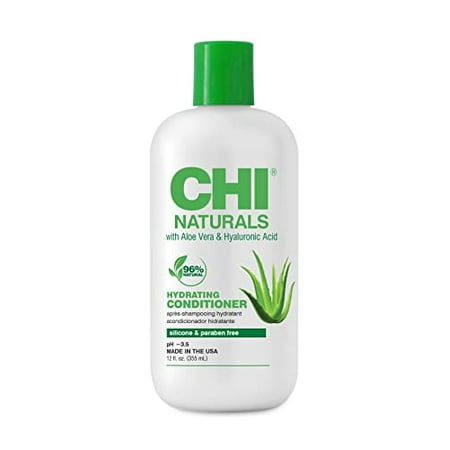
CHI Naturals with Aloe Vera Hydrating Conditioner 12 oz
Analysis updated October 2026 · How Scout scores
At a glance
Summary
This conditioner contains beneficial ingredients like aloe vera, glycerin, and sodium hyaluronate, which are known for their hydrating and soothing properties, contributing positively to hair and scalp health. However, the presence of synthetic fragrances and several fragrance-related compounds, which can cause irritation and allergic reactions, detracts from its overall safety profile. The product is moderately processed, with a mix of beneficial and potentially irritating ingredients.
Key ingredients 29
Aloe Barbadensis Leaf ExtractGood
Aloe vera is known for its hydrating and soothing properties, making it beneficial for hair and scalp health. It can help reduce scalp irritation and provide moisture to the hair. Its natural origin adds to its positive profile.
Risks
Rare allergic reactions may occur in sensitive individuals.
Benefits
Hydrates and soothes the scalp, promoting healthier hair.
GlycerinGood
Glycerin is a humectant that attracts moisture to the hair and scalp, helping to maintain hydration. It is widely used in hair care for its ability to improve moisture levels and reduce dryness. Its natural origin and effectiveness make it a positive ingredient.
Risks
Overuse can lead to a sticky feeling on hair.
Benefits
Attracts moisture, improving hydration and reducing dryness.
Sodium HyaluronateGood
Sodium hyaluronate is a form of hyaluronic acid known for its excellent moisture-retaining properties. It helps keep hair hydrated and can improve elasticity. Its ability to hold moisture makes it beneficial for dry or damaged hair.
Risks
Generally considered safe with minimal risk.
Benefits
Retains moisture, improving hair hydration and elasticity.
Aloe Barbadensis Leaf JuiceGood
Aloe vera juice is known for its hydrating and soothing properties, similar to aloe extract. It helps moisturize the hair and scalp, reducing irritation and dryness. Its natural origin and effectiveness make it a positive ingredient.
Risks
Rare allergic reactions may occur in sensitive individuals.
Benefits
Moisturizes and soothes the scalp, promoting healthier hair.
Glycolic AcidGood
Beneficial ingredient — whole-food or functional value in this product class.
Risks
Potential for irritation if used in high concentrations.
Benefits
Can improve moisture retention in hair.
Aqua/Water/EauNeutral
Water is a universal solvent used as a base in many cosmetic products. It helps dissolve other ingredients and provides a medium for them to function. It does not have any direct benefits or risks in this context.
Benefits
Provides a medium for other ingredients to be effective.
Cetearyl AlcoholNeutral
Standard formulation ingredient — neither beneficial nor harmful at typical use.
Risks
Generally considered safe with minimal risk.
Benefits
Helps to smooth and soften hair, improving texture.
Cetyl AlcoholNeutral
Standard formulation ingredient — neither beneficial nor harmful at typical use.
Risks
Low risk of irritation or allergic reaction.
Benefits
Improves hair manageability and moisture retention.
PropanediolNeutral
Propanediol is a glycol used as a solvent and skin-conditioning agent. It helps improve the texture and spreadability of the product. It is generally considered safe and non-irritating.
Risks
Minimal risk of irritation or allergic reaction.
Benefits
Improves product texture and spreadability.
Behentrimonium ChlorideNeutral
Behentrimonium chloride is a conditioning agent that helps detangle and smooth hair. It is effective in reducing static and improving hair manageability. While effective, it can be irritating to some individuals.
Risks
Potential for irritation in sensitive individuals.
Benefits
Detangles and smooths hair, reducing static.
Cocamidopropyl Pg-Dimonium ChlorideNeutral
This ingredient is a conditioning agent derived from coconut oil, used to improve hair texture and manageability. It is generally considered safe and effective for hair care. However, it can cause irritation in some individuals.
Risks
Potential for irritation in sensitive individuals.
Benefits
Improves hair texture and manageability.
Stearamidopropyl DimethylamineNeutral
Stearamidopropyl dimethylamine is a conditioning agent that helps detangle and smooth hair. It is effective in reducing static and improving hair manageability. It is generally considered safe but can cause irritation in some individuals.
Risks
Potential for irritation in sensitive individuals.
Benefits
Detangles and smooths hair, reducing static.
Caprylyl GlycolNeutral
Caprylyl glycol is a skin-conditioning agent and preservative that helps improve the texture and stability of the product. It is generally considered safe and non-irritating. It does not have significant direct benefits for hair.
Risks
Minimal risk of irritation or allergic reaction.
Benefits
Improves product texture and stability.
Polyglyceryl-3 OleateNeutral
Polyglyceryl-3 oleate is an emulsifier that helps blend oil and water-based ingredients. It is derived from natural sources and is generally considered safe. It does not have significant direct benefits for hair.
Risks
Minimal risk of irritation or allergic reaction.
Benefits
Helps blend ingredients, improving product consistency.
Polyquaternium-37Neutral
Polyquaternium-37 is a conditioning polymer that helps improve hair texture and manageability. It is effective in reducing static and frizz. It is generally considered safe but can cause buildup with excessive use.
Risks
Potential for buildup with excessive use.
Benefits
Improves hair texture and reduces static.
Propylene Glycol Dicaprylate/DicaprateNeutral
This ingredient is an emollient that helps improve the texture and spreadability of the product. It is generally considered safe and non-irritating. It does not have significant direct benefits for hair.
Risks
Minimal risk of irritation or allergic reaction.
Benefits
Improves product texture and spreadability.
Hexylene GlycolNeutral
Hexylene glycol is a solvent and viscosity agent used to improve product texture. It is generally considered safe but can cause irritation in some individuals. It does not have significant direct benefits for hair.
Risks
Potential for irritation in sensitive individuals.
Benefits
Improves product texture and viscosity.
Pentylene GlycolNeutral
Pentylene glycol is a humectant and solvent that helps improve moisture retention and product texture. It is generally considered safe and non-irritating. It does not have significant direct benefits for hair.
Risks
Minimal risk of irritation or allergic reaction.
Benefits
Improves moisture retention and product texture.
EthylhexylglycerinNeutral
Ethylhexylglycerin is a conditioning agent and preservative enhancer that helps improve product stability. It is generally considered safe and non-irritating. It does not have significant direct benefits for hair.
Risks
Minimal risk of irritation or allergic reaction.
Benefits
Improves product stability and conditioning.
Polyquaternium-10Neutral
Polyquaternium-10 is a conditioning polymer that helps improve hair texture and manageability. It is effective in reducing static and frizz. It is generally considered safe but can cause buildup with excessive use.
Risks
Potential for buildup with excessive use.
Benefits
Improves hair texture and reduces static.
PPG-1 Trideceth-6Neutral
PPG-1 Trideceth-6 is a surfactant and emulsifier used to improve product texture and spreadability. It is generally considered safe but can cause irritation in some individuals. It does not have significant direct benefits for hair.
Risks
Potential for irritation in sensitive individuals.
Benefits
Improves product texture and spreadability.
Sodium SulfiteNeutral
Sodium sulfite is an antioxidant used to prevent product discoloration and degradation. It is generally considered safe but can cause irritation in some individuals. It does not have significant direct benefits for hair.
Risks
Potential for irritation in sensitive individuals.
Benefits
Prevents product discoloration and degradation.
Sodium BenzoateBad
Synthetic preservative that can form benzene in the presence of vitamin C.
Risks
Potential for irritation in sensitive individuals.
Benefits
Prevents microbial growth, extending product shelf life.
Alpha-Isomethyl IononeBad
Alpha-Isomethyl Ionone is a fragrance ingredient that can cause allergic reactions and irritation in sensitive individuals. It is part of the synthetic fragrance mix, which is often criticized for potential health concerns. Its use is generally discouraged in sensitive individuals.
Risks
Potential for allergic reactions and irritation.
Benefits
Contributes to the product's fragrance.
Benzyl BenzoateBad
Benzyl benzoate is a fragrance ingredient and solvent that can cause allergic reactions and irritation. It is part of the synthetic fragrance mix, which is often criticized for potential health concerns. Its use is generally discouraged in sensitive individuals.
Risks
Potential for allergic reactions and irritation.
Benefits
Contributes to the product's fragrance.
Hexyl CinnamalBad
Hexyl cinnamal is a fragrance ingredient that can cause allergic reactions and irritation in sensitive individuals. It is part of the synthetic fragrance mix, which is often criticized for potential health concerns. Its use is generally discouraged in sensitive individuals.
Risks
Potential for allergic reactions and irritation.
Benefits
Contributes to the product's fragrance.
LimoneneBad
Limonene is a fragrance ingredient that can cause allergic reactions and irritation in sensitive individuals. It is part of the synthetic fragrance mix, which is often criticized for potential health concerns. Its use is generally discouraged in sensitive individuals.
Risks
Potential for allergic reactions and irritation.
Benefits
Contributes to the product's fragrance.
LinaloolBad
Linalool is a fragrance ingredient that can cause allergic reactions and irritation in sensitive individuals. It is part of the synthetic fragrance mix, which is often criticized for potential health concerns. Its use is generally discouraged in sensitive individuals.
Risks
Potential for allergic reactions and irritation.
Benefits
Contributes to the product's fragrance.
Fragrance (Parfum)Very Bad
Synthetic fragrances are used to impart scent to products but can cause allergic reactions and irritation. They are often composed of undisclosed chemicals, raising concerns about safety. Their use is generally discouraged in sensitive individuals.
Risks
Potential for allergic reactions and irritation.
Benefits
Provides a pleasant scent to the product.
Get the full breakdown in the Scout appTake Scout shopping
Scan any product to see lab results, healthy alternatives, and your personalized analysis.
Download on theApp Store GET IT ONGoogle PlayAmazon pricing & content
Amazon price as of . Product prices and availability are accurate as of the date/time indicated and are subject to change. Any price and availability information displayed on Amazon.com at the time of purchase will apply to the purchase of this product.
CERTAIN CONTENT THAT APPEARS ON THIS SITE COMES FROM AMAZON. THIS CONTENT IS PROVIDED “AS IS” AND IS SUBJECT TO CHANGE OR REMOVAL AT ANY TIME.