
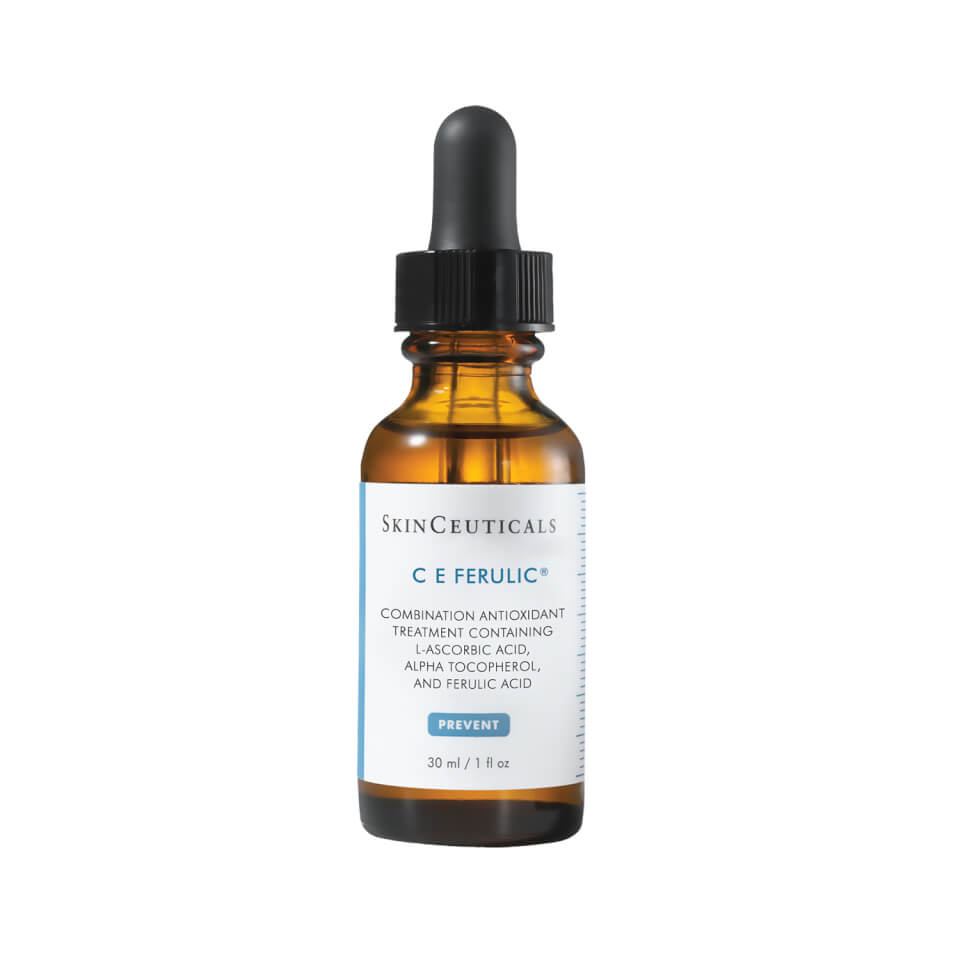

Skinceuticals C E Ferulic Combination Antioxidant Vitamin C Serum
Analysis updated August 2026 · How Scout scores
At a glance
Summary
This serum contains a high concentration of beneficial antioxidants like Vitamin C, Vitamin E, and Ferulic Acid, which provide strong protective benefits against environmental damage. It also includes hydrating ingredients such as Glycerin and Sodium Hyaluronate, enhancing its moisturizing properties. However, the presence of Triethanolamine, which can be irritating and has contamination concerns, slightly lowers the overall safety profile of the product.
Key ingredients 12
L Ascorbic Acid 15.0%Very Good
L Ascorbic Acid, or Vitamin C, is a potent antioxidant that helps protect the skin from free radical damage. It also aids in collagen synthesis and brightens the skin. Its high concentration in this serum makes it highly effective.
Risks
High concentrations may cause irritation in sensitive skin types.
Benefits
It provides antioxidant protection and improves skin brightness and texture.
Alpha Tocopherol 1.0%Very Good
Alpha Tocopherol, or Vitamin E, is a powerful antioxidant that helps protect the skin from oxidative stress. It also has moisturizing and anti-inflammatory properties. Its inclusion in the serum enhances its protective benefits.
Risks
There are minimal risks associated with topical Vitamin E.
Benefits
It provides antioxidant protection and supports skin hydration.
Ferulic Acid 0.5%Very Good
Ferulic Acid is an antioxidant that enhances the stability and efficacy of other antioxidants like Vitamin C and E. It helps protect the skin from environmental damage. Its inclusion in the serum boosts the overall antioxidant protection.
Risks
There are minimal risks associated with Ferulic Acid in cosmetics.
Benefits
It enhances antioxidant protection and stabilizes other active ingredients.
PanthenolVery Good
Panthenol, or Provitamin B5, is a humectant that helps retain moisture in the skin. It also has soothing and anti-inflammatory properties. It is beneficial for maintaining skin hydration and reducing irritation.
Risks
There are minimal risks associated with Panthenol in cosmetics.
Benefits
It provides hydration and soothes irritated skin.
GlycerinGood
Glycerin is a well-known humectant that attracts moisture to the skin. It helps maintain skin hydration and improves the skin barrier function. It is widely used in skincare for its moisturizing properties.
Risks
There are minimal risks associated with glycerin in cosmetics.
Benefits
It provides excellent hydration and supports the skin's natural barrier.
Sodium HyaluronateGood
Sodium Hyaluronate is a form of hyaluronic acid that is highly effective in retaining moisture. It helps plump the skin and reduce the appearance of fine lines. It is a highly regarded ingredient for its hydrating properties.
Risks
There are minimal risks associated with Sodium Hyaluronate in cosmetics.
Benefits
It provides deep hydration and improves skin elasticity.
WaterNeutral
Water is a common solvent used in cosmetic formulations. It helps dissolve other ingredients and provides a base for the serum. It does not have any active benefits or risks.
Risks
There are no significant risks associated with water in cosmetic formulations.
Benefits
Water acts as a solvent and helps in the application of the serum.
EthoxydiglycolNeutral
Ethoxydiglycol is used as a solvent and penetration enhancer in cosmetics. It helps other ingredients penetrate the skin more effectively. It is generally considered safe in cosmetic formulations.
Risks
There is a potential for skin irritation in sensitive individuals.
Benefits
It enhances the penetration of active ingredients into the skin.
Laureth 23Neutral
Laureth 23 is used as an emulsifier and surfactant in cosmetic formulations. It helps blend oil and water-based ingredients. It is generally considered safe for use in cosmetics.
Risks
May cause mild irritation in sensitive skin types.
Benefits
It helps stabilize the formulation and improve texture.
Propylene GlycolBad
Processed additive flagged under Scout's ingredient doctrine.
Risks
May cause irritation in some individuals with sensitive skin.
Benefits
It helps maintain skin hydration and improves product texture.
PhenoxyethanolBad
Processed additive flagged under Scout's ingredient doctrine.
Risks
May cause irritation in some individuals, especially in high concentrations.
Benefits
It helps preserve the product and prevent contamination.
TriethanolamineBad
Triethanolamine is used to adjust pH and stabilize emulsions in cosmetics. However, it can be irritating to the skin and eyes, and there are concerns about nitrosamine contamination. It is generally used in low concentrations to minimize risks.
Risks
Potential skin and eye irritation and concerns about nitrosamine contamination.
Benefits
It helps stabilize the formulation and adjust pH levels.
Processing
Processed Foods
Get the full breakdown in the Scout appTake Scout shopping
Scan any product to see lab results, healthy alternatives, and your personalized analysis.
Download on theApp Store GET IT ONGoogle Play