
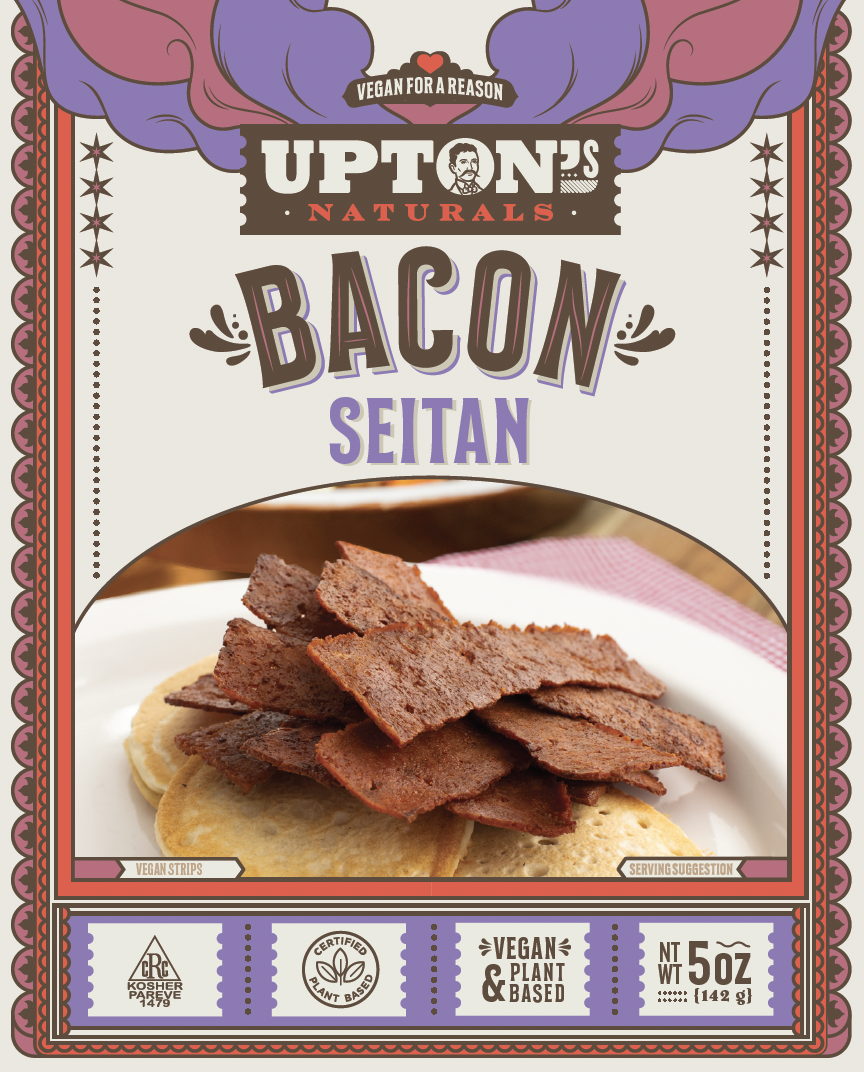
Upton's Naturals BACON SEITAN
Analysis updated August 2026 · How Scout scores
At a glance
Summary
Bacon Seitan is a processed food with a relatively clean ingredient list, featuring whole wheat flour and garlic, which are beneficial. However, it is a plant-based meat product, which typically involves a higher level of processing and can affect protein absorption compared to animal-based proteins. The presence of soy sauce and vital wheat gluten contributes to its processed nature, limiting its score despite the absence of harmful additives.
Key ingredients 7
GarlicGood
Garlic is known for its natural flavor enhancement and potential health benefits, making it a positive addition.
See more about Garlic →Sea saltGood
Sea salt enhances flavor naturally and contains trace minerals, making it a preferable salt choice.
See more about Sea salt →OnionGood
Onion adds natural flavor and nutrients, contributing positively to the overall ingredient profile.
See more about Onion →WaterNeutral
Water is a fundamental ingredient that helps hydrate and form the base of the product without adding any nutritional concerns.
See more about Water →Vital wheat glutenNeutral
Standard formulation ingredient — neither beneficial nor harmful at typical use.
See more about Vital wheat gluten →Soy sauceNeutral
Soy sauce adds flavor and umami to the product but is generally neutral in health impact when consumed in moderation.
See more about Soy sauce →Whole wheat flourNeutral
Whole wheat flour provides some fiber and nutrients, contributing to the product's texture without significant health concerns.
See more about Whole wheat flour →Processing
Processed Foods
Get the full breakdown in the Scout appTake Scout shopping
Scan any product to see lab results, healthy alternatives, and your personalized analysis.
Download on theApp Store GET IT ONGoogle PlayAmazon pricing & content
Amazon price as of . Product prices and availability are accurate as of the date/time indicated and are subject to change. Any price and availability information displayed on Amazon.com at the time of purchase will apply to the purchase of this product.
CERTAIN CONTENT THAT APPEARS ON THIS SITE COMES FROM AMAZON. THIS CONTENT IS PROVIDED “AS IS” AND IS SUBJECT TO CHANGE OR REMOVAL AT ANY TIME.