
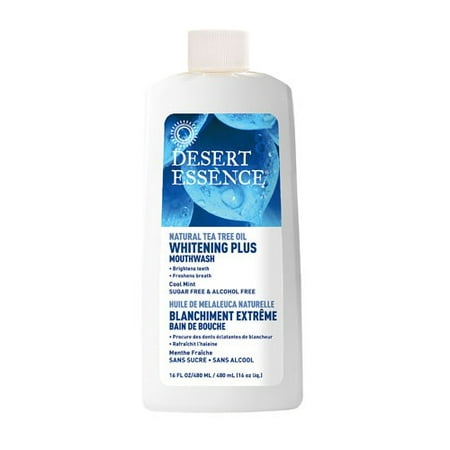


Desert Essence Tea Tree Oil Whitening Plus Mouthwash Cool Mint 16 fl oz (473 ml)
Analysis updated August 2026 · How Scout scores
At a glance
Summary
This mouthwash features a clean formula with beneficial ingredients like tea tree oil, spearmint oil, and aloe vera, which provide antimicrobial properties and support oral health. The absence of harmful chemicals such as fluoride, SLS, and alcohol contributes to its high rating. The product's processing level is low, indicating minimal processing and a focus on natural ingredients.
Key ingredients 16
GlycerinGood
Beneficial ingredient — whole-food or functional value in this product class.
Risks
There are no significant risks associated with glycerin in oral care products.
Benefits
Glycerin helps maintain moisture and texture in the product.
Mentha Viridis Leaf OilGood
Mentha Viridis Leaf Oil, or spearmint oil, is used for its natural antimicrobial properties and freshening effect. It helps reduce oral bacteria and provides a pleasant minty flavor. It is beneficial for maintaining fresh breath.
Risks
There are minimal risks associated with spearmint oil, though some individuals may experience mild irritation.
Benefits
Spearmint oil provides antimicrobial benefits and helps maintain fresh breath.
Gaultheria Procumbens Leaf OilGood
Gaultheria Procumbens Leaf Oil, or wintergreen oil, is used for its natural antimicrobial properties and flavor. It helps reduce oral bacteria and provides a fresh taste. It is beneficial for maintaining oral hygiene.
Risks
There are minimal risks associated with wintergreen oil, though some individuals may experience mild irritation.
Benefits
Wintergreen oil provides antimicrobial benefits and helps maintain fresh breath.
Melaleuca Alternifolia Leaf OilGood
Melaleuca Alternifolia Leaf Oil, commonly known as tea tree oil, is known for its strong antimicrobial properties. It helps reduce oral bacteria and supports oral hygiene. It is beneficial for maintaining a healthy oral environment.
Risks
Tea tree oil can be irritating if used in high concentrations or ingested.
Benefits
Tea tree oil provides strong antimicrobial benefits, supporting oral hygiene.
Zinc CitrateGood
Zinc Citrate is used in oral care products for its ability to reduce plaque and control tartar formation. It helps inhibit the growth of bacteria responsible for bad breath. It is beneficial for maintaining oral hygiene.
Risks
Excessive use of zinc can lead to taste disturbances or nausea.
Benefits
Zinc citrate helps reduce plaque and control tartar, supporting oral hygiene.
Ascorbic AcidGood
Vitamin C — beneficial even when serving as a preservative.
Risks
There are no significant risks associated with ascorbic acid in oral care products.
Benefits
Ascorbic acid may provide antioxidant support, although its direct benefits in oral care are not well-documented.
Aloe Barbadensis Leaf JuiceGood
Aloe Barbadensis Leaf Juice, or aloe vera, is known for its soothing properties. It helps calm irritated oral tissues and supports overall oral health. It is beneficial for maintaining a healthy oral environment.
Risks
There are minimal risks associated with aloe vera, though some individuals may experience mild irritation.
Benefits
Aloe vera provides soothing benefits, supporting oral health.
WaterNeutral
Water is a common solvent used in many oral care products. It helps dissolve other ingredients and provides a liquid base. It does not have direct oral health benefits or risks.
Risks
There are no known risks associated with water in oral care products.
Benefits
Water helps to dissolve and distribute other active ingredients effectively.
Phyllostachis Bambusoides JuiceNeutral
Phyllostachis Bambusoides Juice, derived from bamboo, is used for its potential antioxidant properties. It is not commonly associated with specific oral health benefits. Its role in oral care products is primarily supportive.
Risks
There are no known risks associated with bamboo juice in oral care products.
Benefits
Bamboo juice may provide antioxidant support, although its direct benefits in oral care are not well-documented.
Equisetum Arvense Leaf ExtractNeutral
Equisetum Arvense, or horsetail extract, is known for its silica content, which may support oral health. However, its specific benefits in oral care products are not well-established. It is primarily used for its potential supportive properties.
Risks
There are no significant risks associated with horsetail extract in oral care products.
Benefits
Horsetail extract may provide supportive benefits due to its silica content.
Calcium AscorbateNeutral
Calcium Ascorbate is a form of vitamin C that may support gum health. It is used for its potential antioxidant properties. Its direct benefits in oral care products are not well-documented.
Risks
There are no significant risks associated with calcium ascorbate in oral care products.
Benefits
Calcium ascorbate may provide antioxidant support, although its direct benefits in oral care are not well-documented.
Phytic AcidNeutral
Phytic Acid is used as a chelating agent to bind minerals and prevent tartar formation. It is not commonly associated with specific oral health benefits. Its role in oral care products is primarily supportive.
Risks
There are no significant risks associated with phytic acid in oral care products.
Benefits
Phytic acid helps prevent tartar formation by binding minerals.
Citric AcidNeutral
Citric Acid is used to adjust the pH and enhance flavor in oral care products. It is not commonly associated with specific oral health benefits. Its role is primarily supportive in maintaining product stability.
Risks
Excessive use of citric acid can lead to enamel erosion.
Benefits
Citric acid helps maintain product stability and enhances flavor.
Hamamelis Virginiana ExtractNeutral
Hamamelis Virginiana Extract, or witch hazel, is known for its astringent properties. It may help tighten tissues and reduce inflammation, although its specific benefits in oral care products are not well-documented. It is primarily used for its potential supportive properties.
Risks
There are no significant risks associated with witch hazel in oral care products.
Benefits
Witch hazel may provide astringent benefits, although its direct benefits in oral care are not well-documented.
Stevia Rebaudiana Leaf/Stem PowderNeutral
Stevia Rebaudiana Leaf/Stem Powder is used as a natural sweetener in oral care products. It provides sweetness without contributing to tooth decay. It does not have significant direct oral health benefits or risks.
Risks
There are no significant risks associated with stevia in oral care products.
Benefits
Stevia provides sweetness without contributing to tooth decay.
Polysorbate-80Bad
Processed additive flagged under Scout's ingredient doctrine.
Risks
There are no significant risks associated with polysorbate-80 in oral care products.
Benefits
Polysorbate-80 helps maintain the stability and consistency of the product.
Get the full breakdown in the Scout appTake Scout shopping
Scan any product to see lab results, healthy alternatives, and your personalized analysis.
Download on theApp Store GET IT ONGoogle PlayAmazon pricing & content
Amazon price as of . Product prices and availability are accurate as of the date/time indicated and are subject to change. Any price and availability information displayed on Amazon.com at the time of purchase will apply to the purchase of this product.
CERTAIN CONTENT THAT APPEARS ON THIS SITE COMES FROM AMAZON. THIS CONTENT IS PROVIDED “AS IS” AND IS SUBJECT TO CHANGE OR REMOVAL AT ANY TIME.