
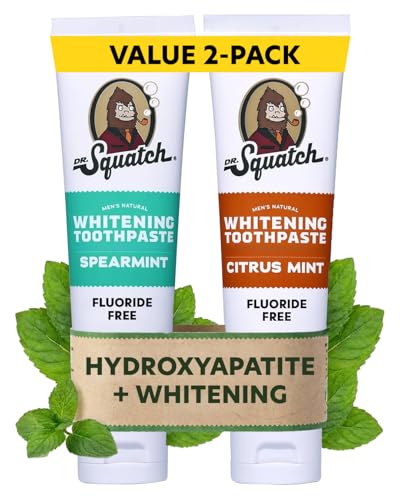



Dr. Squatch Teeth Whitening Toothpaste Kit - Day and Night Flouride Free Natural Toothpaste (1 Citrus Mint + 1 Sooth Spearmint Tooth Paste) 4.7 oz Tubes
Analysis updated August 2026 · How Scout scores
At a glance
Summary
This toothpaste features beneficial ingredients like hydroxyapatite and xylitol, which support enamel remineralization and reduce cavity-causing bacteria. It avoids fluoride and SLS, which are common concerns in oral care products. However, the presence of titanium dioxide, a controversial whitening agent, and its processed nature limit its score.
Key ingredients 18
HydroxyapatiteVery Good
Hydroxyapatite is a beneficial ingredient known for its ability to remineralize tooth enamel. It is a naturally occurring mineral that can help repair and strengthen teeth. This ingredient is often used as a safer alternative to fluoride in toothpaste.
Benefits
Promotes tooth remineralization and strengthens enamel, reducing the risk of cavities.
XylitolGood
Xylitol is a sugar alcohol that is beneficial for oral health due to its ability to reduce cavity-causing bacteria. It is derived from natural sources such as birch trees and corn cobs. Xylitol also helps maintain moisture in the mouth, which can prevent dry mouth.
Risks
Excessive consumption may cause digestive discomfort.
Benefits
Reduces the risk of cavities by inhibiting the growth of harmful oral bacteria.
Vegetable GlycerinGood
Beneficial ingredient — whole-food or functional value in this product class.
Benefits
Helps maintain moisture and texture in the toothpaste.
Mentha Piperita (Peppermint) OilGood
Peppermint oil is used for its flavoring and antimicrobial properties. It is a natural essential oil that provides a refreshing taste and can help reduce oral bacteria. Its cooling effect also contributes to a fresh mouthfeel.
Benefits
Provides a refreshing taste and has antimicrobial properties.
Pimpinella Anisum (Anise) Seed ExtractGood
Anise seed extract is used for its flavor and potential antimicrobial effects. It is a natural extract that can enhance the taste of toothpaste and contribute to oral health. Its aromatic properties also provide a pleasant scent.
Benefits
Enhances flavor and may have antimicrobial effects.
Lemon Peel OilGood
Lemon peel oil is used for its flavor and potential antibacterial properties. It is a natural essential oil that can enhance the taste of toothpaste and support oral hygiene. Its citrus aroma also provides a refreshing scent.
Benefits
Enhances flavor and may have antibacterial properties.
Eucalyptus OilGood
Eucalyptus oil is used for its flavor and potential antimicrobial effects. It is a natural essential oil that can help reduce oral bacteria and freshen breath. Its cooling sensation also contributes to a refreshing mouthfeel.
Benefits
Provides flavor and has potential antimicrobial effects.
WaterNeutral
Water is a neutral ingredient primarily used as a solvent in toothpaste formulations. It helps dissolve other ingredients and provides the necessary consistency for application. No significant health risks or benefits are associated with water in this context.
See more about Water →Hydrated SilicaNeutral
Hydrated silica is used as an abrasive agent to help remove plaque and stains from teeth. It is a naturally occurring mineral that is processed for use in oral care products. While effective for cleaning, it should be used in moderation to avoid enamel wear.
Risks
Excessive use may lead to enamel abrasion.
Benefits
Aids in the removal of plaque and surface stains from teeth.
Cocamidopropyl BetaineNeutral
Cocamidopropyl betaine is a surfactant used to create foam and improve the spreadability of toothpaste. It is derived from coconut oil and is generally considered safe. However, it may cause allergic reactions in some individuals.
Risks
Potential for allergic reactions in sensitive individuals.
Benefits
Improves foam and spreadability of toothpaste.
Carboxymethylcellulose SodiumNeutral
Carboxymethylcellulose sodium is used as a thickening agent in toothpaste. It is a cellulose derivative that helps stabilize the product's consistency. It is generally recognized as safe with no significant health concerns.
Benefits
Helps stabilize and thicken the toothpaste formulation.
Sodium BicarbonateNeutral
Standard formulation ingredient — neither beneficial nor harmful at typical use.
Benefits
Cleans teeth, freshens breath, and neutralizes acids in the mouth.
Gaultheria Procumbens (Wintergreen) Leaf OilNeutral
Standard formulation ingredient — neither beneficial nor harmful at typical use.
Benefits
Provides flavor and may have anti-inflammatory properties.
CarrageenanBad
Processed additive flagged under Scout's ingredient doctrine.
Risks
Potential inflammatory effects in the digestive system when consumed in large amounts.
Sodium TripolyphosphateBad
Sodium tripolyphosphate is used as a cleaning and whitening agent in toothpaste. It is a synthetic compound that can help prevent tartar buildup. However, it is a processed ingredient that may cause irritation in sensitive individuals.
Risks
May cause irritation in sensitive individuals.
Benefits
Helps prevent tartar buildup and enhances whitening effects.
Sodium BenzoateBad
Sodium benzoate is used as a preservative to extend the shelf life of toothpaste. It is a synthetic compound that can prevent microbial growth. However, it may cause allergic reactions in sensitive individuals and has been linked to hyperactivity in children.
Risks
May cause allergic reactions and has been linked to hyperactivity in children.
Benefits
Extends shelf life by preventing microbial growth.
Natural FlavorBad
Umbrella term that can hide dozens of undisclosed synthetic constituents.
Risks
Lack of transparency in ingredient sourcing may be a concern.
Benefits
Enhances the taste of toothpaste.
Titanium DioxideVery Bad
Titanium dioxide is used as a whitening agent to enhance the appearance of toothpaste. It is a processed mineral that has raised health concerns due to its potential as a respiratory irritant. Some studies suggest it may have carcinogenic effects when inhaled in large quantities.
Risks
Potential respiratory irritant and possible carcinogenic effects when inhaled.
Benefits
Enhances the whitening appearance of toothpaste.
Processing
Processed Foods
Get the full breakdown in the Scout appTake Scout shopping
Scan any product to see lab results, healthy alternatives, and your personalized analysis.
Download on theApp Store GET IT ONGoogle PlayAmazon pricing & content
Amazon price as of . Product prices and availability are accurate as of the date/time indicated and are subject to change. Any price and availability information displayed on Amazon.com at the time of purchase will apply to the purchase of this product.
CERTAIN CONTENT THAT APPEARS ON THIS SITE COMES FROM AMAZON. THIS CONTENT IS PROVIDED “AS IS” AND IS SUBJECT TO CHANGE OR REMOVAL AT ANY TIME.