
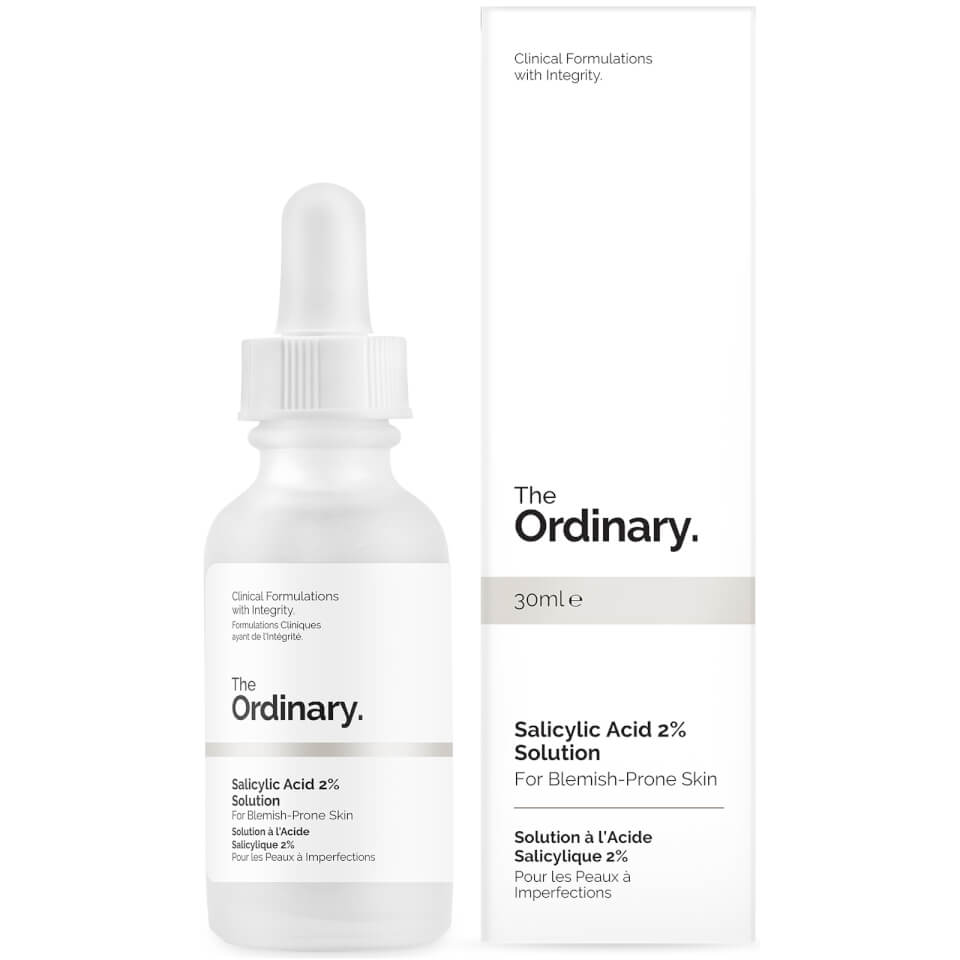


The Ordinary Salicylic Acid 2% Solution (30ml)
OrdinaryAnalysis updated August 2026 · How Scout scores
At a glance
Summary
This product contains beneficial ingredients like salicylic acid, which is effective for exfoliating and treating acne, and saccharide isomerate, a moisturizing agent. However, the presence of phenoxyethanol, a preservative that can cause skin irritation and has potential neurotoxicity concerns, affects its overall safety profile. The formulation is moderately processed, which limits its score despite the presence of beneficial components.
Key ingredients 11
Salicylic AcidVery Good
Salicylic Acid is a beta hydroxy acid (BHA) known for its ability to exfoliate the skin and clear pores. It is effective in treating acne and improving skin texture. It is well-regarded for its anti-inflammatory and keratolytic properties.
Risks
May cause dryness or irritation, especially in sensitive skin or with overuse.
Benefits
Helps to exfoliate the skin, clear pores, and reduce acne.
Saccharide IsomerateGood
Saccharide Isomerate is a plant-derived moisturizer that binds to the skin, providing long-lasting hydration. It mimics the skin's natural carbohydrate complex, enhancing moisture retention. It is generally well-tolerated and beneficial for dry skin.
Risks
There are minimal risks associated with Saccharide Isomerate, though very sensitive skin may experience irritation.
Benefits
It provides long-lasting hydration and improves skin moisture retention.
Aqua (Water)Neutral
Aqua, or water, is a common solvent used in cosmetic formulations. It helps dissolve other ingredients and provides a base for the solution. It does not have any direct benefits or risks associated with its use.
Risks
There are no significant risks associated with water in cosmetic formulations.
Benefits
Water acts as a solvent and carrier for other ingredients in the formulation.
Cocamidopropyl DimethylamineNeutral
Cocamidopropyl Dimethylamine is used as a surfactant and conditioning agent in cosmetics. It helps to stabilize formulations and improve texture. It is generally considered safe but can cause irritation in some individuals.
Risks
Potential for skin irritation, especially in sensitive individuals.
Benefits
Improves product texture and stability, providing conditioning effects.
HydroxyethylcelluloseNeutral
Hydroxyethylcellulose is a thickening agent used to improve the texture and consistency of cosmetic products. It is derived from cellulose and is generally considered safe. It does not provide direct skin benefits or risks.
Risks
There are no significant risks associated with Hydroxyethylcellulose.
Benefits
Enhances the texture and consistency of the product.
Polysorbate 20Neutral
Polysorbate 20 is an emulsifier that helps to mix oil and water-based ingredients. It is commonly used in cosmetics to stabilize formulations. It is generally safe but can cause irritation in some individuals.
Risks
Potential for skin irritation in sensitive individuals.
Benefits
Helps to stabilize formulations by emulsifying oil and water components.
Citric AcidNeutral
Citric Acid is used to adjust the pH of cosmetic products and can also act as a mild exfoliant. It is derived from citrus fruits and is generally safe in low concentrations. It does not pose significant risks or benefits in this formulation.
Risks
High concentrations can cause skin irritation.
Benefits
Helps to adjust pH and can provide mild exfoliation.
Sodium CitrateNeutral
Sodium Citrate is used as a buffering agent to control the pH of cosmetic products. It is generally considered safe and does not provide direct skin benefits. It helps maintain product stability.
Risks
There are no significant risks associated with Sodium Citrate.
Benefits
Maintains product stability by controlling pH levels.
Sodium HydroxideNeutral
Sodium Hydroxide is used to adjust the pH of cosmetic formulations. It is a strong base and is used in very small amounts to neutralize acids. It is safe in low concentrations but can be irritating in higher amounts.
Risks
Can cause irritation if used in high concentrations.
Benefits
Adjusts pH to ensure product stability and effectiveness.
ChlorphenesinNeutral
Chlorphenesin is a preservative used to prevent the growth of bacteria and fungi in cosmetic products. It is generally considered safe but can cause irritation in sensitive individuals. It does not provide direct skin benefits.
Risks
May cause skin irritation in sensitive individuals.
Benefits
Helps to preserve the product by preventing microbial growth.
PhenoxyethanolBad
Phenoxyethanol is a preservative used to prevent microbial growth in cosmetics. It is effective but can cause skin irritation and allergic reactions in some individuals. Concerns have been raised about its potential neurotoxicity at high concentrations.
Risks
Potential for skin irritation and allergic reactions; concerns about neurotoxicity.
Benefits
Prevents microbial growth, extending the shelf life of the product.
Get the full breakdown in the Scout appTake Scout shopping
Scan any product to see lab results, healthy alternatives, and your personalized analysis.
Download on theApp Store GET IT ONGoogle PlayAmazon pricing & content
Amazon price as of . Product prices and availability are accurate as of the date/time indicated and are subject to change. Any price and availability information displayed on Amazon.com at the time of purchase will apply to the purchase of this product.
CERTAIN CONTENT THAT APPEARS ON THIS SITE COMES FROM AMAZON. THIS CONTENT IS PROVIDED “AS IS” AND IS SUBJECT TO CHANGE OR REMOVAL AT ANY TIME.