
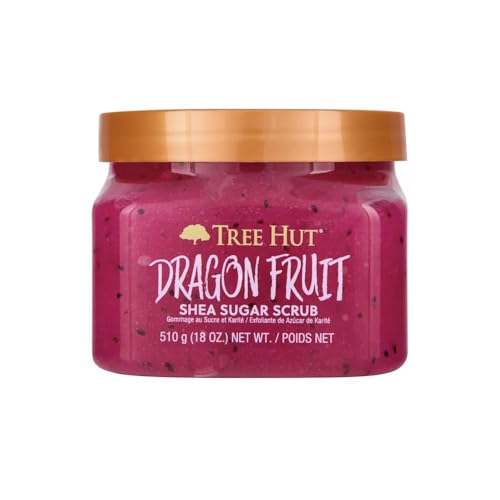


Tree Hut Shea Sugar Scrub Passion Fruit & Guava, 18 oz
Analysis updated September 2026 · How Scout scores
At a glance
Summary
This product contains several beneficial natural oils and butters, such as shea butter, avocado oil, and sweet almond oil, which are known for their moisturizing and nourishing properties. However, the presence of synthetic fragrance and phenoxyethanol, which can cause skin irritation and allergic reactions, detracts from its overall safety profile. The inclusion of these potentially irritating ingredients, along with a moderate level of processing, impacts the overall rating.
Key ingredients 24
Oenothera Biennis (Evening Primrose) OilVery Good
Evening Primrose Oil is rich in essential fatty acids and is known for its anti-inflammatory properties. It helps to soothe and moisturize the skin.
Risks
It is generally safe, but may cause allergic reactions in some individuals.
Benefits
It helps to soothe irritated skin and improve moisture retention.
Prunus Amygdalus Dulcis (Sweet Almond) OilVery Good
Sweet Almond Oil is a natural emollient that helps to soften and moisturize the skin. It is rich in vitamins and fatty acids.
Risks
It is generally safe, but may cause allergic reactions in individuals with nut allergies.
Benefits
It helps to nourish and hydrate the skin, improving its texture.
Butyrospermum Parkii (Shea) ButterVery Good
Shea Butter is a natural fat extracted from the nuts of the shea tree. It is known for its moisturizing and anti-inflammatory properties.
Risks
It is generally safe, but may cause allergic reactions in some individuals.
Benefits
It deeply moisturizes the skin and helps to reduce inflammation.
Carthamus Tinctorius (Safflower) Seed OilVery Good
Safflower Seed Oil is rich in linoleic acid, which helps to maintain the skin's barrier and prevent moisture loss. It is a lightweight oil that absorbs easily.
Risks
It is generally safe, but may cause allergic reactions in some individuals.
Benefits
It helps to moisturize and protect the skin, improving its overall health.
Persea Gratissima (Avocado) OilVery Good
Avocado Oil is rich in vitamins and fatty acids, making it an excellent moisturizer. It helps to nourish and protect the skin.
Risks
It is generally safe, but may cause allergic reactions in some individuals.
Benefits
It provides deep hydration and nourishment to the skin.
Macadamia Ternifolia Seed OilVery Good
Macadamia Seed Oil is rich in monounsaturated fats and is easily absorbed by the skin. It helps to moisturize and protect the skin.
Risks
It is generally safe, but may cause allergic reactions in individuals with nut allergies.
Benefits
It helps to hydrate and soften the skin, improving its elasticity.
TocopherolVery Good
Tocopherol, or Vitamin E, is a powerful antioxidant that helps to protect the skin from free radical damage. It is known for its moisturizing and healing properties.
Risks
It is generally safe, but may cause allergic reactions in some individuals.
Benefits
It helps to protect and moisturize the skin, enhancing its overall health.
GlycerinGood
Glycerin is a humectant that attracts moisture to the skin, helping to keep it hydrated. It is widely used in skincare for its moisturizing properties.
Risks
There are minimal risks associated with glycerin; it is generally safe for all skin types.
Benefits
Glycerin helps to maintain skin hydration and improve skin barrier function.
Ascorbic AcidGood
Ascorbic Acid, or Vitamin C, is an antioxidant that helps to protect the skin from free radical damage. It is known for its brightening and anti-aging properties.
Risks
It can cause irritation in high concentrations, but is generally safe in cosmetic formulations.
Benefits
It helps to brighten the skin and reduce signs of aging.
Passiflora Edulis Fruit ExtractGood
Passion Fruit Extract is rich in antioxidants and vitamins, which help to protect the skin from environmental damage. It has soothing and moisturizing properties.
Risks
It is generally safe, but may cause allergic reactions in some individuals.
Benefits
It helps to soothe and protect the skin, enhancing its appearance.
Passiflora Incarnata Flower ExtractGood
Passion Flower Extract is known for its calming and soothing properties. It helps to reduce skin irritation and inflammation.
Risks
It is generally safe, but may cause allergic reactions in some individuals.
Benefits
It helps to calm and soothe the skin, reducing redness and irritation.
Retinyl PalmitateGood
Retinyl Palmitate is a form of Vitamin A that helps to improve skin texture and reduce signs of aging. It is a common ingredient in anti-aging products.
Risks
It may cause irritation in sensitive skin, especially when exposed to sunlight.
Benefits
It helps to improve skin texture and reduce the appearance of fine lines.
Citrus Aurantium Dulcis (Orange) Peel OilGood
Orange Peel Oil is rich in Vitamin C and antioxidants, which help to brighten the skin and protect it from environmental damage. It has a refreshing scent.
Risks
It may cause photosensitivity, so sun protection is recommended after use.
Benefits
It helps to brighten the skin and provide a refreshing scent.
SucroseNeutral
Sucrose is a common sugar used as an exfoliant in scrubs. It helps to remove dead skin cells and improve skin texture. It is generally considered safe for topical use.
Risks
There are minimal risks associated with topical use, but over-exfoliation can lead to skin irritation.
Benefits
Sucrose can help to smooth and soften the skin by removing dead skin cells.
Polysorbate 20Neutral
Polysorbate 20 is an emulsifier that helps to mix oil and water-based ingredients. It is commonly used in cosmetics to stabilize formulations.
Risks
In rare cases, it may cause skin irritation or allergic reactions.
Benefits
It helps to improve the texture and consistency of cosmetic products.
SilicaNeutral
Silica is used as a thickening agent and absorbent in cosmetics. It helps to improve the texture and feel of products.
Risks
Inhalation of silica particles can be harmful, but this is not a concern in topical products.
Benefits
Silica can help to control oil and improve the matte finish of products.
Caprylyl GlycolNeutral
Standard formulation ingredient — neither beneficial nor harmful at typical use.
Risks
It is generally considered safe with low risk of irritation.
Benefits
It provides moisturizing benefits and helps to preserve the product.
Aqua (Water/Eau)Neutral
Water is used as a solvent in many cosmetic products. It helps to dissolve other ingredients and provide a base for formulations.
Risks
There are no significant risks associated with water in cosmetics.
Benefits
It acts as a solvent and helps to hydrate the skin.
Benzyl SalicylateNeutral
Benzyl Salicylate is used as a fragrance ingredient and UV light absorber. It is commonly found in perfumes and skincare products.
Risks
It may cause skin irritation or allergic reactions in sensitive individuals.
Benefits
It helps to stabilize fragrances and protect products from UV degradation.
Orange 4 (Cl 15510)Neutral
Orange 4 is a synthetic dye used to add color to cosmetics. It is commonly used in personal care products for its bright hue.
Risks
It may cause allergic reactions in some individuals, particularly those sensitive to dyes.
Benefits
It provides a vibrant color to the product, enhancing its visual appeal.
PhenoxyethanolBad
Phenoxyethanol is a preservative used to prevent microbial growth. It can cause skin irritation and is a potential allergen.
Risks
It may cause skin irritation and allergic reactions in some individuals.
Benefits
It helps to preserve the product and extend its shelf life.
Sorbic AcidBad
Processed additive flagged under Scout's ingredient doctrine.
Risks
It may cause mild skin irritation in sensitive individuals.
Benefits
It helps to preserve the product and prevent microbial contamination.
Fragrance (Parfum)Very Bad
Fragrance is often added to cosmetics for scent but can cause skin irritation and allergic reactions. It is a common allergen in skincare products.
Risks
Fragrance can lead to skin irritation, especially in sensitive individuals.
Benefits
It provides a pleasant scent to the product, enhancing user experience.
Yellow 5 (Cl 19140)Very Bad
Heavily flagged ingredient class under Scout's doctrine.
Risks
It may cause allergic reactions in some individuals, particularly those sensitive to dyes.
Benefits
It provides a vibrant color to the product, enhancing its visual appeal.
Get the full breakdown in the Scout appTake Scout shopping
Scan any product to see lab results, healthy alternatives, and your personalized analysis.
Download on theApp Store GET IT ONGoogle PlayAmazon pricing & content
Amazon price as of . Product prices and availability are accurate as of the date/time indicated and are subject to change. Any price and availability information displayed on Amazon.com at the time of purchase will apply to the purchase of this product.
CERTAIN CONTENT THAT APPEARS ON THIS SITE COMES FROM AMAZON. THIS CONTENT IS PROVIDED “AS IS” AND IS SUBJECT TO CHANGE OR REMOVAL AT ANY TIME.