
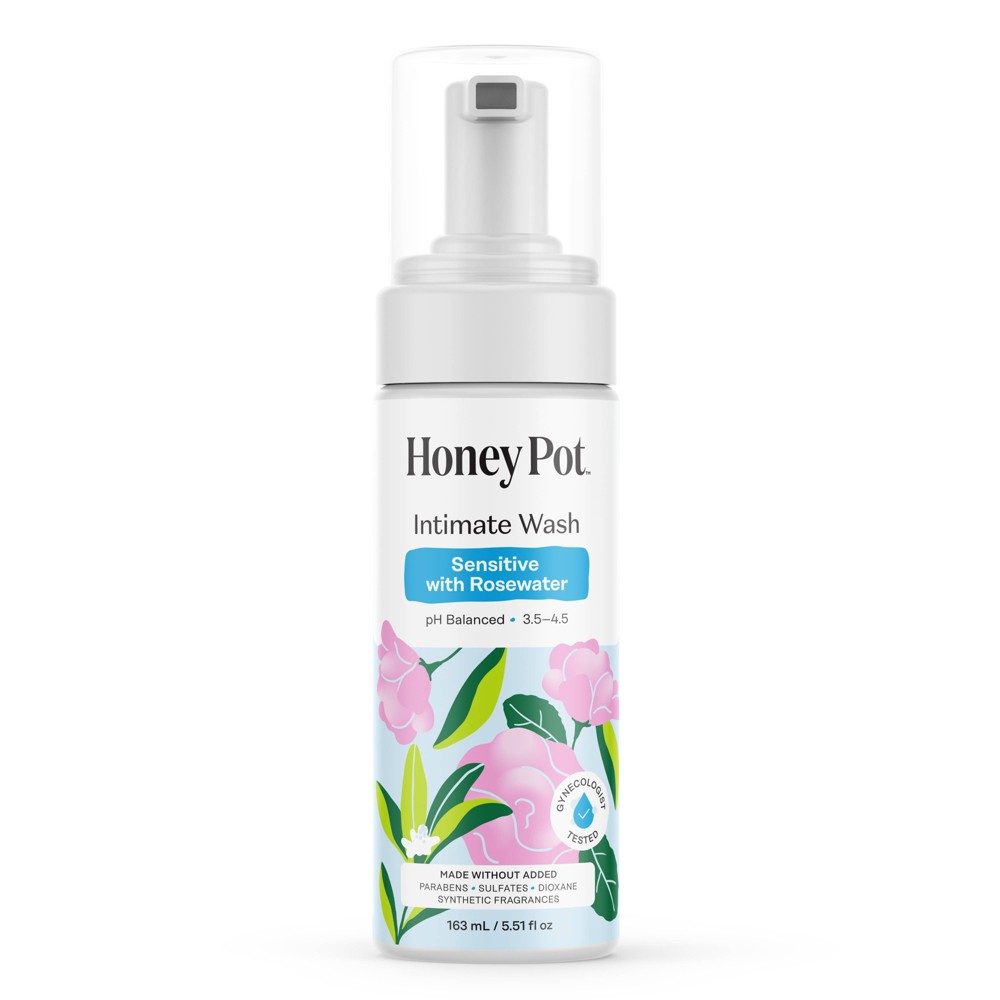
Honey Pot Intimate Wash - Sensitive with Rosewater - 5.51 fl oz
Analysis updated August 2026 · How Scout scores
At a glance
Summary
This product contains several beneficial natural ingredients such as apple cider vinegar, lavender flower water, and calendula extract, which are known for their soothing and anti-inflammatory properties. However, the presence of propylene glycol, phenoxyethanol, and linalool, which can cause irritation and allergic reactions, lowers its overall safety profile. The formulation is moderately processed with a mix of natural and synthetic components, impacting its score.
Key ingredients 26
Calendula Officinalis Flower ExtractVery Good
Calendula Extract is known for its anti-inflammatory and healing properties. It is beneficial for soothing irritated skin and promoting healing. It is well-tolerated by most skin types.
Risks
Very low risk of allergic reactions.
Benefits
Soothes and promotes healing of the skin.
Helianthus Annuus (Sunflower) Seed OilVery Good
Sunflower Seed Oil is rich in essential fatty acids and vitamin E. It helps moisturize and protect the skin barrier. It is suitable for all skin types.
Risks
Minimal risk of irritation.
Benefits
Moisturizes and protects the skin barrier.
TocopherolVery Good
Tocopherol, or Vitamin E, is a powerful antioxidant that helps protect the skin from free radical damage. It also has moisturizing properties. It is well-tolerated by most skin types.
Risks
Very low risk of irritation.
Benefits
Protects against free radicals and moisturizes the skin.
Apple Cider VinegarGood
Apple Cider Vinegar is known for its antibacterial and pH-balancing properties. It can help maintain the skin's natural acidity. It may cause irritation if used in high concentrations.
Risks
Potential for irritation if not properly diluted.
Benefits
Helps balance skin pH and has antibacterial properties.
Lavandula Angustifolia (Lavender) Flower WaterGood
Lavender Flower Water is used for its soothing and calming properties. It can help reduce skin irritation and redness. It is generally well-tolerated by most skin types.
Risks
Rare cases of allergic reactions.
Benefits
Soothes and calms irritated skin.
Rosa Damascena Flower WaterGood
Rose Flower Water is known for its hydrating and soothing properties. It can help refresh and tone the skin. It is suitable for most skin types.
Risks
Minimal risk of irritation.
Benefits
Hydrates and refreshes the skin.
Lavandula Hybrida OilGood
Lavandula Hybrida Oil is used for its aromatic and calming properties. It can help reduce stress and improve mood. It may cause irritation in sensitive individuals.
Risks
Potential skin irritant for sensitive skin.
Benefits
Provides calming and aromatic benefits.
Asparagus Racemosus Root ExtractGood
Asparagus Racemosus Root Extract is used for its antioxidant properties. It helps protect the skin from oxidative stress. It is generally safe for topical use.
Risks
Low risk of irritation.
Benefits
Provides antioxidant protection.
Althaea Officinalis Root ExtractGood
Althaea Officinalis Root Extract is known for its soothing and anti-inflammatory properties. It helps calm irritated skin. It is suitable for sensitive skin.
Risks
Minimal risk of irritation.
Benefits
Soothes and calms irritated skin.
GlycerinGood
Glycerin is a humectant that attracts moisture to the skin, helping to keep it hydrated. It is a common ingredient in skincare products due to its effectiveness. It is suitable for all skin types.
Risks
Minimal risk of irritation.
Benefits
Hydrates and maintains skin moisture.
WaterNeutral
Water is a common solvent used in cosmetic formulations. It helps dissolve other ingredients and provides a base for the product. It does not have any direct benefits or risks.
Benefits
No direct benefits, but essential for formulation.
Sorbitan Oleate Decylglucoside CrosspolymerNeutral
This ingredient is a mild surfactant and emulsifier used to stabilize formulations. It is generally considered safe and non-irritating. It does not provide direct skin benefits.
Risks
Minimal risk of irritation for sensitive skin.
Benefits
Helps maintain product stability and texture.
Cocamidopropyl BetaineNeutral
Cocamidopropyl Betaine is a surfactant derived from coconut oil, used for its foaming and cleansing properties. It is milder than traditional sulfates. It can cause irritation in some individuals.
Risks
Potential skin irritant for sensitive individuals.
Benefits
Provides gentle cleansing and foaming action.
Allium Sativum (Garlic) Bulb ExtractNeutral
Garlic Bulb Extract is known for its antimicrobial properties. It can help reduce bacteria on the skin. It may cause irritation if used in high concentrations.
Risks
Potential for irritation if not properly formulated.
Benefits
Provides antimicrobial benefits.
Citrus Grandis (Grapefruit) Seed ExtractNeutral
Grapefruit Seed Extract is used for its antimicrobial and antioxidant properties. It can help protect the skin from environmental stressors. It may cause irritation in sensitive individuals.
Risks
Potential skin irritant for sensitive skin.
Benefits
Offers antimicrobial and antioxidant benefits.
Lactic AcidNeutral
Standard formulation ingredient — neither beneficial nor harmful at typical use.
Risks
Potential for irritation if used excessively.
Benefits
Exfoliates and improves skin texture.
Citric AcidNeutral
Citric Acid is used to adjust the pH of cosmetic formulations. It can also provide mild exfoliation. It may cause irritation in sensitive skin.
Risks
Potential for irritation in sensitive individuals.
Benefits
Helps maintain product pH and provides mild exfoliation.
EthylhexylglycerinNeutral
Ethylhexylglycerin is used as a skin conditioning agent and preservative enhancer. It is generally considered safe for use in cosmetics. It does not provide direct skin benefits.
Risks
Minimal risk of irritation.
Benefits
Enhances preservation and conditions the skin.
Sodium ChlorideNeutral
Sodium Chloride, or table salt, is used to thicken and stabilize formulations. It is generally safe for use in cosmetics. It does not provide direct skin benefits.
Benefits
Helps stabilize and thicken formulations.
Pentylene GlycolNeutral
Pentylene Glycol is used as a solvent and skin conditioning agent. It helps improve the texture and feel of products. It is generally considered safe for use in cosmetics.
Risks
Minimal risk of irritation.
Benefits
Improves product texture and conditions the skin.
PropanediolNeutral
Propanediol is used as a solvent and skin conditioning agent. It is considered a safer alternative to propylene glycol. It is generally well-tolerated by most skin types.
Risks
Minimal risk of irritation.
Benefits
Conditions the skin and improves product texture.
Propylene GlycolBad
Propylene Glycol is used as a humectant and solvent in cosmetics. It can cause irritation and allergic reactions in some individuals. It is a common ingredient in many formulations.
Risks
Potential skin irritant and allergen.
Benefits
Helps retain moisture in the skin.
Sodium BenzoateBad
Synthetic preservative that can form benzene in the presence of vitamin C.
Risks
Potential for irritation in sensitive individuals.
Benefits
Prevents microbial growth and extends product shelf life.
Potassium SorbateBad
Synthetic preservative — flagged in daily-use products.
Risks
Potential for irritation in sensitive individuals.
Benefits
Inhibits microbial growth and extends product shelf life.
PhenoxyethanolBad
Phenoxyethanol is a preservative used to prevent microbial growth in cosmetics. It can cause irritation and allergic reactions in some individuals. It is a common preservative in many formulations.
Risks
Potential skin irritant and allergen.
Benefits
Prevents microbial growth and extends product shelf life.
LinaloolBad
Linalool is a fragrance component that can cause allergic reactions and skin irritation. It is commonly used in cosmetics for its pleasant scent. It does not provide direct skin benefits.
Risks
Potential allergen and skin irritant.
Benefits
Provides a pleasant fragrance to products.
Get the full breakdown in the Scout appTake Scout shopping
Scan any product to see lab results, healthy alternatives, and your personalized analysis.
Download on theApp Store GET IT ONGoogle PlayAmazon pricing & content
Amazon price as of . Product prices and availability are accurate as of the date/time indicated and are subject to change. Any price and availability information displayed on Amazon.com at the time of purchase will apply to the purchase of this product.
CERTAIN CONTENT THAT APPEARS ON THIS SITE COMES FROM AMAZON. THIS CONTENT IS PROVIDED “AS IS” AND IS SUBJECT TO CHANGE OR REMOVAL AT ANY TIME.