
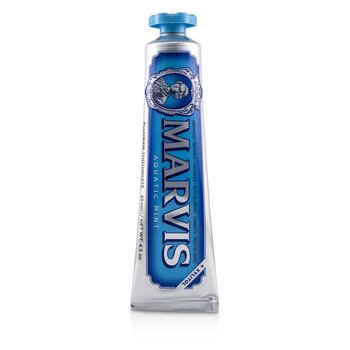


Marvis Aquatic Mint Toothpaste, 4.5 Oz
Summary
This toothpaste contains beneficial ingredients like xylitol and peppermint oil, which support oral health and provide a refreshing experience. However, it also includes titanium dioxide, sodium lauryl sulfate, and sodium saccharin, which are processed ingredients with potential health concerns, such as irritation and past controversies over safety. The presence of these additives and the level of processing limit the overall score.
At a glance
Key ingredients 18
GlycerinNeutral
Glycerin is a humectant that helps retain moisture in toothpaste. It is typically derived from plant oils and is considered safe for use in oral care products. Its role is primarily functional, with no significant health benefits or risks.
Benefits
Helps maintain moisture and prevent toothpaste from drying out.
Aluminum HydroxideNeutral
Aluminum hydroxide acts as a mild abrasive in toothpaste, aiding in the removal of plaque. It is processed from bauxite ore and is generally considered safe in small amounts. Its use is primarily functional, with no direct health benefits.
Risks
Excessive ingestion could lead to aluminum accumulation, but this is unlikely with normal toothpaste use.
Benefits
Contributes to effective cleaning by removing surface stains and plaque.
WaterNeutral
Water is used as a solvent and to provide the desired consistency in toothpaste. It is typically purified to remove impurities and contaminants. Its role is essential but does not provide direct health benefits.
Benefits
Essential for dissolving other ingredients and achieving the correct texture.
SilicaNeutral
Silica is used as an abrasive to help clean teeth and remove plaque. It is derived from natural sources like sand and is processed to ensure safety and effectiveness. Its primary function is mechanical cleaning, with no direct health benefits.
Benefits
Effective in polishing teeth and removing surface stains.
Aroma (Flavor)Neutral
Aroma is added to enhance the sensory experience of using toothpaste. It is typically a blend of natural and artificial flavors. While it improves taste, it does not contribute to oral health.
Risks
Potential for allergic reactions in sensitive individuals.
Benefits
Improves the taste and user experience of the toothpaste.
Cellulose GumNeutral
Cellulose gum is used as a thickening agent to stabilize the toothpaste formula. It is derived from plant fibers and is considered safe for use in food and oral care products. Its role is functional, with no direct health benefits.
Benefits
Helps maintain the consistency and stability of the toothpaste.
Titanium DioxideBad
Titanium dioxide is used as a whitening agent to improve the appearance of toothpaste. It is a processed mineral that has raised health concerns due to potential carcinogenicity when inhaled. Its use in toothpaste is primarily cosmetic.
Risks
Concerns about potential carcinogenic effects, particularly when inhaled in powder form.
Benefits
Improves the visual appeal of the toothpaste by providing a bright white color.
XylitolGood
Xylitol is a sugar alcohol used as a sweetener that also helps reduce cavity-causing bacteria. It is derived from plant sources like birch trees and corn cobs. Its use in toothpaste is beneficial for oral health.
Benefits
Reduces the risk of cavities by inhibiting the growth of harmful oral bacteria.
Sodium Lauryl SulfateBad
Sodium lauryl sulfate is a surfactant used to create foam and improve cleaning. It is synthesized from coconut oil and sulfur trioxide, and can cause irritation in some individuals. Its primary function is to enhance the cleaning action of toothpaste.
Risks
May cause irritation or allergic reactions in sensitive individuals.
Benefits
Enhances the foaming and cleaning action of the toothpaste.
Sodium SaccharinBad
Sodium saccharin is an artificial sweetener used to improve the taste of toothpaste. It is synthesized through chemical processes and has been controversial due to past cancer concerns. Its use is primarily for flavor enhancement.
Risks
Past concerns about potential carcinogenic effects, though deemed safe at current usage levels.
Benefits
Improves the taste of toothpaste without adding sugar.
Benzyl AlcoholNeutral
Benzyl alcohol is used as a preservative and solvent in toothpaste. It is naturally occurring in some essential oils and is synthesized for commercial use. Its role is primarily functional, with no direct health benefits.
Risks
May cause irritation in sensitive individuals.
Benefits
Helps preserve the product and maintain its stability.
MentholGood
Menthol provides a cooling sensation and freshens breath. It is extracted from mint oils and is known for its soothing properties. Its use in toothpaste enhances the sensory experience and provides a refreshing feel.
Benefits
Provides a cooling effect and helps freshen breath.
AnetholeNeutral
Anethole is a flavoring agent derived from anise and fennel. It is used to enhance the taste of toothpaste. Its role is primarily sensory, with no direct health benefits.
Benefits
Enhances the flavor profile of the toothpaste.
EugenolNeutral
Eugenol is a compound found in clove oil, used for its flavor and potential antimicrobial properties. It is extracted from natural sources and is generally considered safe in small amounts. Its use in toothpaste is primarily for flavor and potential oral health benefits.
Risks
May cause irritation or allergic reactions in sensitive individuals.
Benefits
Provides flavor and may offer antimicrobial benefits.
Menta Piperita (Peppermint) OilGood
Peppermint oil is used for its flavor and refreshing properties. It is extracted from peppermint leaves and is known for its antimicrobial and soothing effects. Its use in toothpaste enhances flavor and may contribute to oral health.
Benefits
Provides a refreshing flavor and may offer antimicrobial benefits.
LimoneneNeutral
Limonene is a citrus-derived compound used for its flavor and fragrance. It is extracted from citrus peels and is generally recognized as safe. Its role in toothpaste is primarily sensory, with no direct health benefits.
Risks
May cause irritation or allergic reactions in sensitive individuals.
Benefits
Enhances the flavor and fragrance of the toothpaste.
PineneNeutral
Pinene is a natural compound found in pine trees, used for its fragrance and potential antimicrobial properties. It is extracted from natural sources and is considered safe in small amounts. Its use in toothpaste is primarily for fragrance and potential oral health benefits.
Benefits
Provides fragrance and may offer antimicrobial benefits.
Citrus Aurantium (Orange) Peel OilGood
Orange peel oil is used for its flavor and potential antimicrobial properties. It is extracted from the peel of oranges and is known for its refreshing scent. Its use in toothpaste enhances flavor and may contribute to oral health.
Benefits
Provides a refreshing flavor and may offer antimicrobial benefits.
Processing
Processed Foods
Get the full breakdown in the Scout app
Scan any product to see lab results, healthy alternatives, and your personalized analysis.
Download on theApp Store