
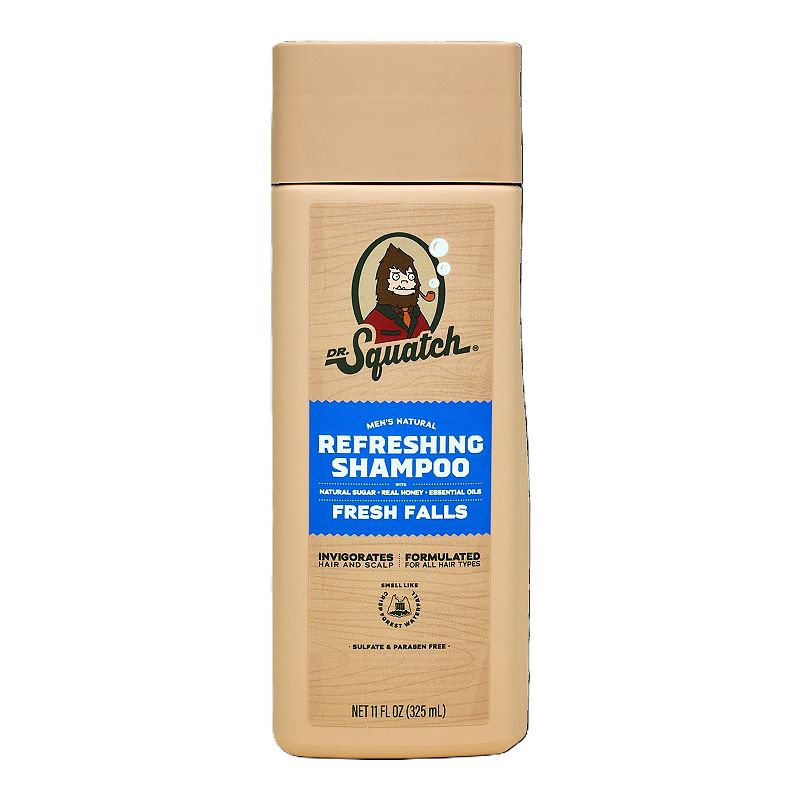


DR. SQUATCH Men's Natural Shampoo - Fresh Falls - 11 fl oz
Analysis updated August 2026 · How Scout scores
At a glance
Summary
This shampoo features a blend of gentle, coconut-derived surfactants like Decyl Glucoside and Coco-Glucoside, which are known for their mildness and effectiveness without irritating the scalp. It is free from harsh sulfates, silicones, and parabens, and includes beneficial ingredients such as jojoba oil and hydrolyzed oat protein that support hair health. The presence of naturally derived fragrance and a few preservatives slightly impacts its processing level, but overall, it maintains a clean ingredient profile suitable for sensitive scalps.
Key ingredients 21
Coco-GlucosideVery Good
Coco-Glucoside is a gentle surfactant derived from coconut oil and glucose. It is known for its mildness and ability to cleanse without causing irritation. It is suitable for all hair types, including sensitive scalps.
Risks
There are minimal risks, though it may cause mild irritation in rare cases.
Benefits
It is biodegradable and provides effective cleansing while maintaining hair's natural moisture.
Simmondsia Chinensis (Jojoba) Seed OilVery Good
Jojoba Seed Oil is known for its moisturizing and conditioning properties. It helps to balance oil production and improve hair texture. It is suitable for all hair types and provides deep conditioning benefits.
Risks
There are minimal risks associated with its use.
Benefits
Moisturizes and conditions hair, improving texture and manageability.
Decyl GlucosideGood
Decyl Glucoside is a mild, non-ionic surfactant derived from glucose and coconut oil. It is known for being gentle on the skin and hair, making it suitable for sensitive scalps. It effectively cleanses without stripping natural oils.
Risks
There are minimal risks associated with Decyl Glucoside, though some individuals may experience mild irritation.
Benefits
It provides gentle cleansing and is biodegradable, making it environmentally friendly.
GlycerinGood
Glycerin is a humectant that attracts moisture to the hair and scalp. It helps to keep hair hydrated and can improve the overall texture and manageability of hair. It is widely used in hair care products for its moisturizing properties.
Risks
In high concentrations, glycerin can make hair feel sticky.
Benefits
It helps to maintain moisture levels in the hair, preventing dryness and frizz.
GluconolactoneGood
Gluconolactone is a polyhydroxy acid that provides gentle exfoliation and hydration. It is known for its antioxidant properties and ability to improve skin and scalp health. It is suitable for sensitive skin and helps to maintain a healthy scalp environment.
Risks
May cause mild irritation in very sensitive individuals.
Benefits
Provides gentle exfoliation and hydration, promoting a healthy scalp.
TrehaloseGood
Trehalose is a sugar that acts as a moisturizer and antioxidant. It helps to protect hair from dehydration and environmental stressors. It is known for its ability to retain moisture and improve hair texture.
Risks
There are minimal risks associated with its use.
Benefits
Provides moisture retention and protection against environmental damage.
HoneyGood
Honey is a natural humectant that attracts and retains moisture. It is known for its antibacterial properties and ability to improve hair health. It helps to condition and soften hair, making it more manageable.
Risks
May cause allergic reactions in individuals sensitive to honey.
Benefits
Provides hydration and antibacterial benefits, improving hair health.
Hydrolyzed Oat ProteinGood
Hydrolyzed Oat Protein is known for its ability to strengthen and protect hair. It helps to improve hair texture and manageability by forming a protective barrier. It is suitable for all hair types and provides conditioning benefits.
Risks
There are minimal risks associated with its use.
Benefits
Strengthens and protects hair, improving texture and manageability.
Calendula Officinalis Flower ExtractGood
Calendula Officinalis Flower Extract is known for its soothing and anti-inflammatory properties. It helps to calm irritated scalps and promote healthy hair growth. It is suitable for sensitive skin and provides conditioning benefits.
Risks
May cause allergic reactions in individuals sensitive to calendula.
Benefits
Soothes and conditions the scalp, promoting healthy hair growth.
Equisetum Arvense (Horsetail) ExtractGood
Horsetail Extract is rich in silica, which helps to strengthen hair and improve its elasticity. It is known for its ability to promote hair growth and reduce hair loss. It provides conditioning benefits and enhances hair health.
Risks
May cause irritation in sensitive individuals.
Benefits
Strengthens hair and promotes growth, enhancing overall hair health.
Rosmarinus Officinalis (Rosemary) Leaf ExtractGood
Rosemary Leaf Extract is known for its antioxidant and antimicrobial properties. It helps to stimulate hair growth and improve scalp health. It is suitable for all hair types and provides conditioning benefits.
Risks
May cause irritation in sensitive individuals.
Benefits
Stimulates hair growth and improves scalp health, providing antioxidant benefits.
Symphytum Officinale (Comfrey) Leaf ExtractGood
Comfrey Leaf Extract is known for its soothing and healing properties. It helps to calm irritated scalps and promote healthy hair growth. It is suitable for sensitive skin and provides conditioning benefits.
Risks
May cause allergic reactions in individuals sensitive to comfrey.
Benefits
Soothes and conditions the scalp, promoting healthy hair growth.
Urtica Dioica (Nettle) Leaf ExtractGood
Nettle Leaf Extract is rich in vitamins and minerals that promote hair growth and improve scalp health. It helps to strengthen hair and reduce hair loss. It provides conditioning benefits and enhances hair health.
Risks
May cause irritation in sensitive individuals.
Benefits
Promotes hair growth and strengthens hair, enhancing overall hair health.
TocopherolGood
Tocopherol, also known as Vitamin E, is an antioxidant that helps to protect hair from environmental damage. It improves scalp health and promotes healthy hair growth. It is suitable for all hair types and provides conditioning benefits.
Risks
There are minimal risks associated with its use.
Benefits
Protects hair from damage and promotes healthy growth, providing antioxidant benefits.
Water (Aqua)Neutral
Water is a common solvent used in cosmetic formulations. It helps to dissolve other ingredients and provides a base for the product. It does not have any direct benefits or risks associated with its use in shampoos.
Risks
There are no known risks associated with water in cosmetic formulations.
Benefits
Water acts as a solvent and helps in the application of the product.
Naturally Derived FragranceNeutral
Naturally derived fragrances are used to impart scent to the product. They are generally considered safer than synthetic fragrances but can still cause allergic reactions in sensitive individuals. The exact composition is often proprietary, making it difficult to assess specific risks.
Risks
Potential for allergic reactions or sensitivities in some individuals.
Benefits
Provides a pleasant scent to the product without synthetic chemicals.
Xanthan GumNeutral
Xanthan Gum is a natural thickening agent used to stabilize and thicken formulations. It helps to improve the texture and consistency of the product. It is generally considered safe and non-irritating.
Risks
There are minimal risks, though it may cause mild irritation in rare cases.
Benefits
Improves product texture and consistency, enhancing user experience.
Citric AcidNeutral
Citric Acid is used to adjust the pH of cosmetic formulations. It helps to maintain the stability and effectiveness of the product. It is generally considered safe and non-irritating in small amounts.
Risks
In high concentrations, it may cause irritation.
Benefits
Helps to maintain product stability and pH balance.
Sodium Stearoyl LactylateBad
Processed additive flagged under Scout's ingredient doctrine.
Risks
There are minimal risks associated with its use.
Benefits
Improves product stability and texture, enhancing overall formulation.
Sodium BenzoateBad
Synthetic preservative that can form benzene in the presence of vitamin C.
Risks
May cause irritation in sensitive individuals.
Benefits
Prevents microbial growth, ensuring product safety and longevity.
Potassium SorbateBad
Synthetic preservative — flagged in daily-use products.
Risks
May cause irritation in sensitive individuals.
Benefits
Prevents mold and yeast growth, ensuring product safety.
Get the full breakdown in the Scout appTake Scout shopping
Scan any product to see lab results, healthy alternatives, and your personalized analysis.
Download on theApp Store GET IT ONGoogle PlayAmazon pricing & content
Amazon price as of . Product prices and availability are accurate as of the date/time indicated and are subject to change. Any price and availability information displayed on Amazon.com at the time of purchase will apply to the purchase of this product.
CERTAIN CONTENT THAT APPEARS ON THIS SITE COMES FROM AMAZON. THIS CONTENT IS PROVIDED “AS IS” AND IS SUBJECT TO CHANGE OR REMOVAL AT ANY TIME.