
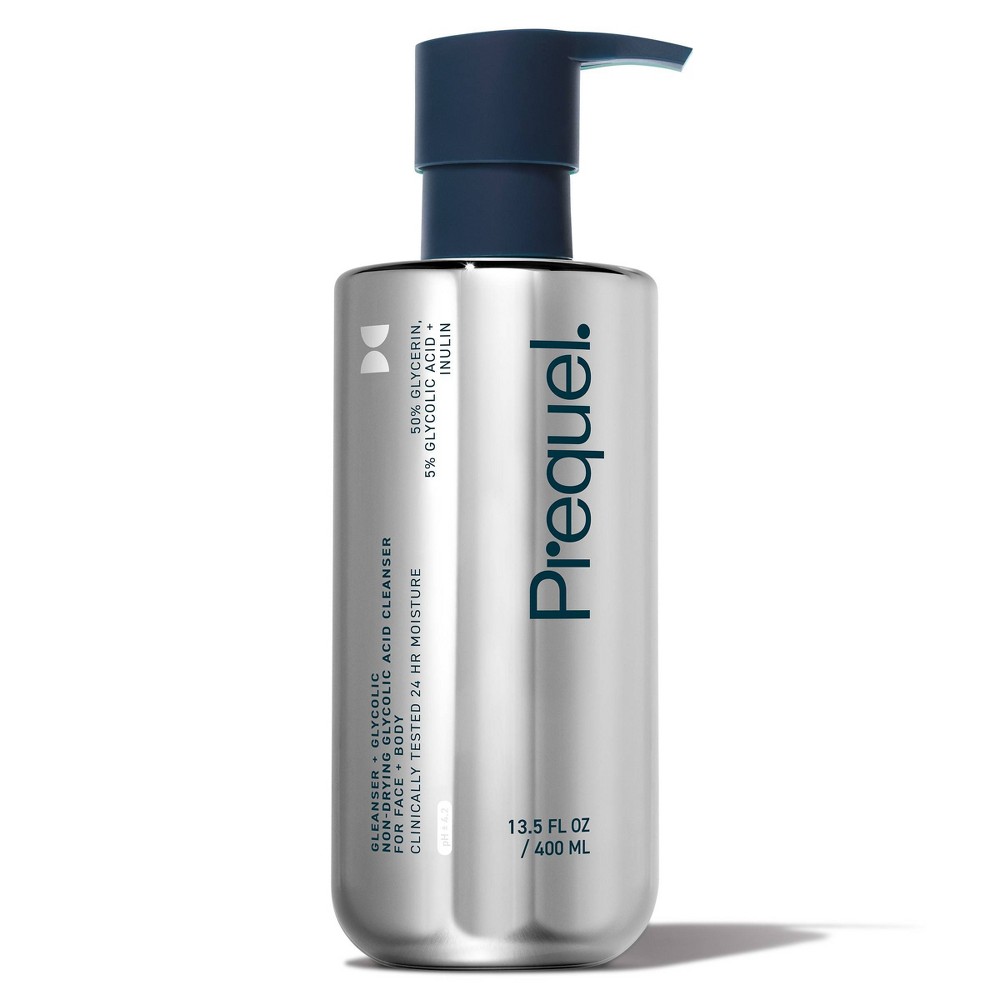

Prequel Gleanser + Glycolic Acid Non-Drying Cleanser - 13.5 fl oz: Basic Cleansing, Liquid, Normal & Combination Skin
Analysis updated August 2026 · How Scout scores
At a glance
Summary
This cleanser features a blend of beneficial ingredients such as glycerin, sodium cocoyl isethionate, and glycolic acid, which are known for their hydrating and exfoliating properties. The formulation avoids harsh surfactants and includes mild, plant-derived cleansing agents like coco-glucoside, making it suitable for sensitive skin. The absence of synthetic fragrances and harmful additives contributes to its high rating, reflecting a clean and minimally processed product.
Key ingredients 16
GlycerinGood
Glycerin is a humectant that attracts moisture to the skin, helping to maintain hydration. It is widely used in skincare products for its ability to improve skin barrier function. It is generally well-tolerated and suitable for all skin types.
Risks
There are minimal risks associated with glycerin, though in rare cases it may cause irritation if used in high concentrations.
Benefits
Glycerin helps to keep the skin moisturized and can improve the skin's natural protective barrier.
Sodium Cocoyl IsethionateGood
Sodium Cocoyl Isethionate is a mild surfactant derived from coconut oil. It is used to create a rich, creamy lather without stripping the skin of its natural oils. It is considered gentle and suitable for sensitive skin.
Risks
In rare cases, it may cause mild irritation, especially in individuals with very sensitive skin.
Benefits
It provides effective cleansing while being gentle on the skin, making it suitable for daily use.
Glycolic AcidGood
Glycolic Acid is an alpha hydroxy acid (AHA) that helps to exfoliate the skin by removing dead skin cells. It can improve skin texture and tone. It is effective in promoting cell turnover and reducing signs of aging.
Risks
Glycolic Acid can cause irritation or sensitivity, especially in higher concentrations or with prolonged use.
Benefits
It helps to exfoliate the skin, improving texture and promoting a more radiant complexion.
Coco-GlucosideGood
Coco-Glucoside is a mild, non-ionic surfactant derived from coconut oil and glucose. It is used to gently cleanse the skin without stripping natural oils. It is biodegradable and considered environmentally friendly.
Risks
It is generally well-tolerated, though very sensitive skin may experience mild irritation.
Benefits
It provides gentle cleansing and is suitable for sensitive skin types.
InulinGood
Beneficial ingredient — whole-food or functional value in this product class.
Risks
There are minimal risks associated with inulin, though it may cause mild irritation in rare cases.
Benefits
It supports the skin's natural microbiome and helps to maintain hydration.
Water (Aqua)Neutral
Water is a common solvent used in cosmetic formulations to dissolve other ingredients. It acts as a base for many skincare products. It is essential for the formulation but does not provide direct skincare benefits.
Risks
There are no significant risks associated with water in cosmetic formulations.
Benefits
Water helps to dissolve other ingredients and provides a base for the formulation.
Cocamidopropyl BetaineNeutral
Cocamidopropyl Betaine is a surfactant and foam booster derived from coconut oil. It is used to enhance the cleansing properties of formulations. It is generally considered mild and non-irritating.
Risks
Some individuals may experience allergic reactions or irritation, particularly if impurities are present.
Benefits
It helps to improve the texture and foaming properties of cleansing products.
Sodium HydroxideNeutral
Sodium Hydroxide is used to adjust the pH of cosmetic formulations. It is a strong base that helps to neutralize acidic components. It is used in very small amounts to ensure product stability.
Risks
In high concentrations, it can be corrosive and cause irritation, but it is typically used in safe, low concentrations in cosmetics.
Benefits
It helps to maintain the desired pH level of the product, ensuring its effectiveness and stability.
Polyglyceryl-10 TristearateNeutral
Polyglyceryl-10 Tristearate is an emulsifier that helps to blend oil and water components in formulations. It is derived from natural sources and is considered safe for use in cosmetics. It helps to stabilize formulations and improve texture.
Risks
There are minimal risks associated with this ingredient, though it may cause mild irritation in sensitive individuals.
Benefits
It helps to stabilize emulsions, ensuring a smooth and consistent product texture.
Glycol DistearateNeutral
Glycol Distearate is used as an opacifying agent and emollient in cosmetic formulations. It helps to improve the texture and appearance of products. It is considered safe for use in cosmetics.
Risks
There are minimal risks associated with this ingredient, though it may cause mild irritation in sensitive individuals.
Benefits
It enhances the texture and appearance of cosmetic products, providing a pearlescent effect.
Polyquaternium-10Neutral
Polyquaternium-10 is a conditioning agent that helps to improve the texture and manageability of hair and skin. It forms a protective film, reducing static and enhancing smoothness. It is widely used in personal care products for its conditioning properties.
Risks
In rare cases, it may cause mild irritation or allergic reactions.
Benefits
It provides conditioning benefits, improving the feel and appearance of hair and skin.
EthylhexylglycerinNeutral
Ethylhexylglycerin is used as a preservative and skin-conditioning agent in cosmetics. It enhances the efficacy of other preservatives and provides mild moisturizing benefits. It is considered safe for use in cosmetic formulations.
Risks
There are minimal risks associated with this ingredient, though it may cause mild irritation in sensitive individuals.
Benefits
It helps to preserve the product and provides mild moisturizing benefits.
Tetrasodium Glutamate DiacetateNeutral
Tetrasodium Glutamate Diacetate is a chelating agent that helps to stabilize cosmetic formulations by binding metal ions. It enhances the effectiveness of preservatives and improves product stability. It is considered safe for use in cosmetics.
Risks
There are minimal risks associated with this ingredient, though it may cause mild irritation in rare cases.
Benefits
It helps to stabilize formulations and enhance the effectiveness of preservatives.
Xanthan GumNeutral
Xanthan Gum is a natural thickening agent used to stabilize and thicken cosmetic formulations. It helps to improve the texture and consistency of products. It is considered safe for use in cosmetics.
Risks
There are minimal risks associated with xanthan gum, though it may cause mild irritation in rare cases.
Benefits
It helps to stabilize and thicken formulations, improving product texture and consistency.
PhenoxyethanolBad
Processed additive flagged under Scout's ingredient doctrine.
Risks
In high concentrations, it may cause irritation or allergic reactions, but it is typically used in safe amounts.
Benefits
It helps to preserve the product, preventing contamination and extending shelf life.
LecithinBad
Processed additive flagged under Scout's ingredient doctrine.
Risks
There are minimal risks associated with lecithin, though it may cause mild irritation in sensitive individuals.
Benefits
It helps to moisturize and condition the skin, improving texture and hydration.
Get the full breakdown in the Scout appTake Scout shopping
Scan any product to see lab results, healthy alternatives, and your personalized analysis.
Download on theApp Store GET IT ONGoogle Play