
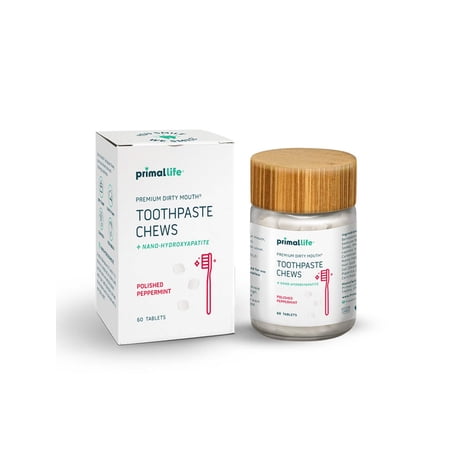
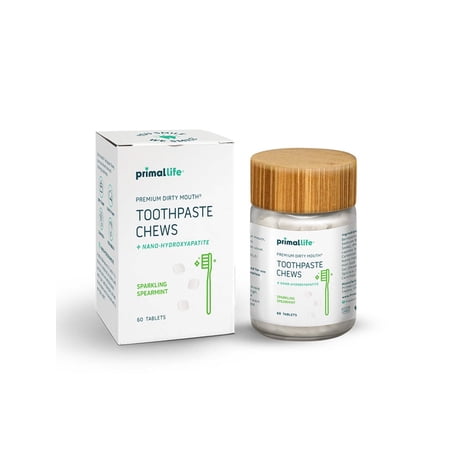


Primal Life Organics Toothpaste Chews!
Analysis updated October 2026 · How Scout scores
At a glance
Summary
This toothpaste features a clean formula with beneficial ingredients like nano-hydroxyapatite for enamel remineralization and baking soda for gentle cleaning. It avoids harmful substances such as fluoride, SLS, and artificial sweeteners, and includes natural mint oils for freshness. The use of clays and natural salts further supports oral health without introducing irritants or harsh chemicals.
Key ingredients 11
Nano-HydroxyapatiteVery Good
Nano-hydroxyapatite is a biomimetic mineral that helps in remineralizing and strengthening tooth enamel. It is considered a safe and effective alternative to fluoride in oral care products. Its ability to repair enamel makes it highly beneficial for dental health.
Risks
There are minimal risks associated with nano-hydroxyapatite when used in oral care.
Benefits
It effectively remineralizes and strengthens tooth enamel, promoting overall dental health.
Peppermint OilGood
Peppermint oil is a natural antimicrobial agent that helps in freshening breath and reducing oral bacteria. It is widely used in oral care products for its refreshing flavor and antibacterial properties. Its use in toothpaste can contribute to overall oral hygiene.
Risks
In rare cases, it may cause allergic reactions or irritation.
Benefits
It provides a refreshing flavor and helps reduce oral bacteria, promoting fresh breath.
Spearmint OilGood
Spearmint oil is known for its antimicrobial properties and is commonly used in oral care products to freshen breath. It helps in reducing oral bacteria and provides a pleasant taste. Its inclusion in toothpaste can enhance oral hygiene.
Risks
Potential risks include allergic reactions or irritation in sensitive individuals.
Benefits
It helps in reducing oral bacteria and freshening breath, contributing to oral health.
Bentonite ClayNeutral
Bentonite clay is a natural clay that is often used for its absorbent properties. It can help remove impurities and toxins from the mouth. However, its effectiveness in oral care is not well-documented.
Risks
There is a potential risk of contamination with heavy metals if not sourced properly.
Benefits
It may help in detoxifying the mouth by binding to toxins and impurities.
Kaolin ClayNeutral
Kaolin clay is a gentle abrasive that can help in cleaning teeth without damaging enamel. It is often used in natural toothpaste formulations. However, its specific benefits for oral health are not extensively studied.
Risks
There is minimal risk associated with kaolin clay when used in oral care products.
Benefits
It provides a mild abrasive action that can aid in cleaning teeth.
Sodium BicarbonateNeutral
Standard formulation ingredient — neither beneficial nor harmful at typical use.
Risks
Excessive use can lead to enamel erosion due to its abrasive nature.
Benefits
It effectively cleans teeth and neutralizes acids, promoting oral health.
Phthalimidoperoxy-caproic Acid (PAP)Neutral
PAP is a bleaching agent used in teeth whitening products. It is considered a safer alternative to hydrogen peroxide as it is less likely to cause enamel erosion. However, its long-term effects on oral health are not fully understood.
Risks
Potential risks include tooth sensitivity and gum irritation with prolonged use.
Benefits
It can effectively whiten teeth without the harsh effects associated with hydrogen peroxide.
Calcium CarbonateNeutral
Calcium carbonate is a common abrasive used in toothpaste to help remove plaque and surface stains. It is generally considered safe and effective for oral care. However, it does not provide any additional benefits beyond its abrasive properties.
Risks
Overuse can lead to enamel wear due to its abrasive nature.
Benefits
It aids in cleaning teeth by removing plaque and surface stains.
Malic AcidNeutral
Malic acid is an organic compound that can help in maintaining oral hygiene by stimulating saliva production. It is often used in oral care products for its tart flavor. However, its direct benefits for oral health are limited.
Risks
Excessive use can lead to enamel erosion due to its acidic nature.
Benefits
It may help in increasing saliva production, which is beneficial for oral health.
Monk FruitNeutral
Monk fruit is a natural sweetener that is often used as an alternative to sugar in oral care products. It does not contribute to tooth decay and is considered safe for dental health. However, its specific benefits for oral health are not well-documented.
Risks
There are no significant risks associated with monk fruit in oral care.
Benefits
It provides a sweet taste without contributing to tooth decay.
Dead Sea SaltNeutral
Dead Sea salt is rich in minerals and is sometimes used in oral care for its potential cleansing properties. It may help in maintaining oral hygiene by providing a mild abrasive action. However, its specific benefits for oral health are not extensively studied.
Risks
Excessive use can lead to irritation due to its salt content.
Benefits
It may aid in cleansing the mouth and maintaining oral hygiene.
Processing
Unprocessed or Minimally Processed Foods
Get the full breakdown in the Scout appTake Scout shopping
Scan any product to see lab results, healthy alternatives, and your personalized analysis.
Download on theApp Store GET IT ONGoogle PlayAmazon pricing & content
Amazon price as of . Product prices and availability are accurate as of the date/time indicated and are subject to change. Any price and availability information displayed on Amazon.com at the time of purchase will apply to the purchase of this product.
CERTAIN CONTENT THAT APPEARS ON THIS SITE COMES FROM AMAZON. THIS CONTENT IS PROVIDED “AS IS” AND IS SUBJECT TO CHANGE OR REMOVAL AT ANY TIME.