
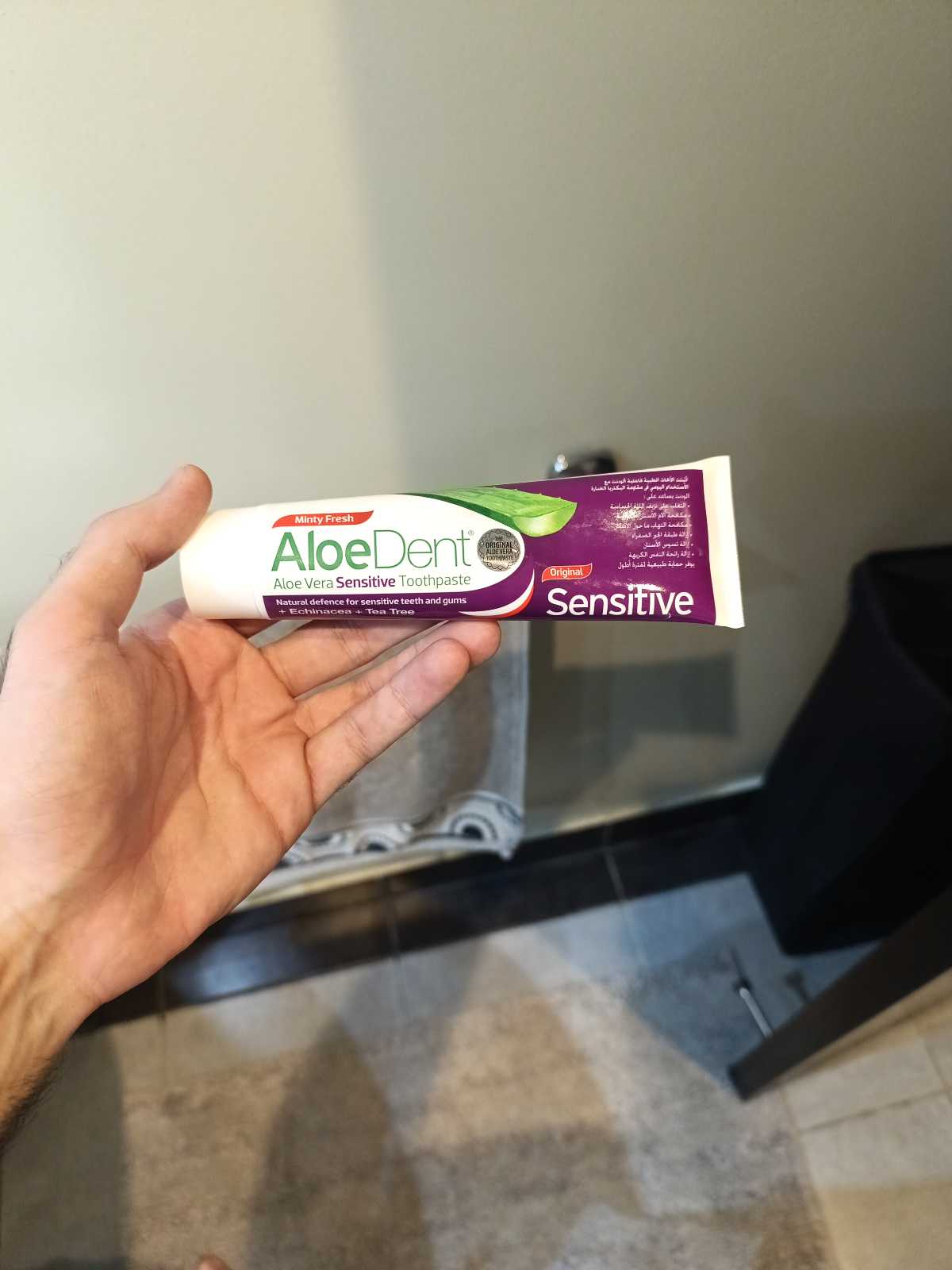


Optima Aloe Dent Sensitive Toothpaste 100ml - Free Shipping
Analysis updated September 2026 · How Scout scores
At a glance
Summary
This toothpaste features a clean formula with beneficial ingredients like aloe vera, tea tree oil, and peppermint, which are known for their soothing and antimicrobial properties. The absence of harmful substances such as fluoride, SLS, and artificial additives contributes to its high rating, making it a safe choice for oral care.
Key ingredients 10
GlycerinGood
Beneficial ingredient — whole-food or functional value in this product class.
Risks
There are minimal risks associated with glycerin in oral care products.
Benefits
Glycerin helps maintain the consistency and moisture of the toothpaste.
Aloe Barbadensis (Aloe Vera) Leaf JuiceGood
Aloe vera is known for its soothing and anti-inflammatory properties. It can help soothe oral tissues and promote healing. It is a beneficial ingredient in oral care products.
Risks
There are minimal risks associated with aloe vera in oral care products.
Benefits
Aloe vera helps soothe and heal irritated oral tissues, contributing to overall oral health.
Tea Tree Essential OilGood
Tea tree oil has natural antimicrobial properties that can help reduce bacteria in the mouth. It is considered a beneficial ingredient in oral care. It contributes to maintaining oral hygiene.
Risks
Tea tree oil should not be ingested in large quantities, but this is not a concern in toothpaste.
Benefits
Tea tree oil helps reduce oral bacteria, promoting healthier gums and fresher breath.
PeppermintGood
Peppermint oil is used for its natural antimicrobial properties and refreshing flavor. It helps freshen breath and can reduce oral bacteria. It is a beneficial ingredient in oral care products.
Risks
There are minimal risks associated with peppermint oil in oral care products.
Benefits
Peppermint oil provides a refreshing taste and helps maintain oral hygiene by reducing bacteria.
SorbitolNeutral
Sorbitol is a sugar alcohol used as a sweetener and humectant in toothpaste. It is generally safe and non-cariogenic. It does not provide significant oral health benefits.
Risks
Excessive consumption can have a laxative effect, but this is not a concern in toothpaste.
Benefits
Sorbitol helps keep the toothpaste moist and provides a sweet taste without promoting cavities.
Hydrated SilicaNeutral
Hydrated silica is used as an abrasive to help remove plaque and stains from teeth. It is considered safe for use in toothpaste. It does not provide additional health benefits beyond its abrasive action.
Risks
Overuse of abrasive toothpaste can potentially wear down enamel over time.
Benefits
Hydrated silica effectively aids in cleaning teeth by removing surface stains.
Horse ChestnutNeutral
Horse chestnut is sometimes used for its anti-inflammatory properties. Its role in oral care is not well-established. It does not have significant known benefits in toothpaste.
Risks
There are minimal risks associated with horse chestnut in oral care products.
Benefits
Horse chestnut may provide mild anti-inflammatory effects, though its benefits in toothpaste are not well-documented.
EchinaceaNeutral
Echinacea is known for its immune-boosting properties, but its role in oral care is not well-defined. It does not have significant known benefits in toothpaste. Its inclusion is likely for potential health benefits.
Risks
There are minimal risks associated with echinacea in oral care products.
Benefits
Echinacea may offer immune support, though its benefits in toothpaste are not well-documented.
MentholNeutral
Menthol provides a cooling sensation and freshens breath. It is commonly used in oral care products for its flavor and sensory effects. It does not provide significant health benefits.
Risks
There are minimal risks associated with menthol in oral care products.
Benefits
Menthol enhances the flavor and provides a refreshing sensation in the mouth.
LimoneneBad
Processed additive flagged under Scout's ingredient doctrine.
Risks
There are minimal risks associated with limonene in oral care products.
Benefits
Limonene contributes to the pleasant flavor and aroma of the toothpaste.
Processing
Processed Culinary Ingredients
Get the full breakdown in the Scout appTake Scout shopping
Scan any product to see lab results, healthy alternatives, and your personalized analysis.
Download on theApp Store GET IT ONGoogle Play