
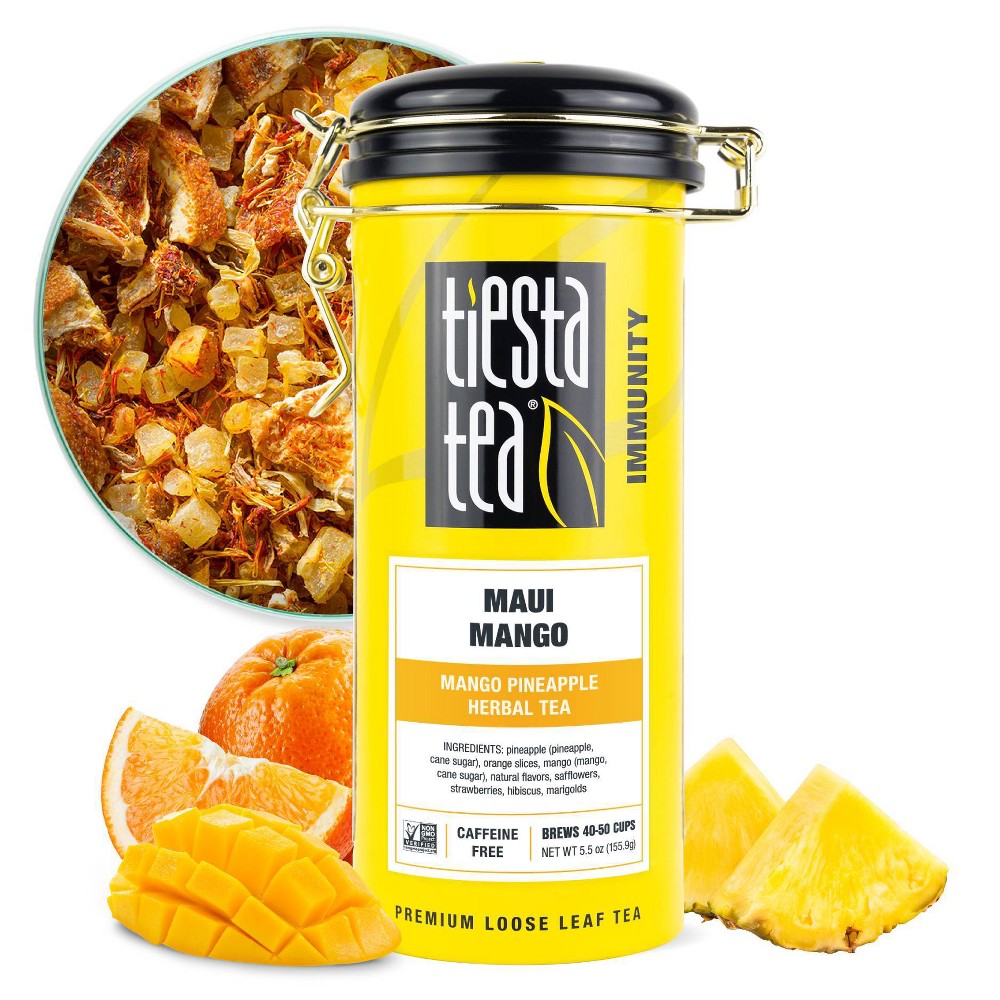


Tiesta Tea Maui Mango, Herbal Loose Leaf Tea Tin - 5.5oz: Non-Caffeinated
Analysis updated August 2026 · How Scout scores
At a glance
Summary
This herbal tea blend includes beneficial ingredients like pineapple, orange slices, mango, hibiscus, and strawberries, which are rich in vitamins and antioxidants. However, the presence of added cane sugar and natural flavors, which can be highly processed and lack transparency, slightly detracts from its overall healthiness. The product is moderately processed, which limits its score despite the presence of nutritious ingredients.
Key ingredients 8
Orange SlicesVery Good
Orange slices are a natural source of vitamin C and dietary fiber, contributing to immune health and digestion. They are minimally processed and retain most of their natural nutrients. The presence of natural sugars is balanced by the fiber content, making them a healthy addition.
Benefits
Rich in vitamin C and fiber, supporting immune health and digestion.
HibiscusVery Good
Hibiscus is known for its high antioxidant content and potential to support cardiovascular health. It is a natural ingredient with minimal processing, retaining its beneficial properties. Hibiscus also contributes a tart flavor and vibrant color to the tea.
Benefits
Rich in antioxidants and may help lower blood pressure and support heart health.
StrawberriesVery Good
Strawberries are a nutrient-dense fruit high in vitamin C, fiber, and antioxidants. They are minimally processed and retain their natural health benefits. The natural sugars in strawberries are balanced by their fiber content, making them a healthy choice.
Benefits
Provides vitamin C, fiber, and antioxidants, supporting immune health and digestion.
PineappleGood
Pineapple is a natural fruit rich in vitamins and antioxidants, particularly vitamin C. The inclusion of cane sugar may slightly reduce its health benefits due to added sugars. However, the natural sugars and nutrients in pineapple contribute positively to the overall nutritional profile.
Risks
The added cane sugar can contribute to increased calorie intake and potential blood sugar spikes.
Benefits
Pineapple provides vitamin C and antioxidants, which support immune function and overall health.
MangoGood
Mango is a tropical fruit high in vitamins A and C, as well as antioxidants. The addition of cane sugar may reduce its health benefits due to added sugars. Despite this, mango remains a nutritious ingredient with beneficial properties.
Risks
The added cane sugar can contribute to increased calorie intake and potential blood sugar spikes.
Benefits
Mango provides vitamins A and C, supporting skin health and immune function.
SafflowersNeutral
Safflowers are used for their color and potential health benefits, including anti-inflammatory properties. They are minimally processed and generally considered safe. However, their nutritional impact in small quantities is limited.
Benefits
May provide anti-inflammatory benefits and add natural color to the product.
MarigoldsNeutral
Marigolds are used for their color and potential health benefits, such as anti-inflammatory properties. They are minimally processed and generally considered safe. However, their nutritional impact in small quantities is limited.
Benefits
May provide anti-inflammatory benefits and add natural color to the product.
Natural FlavorsBad
Natural flavors are often used to enhance taste but can be highly processed and lack transparency. They may contain a variety of chemical compounds, which can be concerning for those seeking clean labels. The lack of specific ingredient disclosure makes it difficult to assess their health impact.
Risks
Potential for containing undisclosed additives and chemicals, which may cause allergic reactions or other health concerns.
Processing
Processed Foods
Get the full breakdown in the Scout appTake Scout shopping
Scan any product to see lab results, healthy alternatives, and your personalized analysis.
Download on theApp Store GET IT ONGoogle Play