
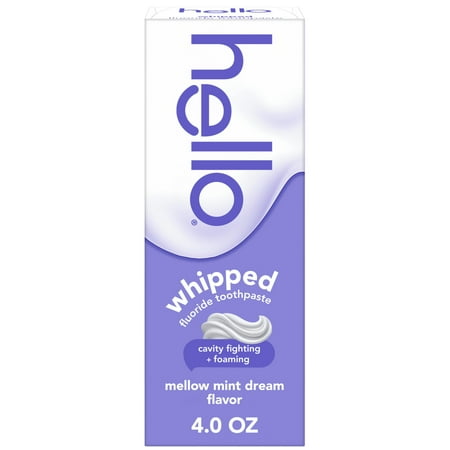


Hello Whipped Fluoride Toothpaste Minty Foam Toothpaste Mellow Mint Dream 4.0 oz
Analysis updated August 2026 · How Scout scores
At a glance
Summary
This toothpaste contains sodium monofluorophosphate, which provides cavity protection but poses a risk of fluorosis if overused. It also includes sodium bicarbonate, a beneficial ingredient for oral health due to its gentle abrasive properties. However, the presence of processed ingredients and the inclusion of fluoride limit its overall score.
Key ingredients 18
GlycerinGood
Beneficial ingredient — whole-food or functional value in this product class.
Risks
There are no significant risks associated with glycerin in toothpaste.
Benefits
Glycerin helps maintain the moisture and texture of the toothpaste.
WaterNeutral
Water is a common solvent used in toothpaste formulations. It helps dissolve other ingredients and provides the necessary consistency. It does not have any direct oral health benefits or risks.
Risks
There are no significant risks associated with water in toothpaste.
Benefits
Water helps in maintaining the desired texture and consistency of the toothpaste.
Calcium CarbonateNeutral
Calcium carbonate is used as a mild abrasive in toothpaste to help remove plaque and surface stains. It is generally considered safe and effective for this purpose. However, it does not provide any additional oral health benefits.
Risks
Excessive use of abrasives can potentially wear down enamel over time.
Benefits
It helps in cleaning teeth by removing surface stains and plaque.
Hydrated SilicaNeutral
Hydrated silica is used as an abrasive to help clean teeth and remove stains. It is effective for this purpose but does not provide additional oral health benefits. It is considered safe when used in moderation.
Risks
Overuse of abrasives can potentially lead to enamel erosion.
Benefits
It aids in cleaning teeth by removing surface stains and plaque.
Lauryl GlucosideNeutral
Lauryl glucoside is a mild surfactant used to create foam and improve the spreadability of toothpaste. It is derived from natural sources and is considered safe. It does not have any direct oral health benefits.
Risks
There are no significant risks associated with lauryl glucoside in toothpaste.
Benefits
It helps in creating foam, which can enhance the cleaning experience.
Sodium Methyl Cocoyl TaurateNeutral
Sodium methyl cocoyl taurate is a mild surfactant used to create foam and improve the texture of toothpaste. It is considered safe and does not contribute to oral health issues. It does not offer direct oral health benefits.
Risks
There are no significant risks associated with sodium methyl cocoyl taurate in toothpaste.
Benefits
It helps in creating foam, which can enhance the cleaning experience.
Cellulose GumNeutral
Cellulose gum is used as a thickening agent to provide the desired consistency in toothpaste. It is derived from natural sources and is considered safe. It does not offer direct oral health benefits.
Risks
There are no significant risks associated with cellulose gum in toothpaste.
Benefits
Helps maintain the desired texture and consistency of the toothpaste.
Sodium CarbonateNeutral
Sodium carbonate is used to adjust the pH of toothpaste and enhance cleaning. It is generally safe and effective for this purpose. It does not provide direct oral health benefits.
Risks
Excessive use can potentially irritate oral tissues.
Benefits
Helps in cleaning and maintaining the pH balance of the toothpaste.
Tetrasodium PyrophosphateNeutral
Tetrasodium pyrophosphate is used to prevent tartar buildup by binding calcium. It is effective for this purpose but does not provide additional oral health benefits. It is considered safe in toothpaste formulations.
Risks
There are no significant risks associated with tetrasodium pyrophosphate in toothpaste.
Benefits
Helps in preventing tartar buildup on teeth.
Cocamidopropyl BetaineNeutral
Cocamidopropyl betaine is a mild surfactant used to create foam and improve the texture of toothpaste. It is derived from coconut oil and is considered safe. It does not offer direct oral health benefits.
Risks
In rare cases, it can cause allergic reactions or irritation.
Benefits
Helps in creating foam, which can enhance the cleaning experience.
Rebaudioside ANeutral
Rebaudioside A is a natural sweetener derived from stevia. It is used to improve the taste of toothpaste without adding sugar. It does not provide direct oral health benefits.
Risks
There are no significant risks associated with rebaudioside A in toothpaste.
Benefits
Improves the taste of toothpaste without adding sugar.
CarbomerNeutral
Carbomer is used as a thickening agent to provide the desired consistency in toothpaste. It is considered safe for use in oral care products. It does not offer direct oral health benefits.
Risks
There are no significant risks associated with carbomer in toothpaste.
Benefits
Helps maintain the desired texture and consistency of the toothpaste.
Sodium BicarbonateNeutral
Standard formulation ingredient — neither beneficial nor harmful at typical use.
Risks
Excessive use can potentially lead to enamel erosion.
Benefits
Helps in cleaning teeth and neutralizing acids, promoting oral health.
Xanthan GumNeutral
Xanthan gum is used as a thickening agent to provide the desired consistency in toothpaste. It is derived from natural sources and is considered safe. It does not offer direct oral health benefits.
Risks
There are no significant risks associated with xanthan gum in toothpaste.
Benefits
Helps maintain the desired texture and consistency of the toothpaste.
FlavorBad
Processed additive flagged under Scout's ingredient doctrine.
Risks
Undisclosed flavor components can be a concern for those with allergies or sensitivities.
Benefits
Improves the taste of toothpaste, encouraging regular use.
Benzyl AlcoholBad
Processed additive flagged under Scout's ingredient doctrine.
Risks
In rare cases, benzyl alcohol can cause allergic reactions.
Benefits
Helps preserve the toothpaste by preventing microbial growth.
Acrylates/C10-30 Alkyl Acrylate CrosspolymerBad
Processed additive flagged under Scout's ingredient doctrine.
Risks
There are no significant risks associated with this ingredient in toothpaste.
Benefits
Helps maintain the desired texture and consistency of the toothpaste.
Sodium MonofluorophosphateBad
Sodium monofluorophosphate is used as a source of fluoride to help prevent cavities. While effective in reducing tooth decay, excessive fluoride can lead to fluorosis, a condition that affects tooth enamel. It is important to use fluoride-containing products as directed to avoid potential risks.
Risks
Excessive fluoride exposure can lead to dental fluorosis, affecting tooth enamel.
Benefits
Helps in preventing cavities by strengthening tooth enamel.
Get the full breakdown in the Scout appTake Scout shopping
Scan any product to see lab results, healthy alternatives, and your personalized analysis.
Download on theApp Store GET IT ONGoogle PlayAmazon pricing & content
Amazon price as of . Product prices and availability are accurate as of the date/time indicated and are subject to change. Any price and availability information displayed on Amazon.com at the time of purchase will apply to the purchase of this product.
CERTAIN CONTENT THAT APPEARS ON THIS SITE COMES FROM AMAZON. THIS CONTENT IS PROVIDED “AS IS” AND IS SUBJECT TO CHANGE OR REMOVAL AT ANY TIME.