
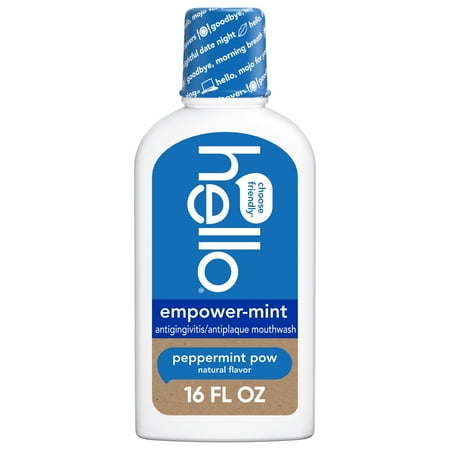

hello Empower-Mint Fluoride Free and Alcohol Free Mouthwash Peppermint Pow 16 Fl Oz Bottle
Analysis updated August 2026 · How Scout scores
At a glance
Summary
This mouthwash features a clean formula with beneficial ingredients such as xylitol, aloe vera, coconut oil, and tea tree oil, which support oral health by reducing bacteria and inflammation. It is free from fluoride and alcohol, avoiding common irritants and harmful chemicals often found in oral care products. The minimal processing level and absence of major harmful substances contribute to its high rating.
Key ingredients 14
XylitolVery Good
Xylitol is a natural sweetener that reduces cavity-causing bacteria. It helps maintain oral health by preventing tooth decay. It is highly beneficial in oral care products.
Risks
Excessive consumption may cause digestive issues.
Benefits
It reduces cavity-causing bacteria and prevents tooth decay.
GlycerinGood
Beneficial ingredient — whole-food or functional value in this product class.
Risks
Excessive use may lead to a sticky feeling in the mouth.
Benefits
It helps retain moisture and provides a pleasant texture.
Aloe Barbadensis LeafGood
Aloe Barbadensis Leaf, commonly known as Aloe Vera, is known for its soothing properties. It can help reduce inflammation and irritation in the mouth. It is a beneficial ingredient in oral care products.
Risks
There are minimal risks when used in appropriate amounts.
Benefits
It soothes oral tissues and reduces inflammation.
Cocos Nucifera (Coconut) OilGood
Coconut oil is known for its natural antibacterial properties. It can help reduce harmful bacteria in the mouth. It is a beneficial ingredient in oral care products.
Risks
There are minimal risks when used appropriately.
Benefits
It reduces harmful bacteria and supports oral health.
Melaleuca Alternifolia (Tea Tree) Leaf OilGood
Tea Tree Oil is a natural antimicrobial agent. It helps reduce bacteria and inflammation in the mouth. It is a beneficial ingredient in oral care products.
Risks
Undiluted use may cause irritation.
Benefits
It reduces bacteria and inflammation, supporting oral health.
Cetylpyridinium ChlorideNeutral
Cetylpyridinium Chloride is a common antimicrobial agent used in oral care products. It helps reduce plaque and gingivitis. However, its effectiveness can vary, and it may cause staining in some users.
Risks
Potential risks include tooth staining and altered taste perception.
Benefits
It provides antimicrobial action, reducing plaque and gingivitis.
WaterNeutral
Water is used as a solvent in many oral care products. It helps dissolve other ingredients and provides a liquid base. It is generally considered safe and inert.
Risks
There are no significant risks associated with water in this context.
Benefits
It acts as a solvent and carrier for other ingredients.
ErythritolNeutral
Erythritol is a sugar alcohol used as a sweetener. It does not contribute to tooth decay and is calorie-free. It is considered safe for oral care use.
Risks
Excessive consumption may cause digestive discomfort.
Benefits
It sweetens without contributing to tooth decay.
Poloxamer 407Neutral
Poloxamer 407 is a surfactant used to improve the solubility of ingredients. It helps in the even distribution of active ingredients. It is generally safe for use in oral care products.
Risks
High concentrations may cause irritation.
Benefits
It enhances the solubility and distribution of ingredients.
Citric AcidNeutral
Citric Acid is used to adjust the pH of oral care products. It can help enhance the stability and effectiveness of the formulation. It is generally safe for use in oral care.
Risks
High concentrations may cause enamel erosion.
Benefits
It adjusts pH and enhances product stability.
Rebaudioside ANeutral
Rebaudioside A is a steviol glycoside used as a natural sweetener. It provides sweetness without contributing to tooth decay. It is considered safe for use in oral care products.
Risks
There are minimal risks when used appropriately.
Benefits
It sweetens without contributing to tooth decay.
Polysorbate 80Bad
Processed additive flagged under Scout's ingredient doctrine.
Risks
In rare cases, it may cause allergic reactions.
Benefits
It stabilizes the formulation by emulsifying ingredients.
FlavorBad
Processed additive flagged under Scout's ingredient doctrine.
Risks
Undisclosed components may cause allergic reactions in sensitive individuals.
Benefits
It enhances the taste and user experience.
Sodium BenzoateBad
Synthetic preservative that can form benzene in the presence of vitamin C.
Risks
High concentrations may cause irritation or allergic reactions.
Benefits
It prevents microbial growth and extends shelf life.
Get the full breakdown in the Scout appTake Scout shopping
Scan any product to see lab results, healthy alternatives, and your personalized analysis.
Download on theApp Store GET IT ONGoogle PlayAmazon pricing & content
Amazon price as of . Product prices and availability are accurate as of the date/time indicated and are subject to change. Any price and availability information displayed on Amazon.com at the time of purchase will apply to the purchase of this product.
CERTAIN CONTENT THAT APPEARS ON THIS SITE COMES FROM AMAZON. THIS CONTENT IS PROVIDED “AS IS” AND IS SUBJECT TO CHANGE OR REMOVAL AT ANY TIME.