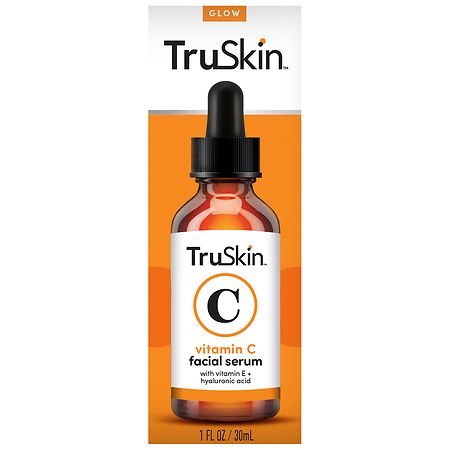
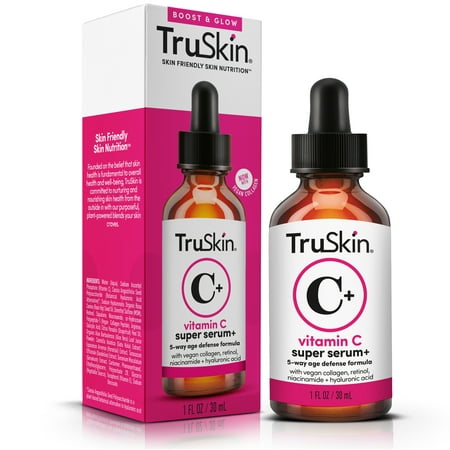
TruSkin Vitamin C Plus Super Serum 5-Way Rejuvenation with Vegan Collagen 1 fl oz
At a glance
Summary
This serum features a range of beneficial ingredients such as Vitamin C, hyaluronic acid alternatives, rose hip seed oil, retinol, and niacinamide, which are known for their skin-rejuvenating and hydrating properties. The formulation is largely composed of natural and effective skin actives, with minimal synthetic additives. The presence of phenoxyethanol as a preservative is a minor concern, but it is commonly used and generally well-tolerated, resulting in a high overall score for ingredient safety.
Key ingredients 26
Sodium Ascorbyl Phosphate (Vitamin C)Very Good
Sodium Ascorbyl Phosphate is a stable form of Vitamin C known for its antioxidant properties. It helps brighten the skin and reduce signs of aging. It is well-tolerated by most skin types.
Risks
May cause irritation in very sensitive skin types.
Benefits
Improves skin brightness and reduces the appearance of fine lines.
Organic Rosa Gamma (Rose Hip) Seed OilVery Good
Rose Hip Seed Oil is rich in essential fatty acids and antioxidants. It helps nourish and regenerate the skin, improving texture and tone. It is known for its anti-inflammatory properties.
Risks
May cause breakouts in acne-prone skin.
Benefits
Nourishes and regenerates the skin, improving texture and tone.
RetinolVery Good
Retinol is a form of Vitamin A that promotes cell turnover and collagen production. It is effective in reducing wrinkles and improving skin texture. It is a well-researched anti-aging ingredient.
Risks
Can cause irritation and sensitivity, especially in high concentrations.
Benefits
Reduces wrinkles and improves skin texture through enhanced cell turnover.
SqualaneVery Good
Squalane is a lightweight moisturizer that mimics the skin's natural oils. It helps maintain hydration without clogging pores. It is suitable for all skin types, including sensitive skin.
Risks
Generally considered safe with minimal risk of irritation.
Benefits
Provides lightweight hydration and maintains skin's moisture balance.
Organic Aloe Barbadensis (Aloe Vera) Leaf Juice PowderVery Good
Aloe Vera is known for its soothing and hydrating properties. It helps calm irritated skin and provides moisture. It is widely used for its skin healing benefits.
Risks
Generally safe, but may cause allergic reactions in rare cases.
Benefits
Soothes and hydrates the skin, providing moisture and calming irritation.
Cassia Angustifolia Seed Polysaccharide (Botanical Hyaluronic Acid Alternative)Good
This ingredient is a natural alternative to hyaluronic acid, providing hydration and moisture retention. It forms a protective film on the skin, enhancing its barrier function. It is derived from plant sources.
Risks
Minimal risk of allergic reaction.
Benefits
Enhances skin hydration and improves moisture retention.
Sodium HyaluronateGood
Sodium Hyaluronate is a form of hyaluronic acid that penetrates the skin to provide deep hydration. It helps maintain skin elasticity and plumpness. It is highly effective in retaining moisture.
Risks
Generally safe with minimal risk of irritation.
Benefits
Deeply hydrates and plumps the skin, reducing the appearance of wrinkles.
Dimethyl Sulfone (MSM)Good
MSM is an organic sulfur compound that supports collagen production and reduces inflammation. It is used to improve skin health and elasticity. It is generally well-tolerated.
Risks
Rarely, it may cause mild skin irritation.
Benefits
Supports collagen production and reduces inflammation, improving skin health.
NiacinamideGood
Niacinamide is a form of Vitamin B3 that improves skin barrier function and reduces inflammation. It helps even out skin tone and reduces the appearance of pores. It is suitable for all skin types.
Risks
Rarely causes mild irritation in sensitive skin.
Benefits
Improves skin barrier function and evens out skin tone.
Sr-Hydroxysan Polypeptide-1 (Vegan Collagen Peptide)Good
This vegan collagen peptide helps improve skin elasticity and firmness. It mimics the function of natural collagen, supporting skin structure. It is derived from non-animal sources.
Risks
Minimal risk of allergic reaction.
Benefits
Enhances skin elasticity and firmness, supporting skin structure.
ArginineGood
Arginine is an amino acid that helps improve skin hydration and elasticity. It supports collagen production and wound healing. It is generally well-tolerated by the skin.
Risks
Low risk of irritation.
Benefits
Improves skin hydration and supports collagen production.
Salicylic AcidGood
Salicylic Acid is a beta hydroxy acid that exfoliates the skin and unclogs pores. It is effective in treating acne and improving skin texture. It is well-suited for oily and acne-prone skin.
Risks
Can cause dryness and irritation if overused.
Benefits
Exfoliates and unclogs pores, improving skin texture and treating acne.
Centella Asiatica (Gotu Kola) ExtractGood
Gotu Kola Extract is known for its anti-inflammatory and wound healing properties. It helps improve skin elasticity and reduce the appearance of scars. It is beneficial for sensitive and aging skin.
Risks
Minimal risk of irritation.
Benefits
Improves skin elasticity and reduces the appearance of scars.
Glycerin (Vegetable Source)Good
Glycerin is a humectant that attracts moisture to the skin, keeping it hydrated. It is derived from vegetable sources and is widely used in skincare products. It is suitable for all skin types.
Risks
Generally safe with minimal risk of irritation.
Benefits
Attracts moisture to the skin, providing hydration and improving skin barrier function.
Tocopherol (Vitamin E)Good
Tocopherol is a form of Vitamin E that acts as an antioxidant, protecting the skin from free radical damage. It helps moisturize and improve skin texture. It is beneficial for maintaining skin health.
Risks
Rarely causes skin irritation.
Benefits
Protects the skin from free radical damage and improves moisture retention.
Water (Aqua)Neutral
Water is a common solvent used in cosmetic formulations. It helps dissolve other ingredients and provides a base for the serum. It does not have direct benefits or risks.
Benefits
Provides a medium for other active ingredients to be delivered to the skin.
Citrus Paradisi (Grapefruit) Peel OilNeutral
Grapefruit Peel Oil is used for its fragrance and potential antioxidant properties. It can provide a refreshing scent to cosmetic products. It may have mild astringent effects.
Risks
Potential for skin irritation and photosensitivity.
Benefits
Provides a refreshing scent and potential antioxidant benefits.
Equisetum Arvense (Horsetail) ExtractNeutral
Horsetail Extract is rich in silica, which may support skin health. It is used for its potential astringent and antioxidant properties. Its benefits in cosmetics are not well-documented.
Risks
Potential for mild irritation.
Benefits
May support skin health due to its silica content.
Taraxacum Officinale (Dandelion) ExtractNeutral
Dandelion Extract is used for its potential antioxidant and anti-inflammatory properties. It may help soothe and protect the skin. Its efficacy in cosmetics is not well-established.
Risks
Low risk of irritation.
Benefits
May provide antioxidant and soothing benefits.
Geranium Maculatum (Geranium) ExtractNeutral
Geranium Extract is used for its potential astringent and anti-inflammatory properties. It may help balance oil production and improve skin texture. Its benefits in cosmetics are not well-documented.
Risks
Potential for mild irritation.
Benefits
May help balance oil production and improve skin texture.
HydroxyethylcelluloseNeutral
Hydroxyethylcellulose is a thickening agent used to improve the texture of cosmetic products. It helps stabilize formulations and enhance product consistency. It is generally considered safe.
Risks
Low risk of irritation.
Benefits
Improves product texture and stability.
CarbomerNeutral
Carbomer is a thickening agent used to create gel-like textures in cosmetics. It helps stabilize emulsions and improve product consistency. It is widely used and considered safe.
Risks
Low risk of irritation.
Benefits
Enhances product texture and stability.
EthylhexylglycerinNeutral
Ethylhexylglycerin is used as a preservative and skin conditioning agent. It enhances the efficacy of other preservatives and provides mild moisturizing benefits. It is generally considered safe.
Risks
Low risk of irritation.
Benefits
Enhances preservative efficacy and provides mild moisturizing benefits.
Polysorbate 20Neutral
Polysorbate 20 is an emulsifier used to stabilize cosmetic formulations. It helps mix oil and water-based ingredients. It is generally considered safe for use in cosmetics.
Risks
Low risk of irritation.
Benefits
Stabilizes formulations by emulsifying oil and water-based ingredients.
PhenoxyethanolBad
Phenoxyethanol is a preservative used to prevent microbial growth in cosmetics. It is effective but can cause irritation in some individuals. It is a common alternative to parabens.
Risks
Potential for skin irritation and allergic reactions.
Benefits
Prevents microbial growth, extending product shelf life.
Sodium BenzoateBad
Synthetic preservative that can form benzene in the presence of vitamin C.
Risks
Low risk of irritation.
Benefits
Prevents microbial growth, extending product shelf life.
Processing
Processed Foods
Get the full breakdown in the Scout appTake Scout shopping
Scan any product to see lab results, healthy alternatives, and your personalized analysis.