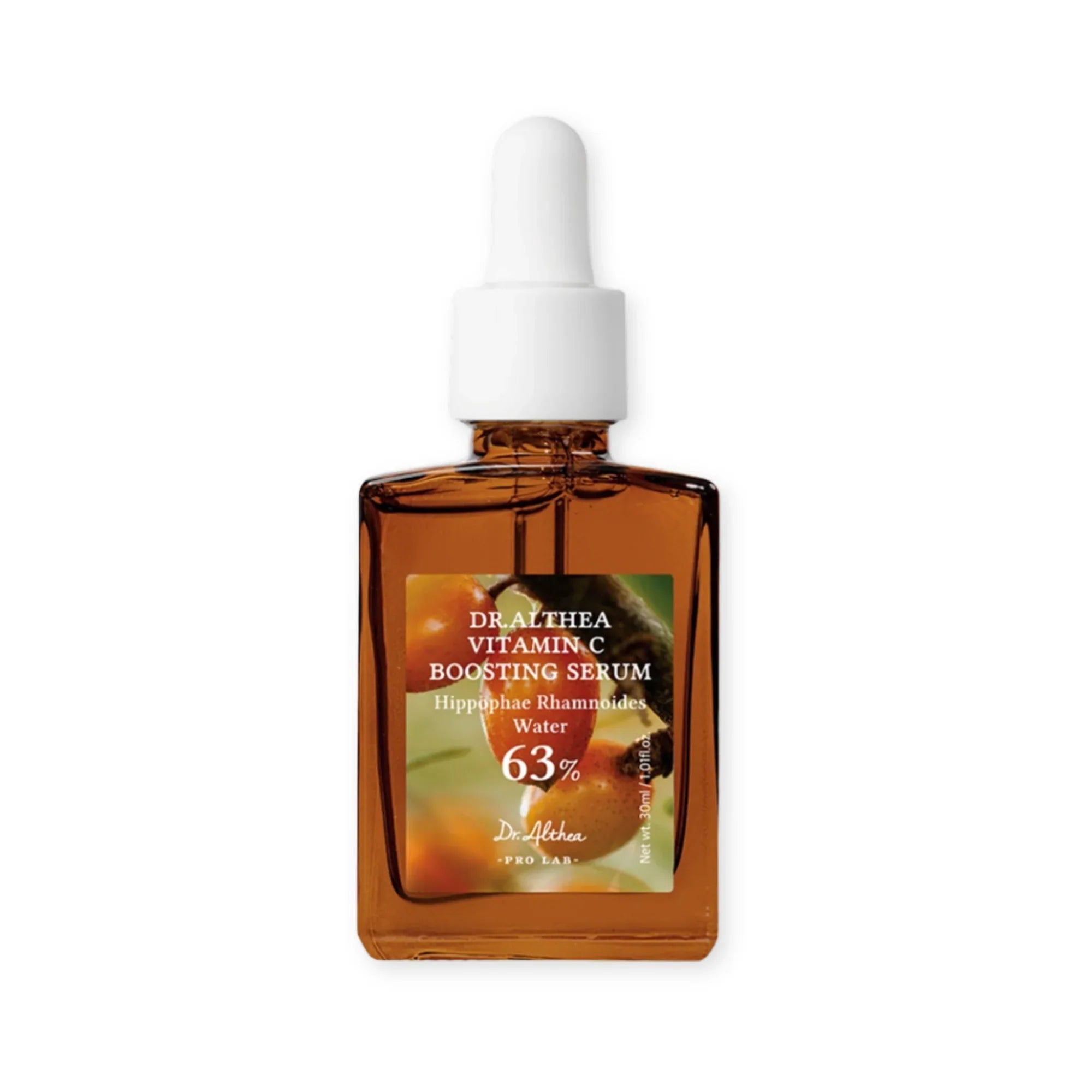
Dr. Althea Vitamin C Boosting Serum 30 Ml (1.01 Fl Oz)
At a glance
Summary
This serum contains a high concentration of beneficial ingredients such as niacinamide, 3-O-ethyl ascorbic acid, and various forms of hyaluronic acid, which are known for their skin-brightening, hydrating, and anti-aging properties. The formulation is largely composed of natural extracts and vitamins, contributing to its minimal processing level. However, the presence of limonene, a potential skin irritant, slightly detracts from its overall safety profile.
Key ingredients 47
Hippophae Rhamnoides Fruit ExtractVery Good
This extract is rich in vitamins and antioxidants, which can help protect the skin from environmental damage. It is known for its anti-inflammatory and skin-repairing properties.
Risks
There are minimal risks, though some individuals may experience mild irritation.
Benefits
It provides nourishment and helps in skin regeneration.
3-O-Ethyl Ascorbic AcidVery Good
This is a stable form of Vitamin C that provides antioxidant protection and brightens the skin. It helps in collagen synthesis and reduces signs of aging.
Risks
May cause irritation in sensitive skin types.
Benefits
It enhances skin radiance and reduces pigmentation.
PanthenolVery Good
Panthenol is a provitamin of B5 that acts as a moisturizer and skin conditioner. It helps improve skin hydration and elasticity.
Risks
Generally safe, but may cause mild irritation in some cases.
Benefits
It soothes and moisturizes the skin, promoting healing.
AllantoinVery Good
Allantoin is known for its soothing and skin-conditioning properties. It helps promote skin healing and reduces irritation.
Risks
Generally safe, but may cause mild irritation in rare cases.
Benefits
It soothes and protects the skin, promoting a healthy appearance.
Hydrolyzed Hyaluronic AcidVery Good
This form of hyaluronic acid penetrates deeper into the skin, providing intense hydration. It helps plump the skin and reduce the appearance of fine lines.
Risks
Generally safe, but may cause irritation in sensitive skin.
Benefits
It deeply hydrates and improves skin elasticity.
Hydroxypropyltrimonium HyaluronateVery Good
This modified form of hyaluronic acid provides enhanced moisture retention and skin conditioning. It helps improve skin texture and hydration.
Risks
Generally safe, but may cause irritation in sensitive skin.
Benefits
It offers superior hydration and skin smoothness.
TocopherolVery Good
Tocopherol, or Vitamin E, is a powerful antioxidant that helps protect the skin from free radical damage. It supports skin health and reduces signs of aging.
Risks
Generally safe, but may cause irritation in sensitive skin.
Benefits
It provides antioxidant protection and improves skin texture.
Sodium Acetylated HyaluronateVery Good
This form of hyaluronic acid provides enhanced moisture retention and skin conditioning. It helps improve skin texture and hydration.
Risks
Generally safe, but may cause irritation in sensitive skin.
Benefits
It offers superior hydration and skin smoothness.
Sodium Hyaluronate CrosspolymerVery Good
This crosslinked form of hyaluronic acid provides long-lasting hydration and skin conditioning. It helps improve skin texture and elasticity.
Risks
Generally safe, but may cause irritation in sensitive skin.
Benefits
It offers prolonged hydration and skin smoothness.
Hydrolyzed Sodium HyaluronateVery Good
This form of hyaluronic acid penetrates deeper into the skin, providing intense hydration. It helps plump the skin and reduce the appearance of fine lines.
Risks
Generally safe, but may cause irritation in sensitive skin.
Benefits
It deeply hydrates and improves skin elasticity.
Potassium HyaluronateVery Good
Potassium Hyaluronate is a salt form of hyaluronic acid that attracts and retains moisture in the skin. It helps improve skin texture and hydration.
Risks
Generally safe, but may cause irritation in sensitive skin.
Benefits
It provides long-lasting hydration and smoothness.
NiacinamideGood
Niacinamide is a form of Vitamin B3 that is known for its anti-inflammatory and skin-brightening properties. It helps improve skin elasticity and reduces the appearance of pores.
Risks
Generally safe, but high concentrations may cause mild irritation.
Benefits
It improves skin texture and tone, and reduces redness.
Dipotassium GlycyrrhizateGood
Dipotassium Glycyrrhizate is derived from licorice root and has anti-inflammatory and soothing properties. It helps reduce redness and irritation.
Risks
Generally safe, but excessive use may lead to skin sensitivity.
Benefits
It calms the skin and reduces inflammation.
AdenosineGood
Adenosine is known for its anti-wrinkle and skin-soothing properties. It helps improve skin smoothness and reduces the appearance of fine lines.
Risks
Generally safe, but may cause mild irritation in some individuals.
Benefits
It promotes a smoother and more youthful skin appearance.
Citrus Aurantium Dulcis (Orange) Peel OilGood
Orange Peel Oil is rich in antioxidants and has a refreshing scent. It provides a natural fragrance and has skin-brightening properties.
Risks
May cause photosensitivity or irritation in some individuals.
Benefits
It enhances skin radiance and provides a pleasant aroma.
Melia Azadirachta Leaf ExtractGood
This extract is known for its antibacterial and anti-inflammatory properties. It helps protect the skin from environmental stressors.
Risks
Generally safe, but may cause irritation in sensitive skin.
Benefits
It supports skin health and reduces inflammation.
Melia Azadirachta Flower ExtractGood
Similar to the leaf extract, this ingredient provides antibacterial and soothing benefits. It helps maintain skin balance and health.
Risks
Generally safe, but may cause irritation in sensitive skin.
Benefits
It calms and protects the skin from environmental damage.
Sodium HyaluronateGood
Sodium Hyaluronate is a salt form of hyaluronic acid that attracts and retains moisture in the skin. It helps improve skin texture and hydration.
Risks
Generally safe, but may cause irritation in sensitive skin.
Benefits
It provides long-lasting hydration and smoothness.
Coccinia Indica Fruit ExtractGood
This extract is known for its antioxidant properties, helping to protect the skin from free radical damage. It supports skin health and vitality.
Risks
Generally safe, but may cause irritation in sensitive skin.
Benefits
It enhances skin protection and radiance.
Solanum Melongena (Eggplant) Fruit ExtractGood
Eggplant extract is rich in antioxidants and has anti-inflammatory properties. It helps soothe and protect the skin.
Risks
Generally safe, but may cause irritation in sensitive skin.
Benefits
It calms the skin and provides antioxidant protection.
Ocimum Sanctum Leaf ExtractGood
Also known as Holy Basil, this extract has antibacterial and anti-inflammatory properties. It helps protect the skin from environmental stressors.
Risks
Generally safe, but may cause irritation in sensitive skin.
Benefits
It supports skin health and reduces inflammation.
Curcuma Longa Root ExtractGood
Turmeric root extract is known for its anti-inflammatory and antioxidant properties. It helps soothe the skin and reduce redness.
Risks
Generally safe, but may cause irritation in sensitive skin.
Benefits
It calms the skin and provides antioxidant protection.
Corallina Officinalis ExtractGood
This red algae extract is rich in minerals and antioxidants, helping to protect and nourish the skin. It supports skin health and vitality.
Risks
Generally safe, but may cause irritation in sensitive skin.
Benefits
It enhances skin protection and radiance.
NiacinGood
Niacin, or Vitamin B3, is known for its skin-brightening and anti-inflammatory properties. It helps improve skin texture and tone.
Risks
Generally safe, but high concentrations may cause mild irritation.
Benefits
It enhances skin radiance and reduces redness.
Ascorbic AcidGood
Ascorbic Acid, or Vitamin C, is a potent antioxidant that helps brighten the skin and reduce signs of aging. It supports collagen production and protects against environmental damage.
Risks
May cause irritation in sensitive skin types.
Benefits
It enhances skin radiance and reduces pigmentation.
BiotinGood
Beneficial ingredient — whole-food or functional value in this product class.
Risks
Generally safe, but may cause irritation in sensitive skin.
Benefits
It supports overall skin health and vitality.
RiboflavinGood
Essential B vitamin — beneficial micronutrient.
Risks
Generally safe, but may cause irritation in sensitive skin.
Benefits
It supports overall skin health and vitality.
TaurineGood
Beneficial ingredient — whole-food or functional value in this product class.
Risks
Generally safe, but may cause irritation in sensitive skin.
Benefits
It supports overall skin health and vitality.
Hyaluronic AcidGood
Hyaluronic Acid is a powerful humectant that attracts and retains moisture in the skin. It helps improve skin texture and hydration.
Risks
Generally safe, but may cause irritation in sensitive skin.
Benefits
It provides long-lasting hydration and smoothness.
Orange Peel OilGood
Orange Peel Oil is rich in antioxidants and has a refreshing scent. It provides a natural fragrance and has skin-brightening properties.
Risks
May cause photosensitivity or irritation in some individuals.
Benefits
It enhances skin radiance and provides a pleasant aroma.
WaterNeutral
Water is a common solvent used in cosmetic formulations. It helps dissolve other ingredients and provides a base for the serum. It does not have any active benefits or risks.
Risks
There are no significant risks associated with water in cosmetic products.
Benefits
Water helps in the application and absorption of the serum.
Butylene GlycolNeutral
Butylene Glycol is a common humectant that helps retain moisture in the skin. It also acts as a solvent and improves the texture of the product.
Risks
In rare cases, it may cause irritation or allergic reactions.
Benefits
It enhances skin hydration and improves product spreadability.
Dipropylene GlycolNeutral
Dipropylene Glycol is used as a solvent and viscosity-decreasing agent in cosmetics. It helps in the even distribution of other ingredients.
Risks
It is generally considered safe, but can cause irritation in sensitive individuals.
Benefits
It aids in the smooth application of the product.
1, 2-HexanediolNeutral
1, 2-Hexanediol is used as a preservative and humectant in cosmetics. It helps maintain product stability and moisture.
Risks
It is considered safe, but can cause irritation in sensitive individuals.
Benefits
It helps preserve the product and maintain skin hydration.
PropanediolNeutral
Propanediol is a glycol that acts as a solvent and skin-conditioning agent. It enhances the absorption of other ingredients.
Risks
Generally safe, but may cause irritation in sensitive skin.
Benefits
It improves product texture and skin feel.
Polyglyceryl-10 LaurateNeutral
This ingredient is an emulsifier that helps blend oil and water components in formulations. It is derived from natural sources.
Risks
There are minimal risks associated with its use.
Benefits
It stabilizes the formulation and improves texture.
CarbomerNeutral
Carbomer is a thickening agent used to stabilize and control the viscosity of cosmetic products. It helps create a smooth texture.
Risks
It is generally safe, but can cause irritation if not properly neutralized.
Benefits
It provides a desirable consistency to the product.
TromethamineNeutral
Tromethamine is used as a pH adjuster in cosmetic formulations. It helps maintain the stability and effectiveness of the product.
Risks
It is generally safe, but may cause irritation in sensitive skin.
Benefits
It ensures the product remains effective and stable.
Xanthan GumNeutral
Xanthan Gum is a natural thickening agent that helps stabilize emulsions. It is derived from fermented sugars.
Risks
There are minimal risks associated with its use.
Benefits
It improves the texture and stability of the product.
Ammonium Acryloyldimethyltaurate/VP CopolymerNeutral
This copolymer is used as a film-forming agent and thickener in cosmetics. It helps improve the texture and spreadability of the product.
Risks
It is generally considered safe, but can cause irritation in sensitive individuals.
Benefits
It enhances the application and feel of the product.
EthylhexylglycerinNeutral
Ethylhexylglycerin is used as a preservative and skin-conditioning agent. It helps enhance the efficacy of other preservatives.
Risks
It is generally safe, but may cause irritation in sensitive skin.
Benefits
It helps maintain product freshness and skin hydration.
Thiamine HclNeutral
Thiamine Hcl, or Vitamin B1, is used in cosmetics for its skin-conditioning properties. It helps maintain skin health.
Risks
Generally safe, but may cause irritation in sensitive skin.
Benefits
It supports overall skin health and vitality.
Pantothenic AcidNeutral
Pantothenic Acid, or Vitamin B5, is known for its moisturizing and skin-conditioning properties. It helps improve skin hydration.
Risks
Generally safe, but may cause irritation in sensitive skin.
Benefits
It enhances skin hydration and smoothness.
Folic AcidNeutral
Folic Acid, or Vitamin B9, is used in cosmetics for its skin-conditioning properties. It helps maintain skin health.
Risks
Generally safe, but may cause irritation in sensitive skin.
Benefits
It supports overall skin health and vitality.
PyridoxineNeutral
Pyridoxine, or Vitamin B6, is used in cosmetics for its skin-conditioning properties. It helps maintain skin health.
Risks
Generally safe, but may cause irritation in sensitive skin.
Benefits
It supports overall skin health and vitality.
Disodium EDTABad
Processed additive flagged under Scout's ingredient doctrine.
Risks
It is generally safe, but can cause irritation in sensitive skin.
Benefits
It improves product stability and shelf life.
LimoneneBad
Limonene is a fragrance component that can cause skin irritation and sensitization. It is often used for its citrus scent.
Risks
It may cause skin irritation or allergic reactions, especially in sensitive individuals.
Benefits
It provides a pleasant citrus aroma.
Processing
Processed Foods
Get the full breakdown in the Scout appTake Scout shopping
Scan any product to see lab results, healthy alternatives, and your personalized analysis.
Amazon pricing & content
Amazon price as of . Product prices and availability are accurate as of the date/time indicated and are subject to change. Any price and availability information displayed on Amazon.com at the time of purchase will apply to the purchase of this product.
CERTAIN CONTENT THAT APPEARS ON THIS SITE COMES FROM AMAZON. THIS CONTENT IS PROVIDED “AS IS” AND IS SUBJECT TO CHANGE OR REMOVAL AT ANY TIME.