
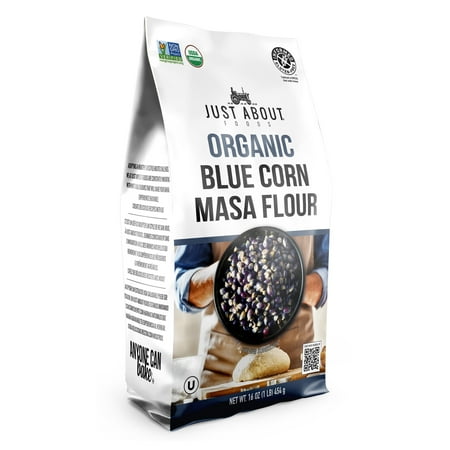

Just About Foods USDA Organic Blue Corn Flour 1lb Flour for Tortillas Sopes and Mexican Dishes Gluten-Free Kosher and Vegan Masa Flour for Baking
Analysis updated September 2026 · How Scout scores
At a glance
Summary
This product features organic nixtamalized blue corn flour, which is a minimally processed whole grain that retains nutrients and fiber. The nixtamalization process enhances nutrient bioavailability, and the organic certification ensures it is free from synthetic pesticides and GMOs. Although it is processed, the absence of harmful additives and the inclusion of beneficial vitamins and minerals contribute positively to its nutritional profile.
Key ingredients 7
Organic Nixtamalized Blue Corn FlourGood
This ingredient is a minimally processed whole grain flour that retains nutrients and fiber. The nixtamalization process enhances the bioavailability of nutrients like niacin. Being organic, it is free from synthetic pesticides and GMOs.
Benefits
Rich in fiber and essential nutrients, it supports digestive health and provides a source of complex carbohydrates.
NiacinGood
Beneficial ingredient — whole-food or functional value in this product class.
Risks
High doses of niacin can cause flushing and liver issues, but these are unlikely from fortified foods.
Benefits
Supports energy production and helps maintain healthy skin and nerves.
RiboflavinGood
Essential B vitamin — beneficial micronutrient.
Benefits
Supports energy production and helps maintain healthy skin and eyes.
Zinc OxideNeutral
Zinc oxide is used as a dietary supplement to provide zinc, an essential mineral. It is commonly used in fortified foods to prevent zinc deficiency. The bioavailability of zinc from zinc oxide is lower compared to other forms like zinc gluconate.
Risks
Excessive intake of zinc can lead to toxicity, but this is unlikely from fortified foods alone.
Benefits
Zinc is crucial for immune function, wound healing, and DNA synthesis.
Electrolytic IronNeutral
Electrolytic iron is added to foods as a source of iron to prevent anemia. It is a common fortification method in flour products. The absorption of iron from this form can be less efficient compared to heme iron from animal sources.
Risks
High doses of iron can cause gastrointestinal issues, but this is rare from fortified foods.
Benefits
Iron is essential for oxygen transport in the blood and energy metabolism.
Thiamine MononitrateNeutral
Thiamine mononitrate is a form of vitamin B1 used to fortify foods and prevent deficiencies. It plays a crucial role in carbohydrate metabolism. Fortification helps ensure adequate intake in populations with limited dietary diversity.
Benefits
Essential for energy metabolism and proper nerve function.
Folic AcidNeutral
Folic acid is a synthetic form of folate used to fortify foods to prevent neural tube defects. It is crucial for DNA synthesis and cell division. Fortification is particularly important for women of childbearing age.
Risks
Excessive intake can mask vitamin B12 deficiency, but this is unlikely from fortified foods alone.
Benefits
Essential for DNA synthesis and preventing birth defects during pregnancy.
Processing
Processed Foods
Get the full breakdown in the Scout appTake Scout shopping
Scan any product to see lab results, healthy alternatives, and your personalized analysis.
Download on theApp Store GET IT ONGoogle Play