
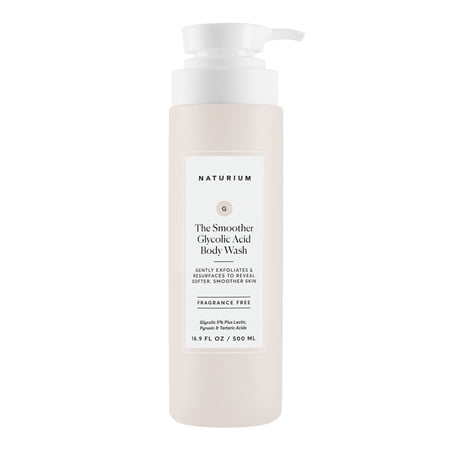
Naturium The Smoother Glycolic Acid Exfoliating Body Wash
Analysis updated August 2026 · How Scout scores
At a glance
Summary
This body wash contains beneficial ingredients like glycolic acid, lactic acid, and glycerin, which are known for their exfoliating and moisturizing properties. However, the presence of synthetic ingredients such as polyquaternium compounds and cocamide MIPA, which are associated with moderate processing, affects its overall rating. The product is processed, which limits its score despite the inclusion of several skin-friendly components.
Key ingredients 24
Sodium PCAVery Good
Sodium PCA is a natural component of skin that acts as a humectant. It helps to attract and retain moisture in the skin. It is highly effective in maintaining skin hydration.
Risks
There are no significant risks associated with its use.
Benefits
Enhances skin hydration, making it feel softer and more supple.
Sodium Cocoyl IsethionateGood
Sodium Cocoyl Isethionate is a mild surfactant derived from coconut oil. It is known for its gentle cleansing properties and ability to produce a rich, creamy lather. It is less irritating than traditional sulfates.
Risks
In rare cases, it may cause mild irritation to very sensitive skin.
Benefits
It effectively cleanses the skin without stripping away natural oils, making it suitable for sensitive skin types.
Glycolic AcidGood
Glycolic Acid is an alpha hydroxy acid (AHA) known for its exfoliating properties. It helps to remove dead skin cells and promote cell turnover. This can lead to smoother, brighter skin.
Risks
Overuse can lead to skin irritation or increased sensitivity to sunlight.
Benefits
Regular use can improve skin texture and reduce the appearance of fine lines and hyperpigmentation.
Sodium Methyl Cocoyl TaurateGood
Sodium Methyl Cocoyl Taurate is a mild surfactant derived from coconut oil. It is known for its gentle cleansing and foaming properties. It is suitable for sensitive skin and helps maintain skin moisture.
Risks
May cause mild irritation if used in high concentrations.
Benefits
Provides effective cleansing while being gentle on the skin, preserving its natural moisture barrier.
Malic AcidGood
Malic Acid is an AHA that gently exfoliates the skin. It helps to improve skin texture and appearance. It is less irritating than other AHAs, making it suitable for sensitive skin.
Risks
May cause mild irritation if used excessively.
Benefits
Enhances skin smoothness and clarity with minimal irritation.
Chondrus Crispus ExtractGood
Chondrus Crispus Extract, also known as Irish Moss, is a natural thickening agent. It is rich in nutrients and helps to hydrate and soothe the skin. It is often used in cosmetics for its emollient properties.
Risks
There are no significant risks associated with its use.
Benefits
Provides hydration and soothing benefits to the skin, enhancing its overall health.
GlycerinGood
Glycerin is a well-known humectant that attracts moisture to the skin. It helps to keep the skin hydrated and soft. It is widely used in cosmetics for its moisturizing properties.
Risks
There are no significant risks associated with its use.
Benefits
Enhances skin hydration, making it feel smoother and more supple.
AquaNeutral
Aqua, or water, is a common solvent used in cosmetic formulations. It serves as a base for many ingredients to dissolve and mix properly. It does not provide any direct benefits or risks.
Risks
There are no known risks associated with the use of water in cosmetics.
Benefits
Water helps to hydrate the skin and is essential for the formulation of many cosmetic products.
Sodium HydroxideNeutral
Sodium Hydroxide is used to adjust the pH of cosmetic products. It is a strong base that helps to neutralize acidic components. It is used in very small amounts to ensure product stability.
Risks
In high concentrations, it can be corrosive and irritating to the skin.
Benefits
When used correctly, it ensures the product maintains a skin-friendly pH level.
Glycol DistearateNeutral
Glycol Distearate is used as an opacifying agent and emollient in cosmetics. It gives products a pearlescent appearance and improves texture. It is generally considered safe for use in cosmetics.
Risks
There are minimal risks associated with its use in cosmetics.
Benefits
Enhances the aesthetic appeal and texture of the product without affecting skin health.
Lactic AcidNeutral
Standard formulation ingredient — neither beneficial nor harmful at typical use.
Risks
Can cause irritation or sensitivity if overused, especially on sensitive skin.
Benefits
Improves skin texture and hydration, making it look more radiant and youthful.
Pyruvic AcidNeutral
Pyruvic Acid is an AHA used for its exfoliating properties. It helps to remove dead skin cells and improve skin texture. It is less commonly used than other AHAs.
Risks
Can cause irritation or sensitivity, particularly in high concentrations.
Benefits
Promotes smoother skin by aiding in the removal of dead skin cells.
Tartaric AcidNeutral
Tartaric Acid is an AHA that provides gentle exfoliation. It helps to improve skin texture and appearance. It is often used in combination with other AHAs for enhanced effects.
Risks
May cause mild irritation if used in high concentrations.
Benefits
Contributes to smoother, more even skin texture.
Polyquaternium-73Neutral
Polyquaternium-73 is a conditioning agent used in cosmetics. It helps to improve the texture and feel of the product. It is generally considered safe for use in personal care products.
Risks
There are minimal risks associated with its use.
Benefits
Improves product texture and provides a conditioning effect on the skin.
Cocamide MIPANeutral
Cocamide MIPA is a surfactant and foam booster derived from coconut oil. It helps to stabilize foam and improve the texture of cleansing products. It is generally considered safe for use in cosmetics.
Risks
May cause mild irritation in sensitive individuals.
Benefits
Enhances the foaming and cleansing properties of the product.
Cocamidopropyl HydroxysultaineNeutral
Cocamidopropyl Hydroxysultaine is a mild surfactant used in personal care products. It helps to cleanse the skin and hair without causing irritation. It is derived from coconut oil and is considered safe for use.
Risks
Rarely, it may cause mild irritation in sensitive individuals.
Benefits
Provides gentle cleansing and helps to maintain skin moisture.
Polyquaternium-10Neutral
Polyquaternium-10 is a conditioning agent used in hair and skin care products. It helps to improve the texture and manageability of hair and skin. It is generally considered safe for use in cosmetics.
Risks
There are minimal risks associated with its use.
Benefits
Improves the feel and appearance of hair and skin, providing a conditioning effect.
Caprylyl GlycolNeutral
Standard formulation ingredient — neither beneficial nor harmful at typical use.
Risks
There are minimal risks associated with its use.
Benefits
Provides moisturizing benefits and helps to maintain product stability.
Didecyldimonium ChlorideNeutral
Didecyldimonium Chloride is a conditioning agent used in hair and skin care products. It helps to improve the texture and manageability of hair and skin. It is generally considered safe for use in cosmetics.
Risks
There are minimal risks associated with its use.
Benefits
Improves the feel and appearance of hair and skin, providing a conditioning effect.
MethylpropanediolNeutral
Methylpropanediol is a solvent and skin-conditioning agent. It helps to improve the penetration of other ingredients into the skin. It is generally considered safe for use in cosmetics.
Risks
There are minimal risks associated with its use.
Benefits
Enhances the effectiveness of active ingredients by improving their absorption.
Polyquaternium-80Neutral
Polyquaternium-80 is a conditioning agent used in hair and skin care products. It helps to improve the texture and manageability of hair and skin. It is generally considered safe for use in cosmetics.
Risks
There are minimal risks associated with its use.
Benefits
Improves the feel and appearance of hair and skin, providing a conditioning effect.
Citric AcidNeutral
Citric Acid is used to adjust the pH of cosmetic products. It also acts as a mild exfoliant and antioxidant. It is generally considered safe for use in cosmetics.
Risks
May cause mild irritation if used in high concentrations.
Benefits
Helps to maintain product stability and improve skin texture.
Tetrasodium Glutamate DiacetateNeutral
Tetrasodium Glutamate Diacetate is a chelating agent used in cosmetics. It helps to improve the stability and efficacy of the product. It is generally considered safe for use in cosmetics.
Risks
There are minimal risks associated with its use.
Benefits
Enhances product stability by binding metal ions that could affect product performance.
Sodium LactateNeutral
Standard formulation ingredient — neither beneficial nor harmful at typical use.
Risks
There are no significant risks associated with its use.
Benefits
Enhances skin hydration, making it feel softer and more supple.
Get the full breakdown in the Scout appTake Scout shopping
Scan any product to see lab results, healthy alternatives, and your personalized analysis.
Download on theApp Store GET IT ONGoogle PlayAmazon pricing & content
Amazon price as of . Product prices and availability are accurate as of the date/time indicated and are subject to change. Any price and availability information displayed on Amazon.com at the time of purchase will apply to the purchase of this product.
CERTAIN CONTENT THAT APPEARS ON THIS SITE COMES FROM AMAZON. THIS CONTENT IS PROVIDED “AS IS” AND IS SUBJECT TO CHANGE OR REMOVAL AT ANY TIME.