


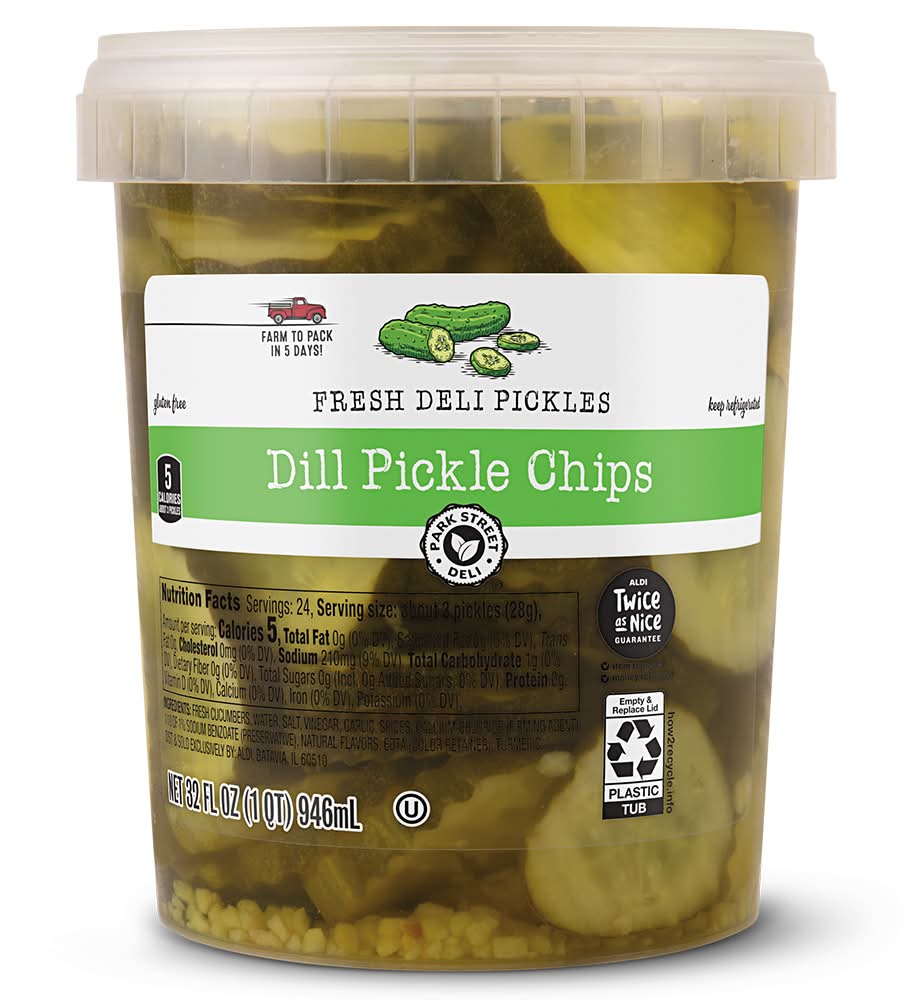
At a glance
Summary
This product is ultra-processed, which limits its potential health score. While cucumbers are a beneficial ingredient, the presence of synthetic additives such as sodium benzoate, potassium sorbate, and alum raises health concerns. Additionally, the use of 'natural flavors' adds to the lack of transparency in the ingredient list, further impacting the overall rating.
Key ingredients 9
CucumbersGood
Cucumbers are a low-calorie vegetable that provides hydration and some vitamins. They are minimally processed and retain most of their natural nutrients. As a whole food, they contribute positively to the product's nutritional profile.
Benefits
Cucumbers are hydrating and provide small amounts of vitamins and minerals, contributing to overall health.
WaterNeutral
Water is used as a solvent and carrier in food products. It is essential for maintaining the texture and consistency of the product. As a neutral ingredient, it does not contribute additional nutrients or risks.
See more about Water →VinegarNeutral
Vinegar is used for its preservative and flavor-enhancing properties. It is a natural acid that helps in preserving the cucumbers. While it adds flavor, it does not provide significant nutritional benefits.
Risks
Excessive consumption may lead to digestive discomfort due to its acidity.
Benefits
Vinegar can enhance flavor and act as a natural preservative.
SaltNeutral
Salt is used for flavor enhancement and preservation. It is a common culinary ingredient that helps in extending shelf life. However, high sodium content can be a concern for some individuals.
Risks
High sodium intake can contribute to hypertension and cardiovascular issues.
Benefits
Salt enhances flavor and acts as a preservative.
Calcium ChlorideNeutral
Calcium chloride is used as a firming agent in pickles. It is a mineral salt that helps maintain texture. While it is generally recognized as safe, it does not provide significant nutritional benefits.
Benefits
Helps maintain firmness and texture in pickled products.
AlumBad
Alum is used as a firming agent in pickles. It is a chemical compound that can have adverse effects if consumed in large quantities. Its use is generally limited due to potential health concerns.
Risks
Excessive consumption may lead to gastrointestinal irritation and other health issues.
Sodium BenzoateBad
Sodium benzoate is a preservative used to prevent microbial growth. It is a synthetic additive that can form benzene, a carcinogen, under certain conditions. Its use is controversial due to potential health risks.
Risks
May form benzene, a known carcinogen, when combined with vitamin C.
Potassium SorbateBad
Potassium sorbate is a preservative used to inhibit mold and yeast growth. It is a synthetic additive that can cause allergic reactions in sensitive individuals. Its use is common in processed foods to extend shelf life.
Risks
May cause allergic reactions or skin irritation in sensitive individuals.
Natural FlavorsBad
Natural flavors are used to enhance taste but lack transparency in their composition. They can contain a variety of compounds, some of which may not be beneficial. The lack of specificity makes it difficult to assess their health impact.
Risks
Potential allergens or unwanted compounds may be present without clear labeling.
Processing
Ultra-Processed Foods
Get the full breakdown in the Scout appTake Scout shopping
Scan any product to see lab results, healthy alternatives, and your personalized analysis.
Download on theApp Store GET IT ONGoogle Play