
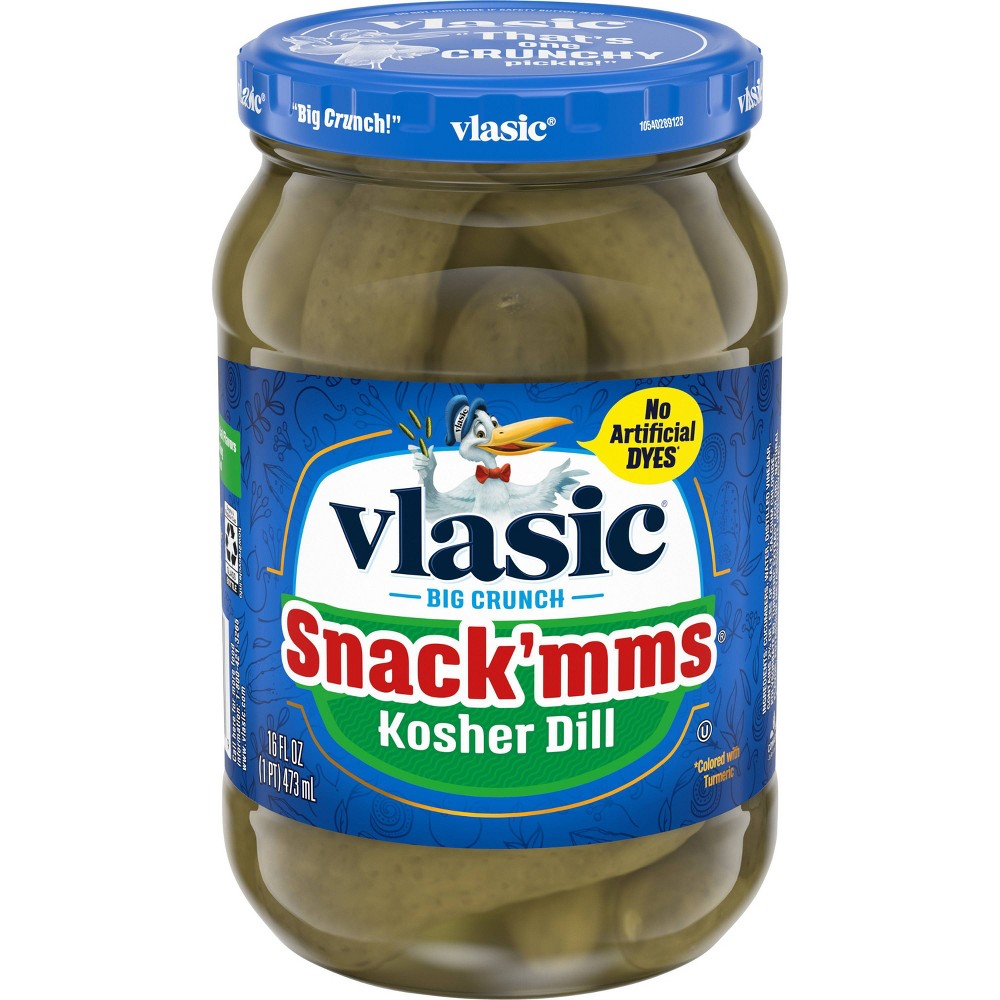



vlasic KOSHER DILL MINIS
Analysis updated August 2026 · How Scout scores
At a glance
Summary
This product contains cucumbers and sea salt, which are beneficial ingredients, but it is classified as ultra-processed due to the presence of additives like potassium metabisulfite and natural flavors. The use of these additives, along with the processing level, limits the healthiness of the product despite its low-calorie content and minimal harmful ingredients.
Key ingredients 9
CucumbersGood
Cucumbers are a low-calorie vegetable with high water content, making them hydrating and refreshing. They are minimally processed and retain most of their natural nutrients. Cucumbers provide a source of vitamins and antioxidants.
Benefits
Rich in water and fiber, cucumbers support hydration and digestive health. They contain antioxidants that may help reduce inflammation.
Sea saltGood
Sea salt is a natural source of sodium and trace minerals. It is less processed than table salt and retains some beneficial minerals. Sea salt can enhance flavor and provide essential electrolytes.
Risks
High sodium intake can contribute to hypertension and cardiovascular issues.
Benefits
Provides essential sodium and trace minerals that support electrolyte balance and nerve function.
Beta caroteneGood
Beneficial ingredient — whole-food or functional value in this product class.
Risks
High doses may cause skin discoloration, but this is rare from food sources.
Benefits
Acts as an antioxidant and can be converted to vitamin A in the body.
WaterNeutral
Water is the base of the formulation — inert.
Benefits
Crucial for maintaining hydration and supporting metabolic processes. It aids in nutrient transport and temperature regulation.
Distilled vinegarNeutral
Distilled vinegar is used as a preservative and flavor enhancer in pickling. It is a processed ingredient but generally considered safe in moderate amounts. Vinegar can add tanginess and help preserve the product.
Risks
Excessive consumption may lead to digestive discomfort or enamel erosion.
Benefits
May aid in preservation and add flavor without adding calories.
Calcium chlorideNeutral
Calcium chloride is used as a firming agent in pickles. It is a processed additive but generally recognized as safe in small amounts. It helps maintain the crispness of pickles.
Risks
Excessive intake may cause gastrointestinal discomfort.
Benefits
Helps maintain texture and firmness in pickled products.
Acacia gumNeutral
Acacia gum is a natural gum used as a stabilizer and thickener. It is derived from the sap of acacia trees and is minimally processed. Acacia gum can improve texture and stability in foods.
Risks
May cause digestive discomfort in sensitive individuals when consumed in large amounts.
Benefits
Provides dietary fiber and can improve the texture of food products.
Natural flavorsBad
Natural flavors are a catch-all term for flavoring agents derived from natural sources. They are highly processed and lack transparency in their composition. The use of natural flavors can mask the true nature of ingredients.
Risks
Potential allergens or sensitivities due to undisclosed components.
Benefits
Adds flavor without adding calories, but lacks nutritional benefits.
Potassium metabisulfiteBad
Potassium metabisulfite is a preservative used to prevent spoilage. It is a synthetic additive and can cause allergic reactions in sensitive individuals. Its use is controversial due to potential health concerns.
Risks
May cause allergic reactions or respiratory issues in sensitive individuals.
Benefits
Extends shelf life by preventing microbial growth, but offers no nutritional benefits.
Processing
Ultra-Processed Foods
Get the full breakdown in the Scout appTake Scout shopping
Scan any product to see lab results, healthy alternatives, and your personalized analysis.
Download on theApp Store GET IT ONGoogle PlayAmazon pricing & content
Amazon price as of . Product prices and availability are accurate as of the date/time indicated and are subject to change. Any price and availability information displayed on Amazon.com at the time of purchase will apply to the purchase of this product.
CERTAIN CONTENT THAT APPEARS ON THIS SITE COMES FROM AMAZON. THIS CONTENT IS PROVIDED “AS IS” AND IS SUBJECT TO CHANGE OR REMOVAL AT ANY TIME.