
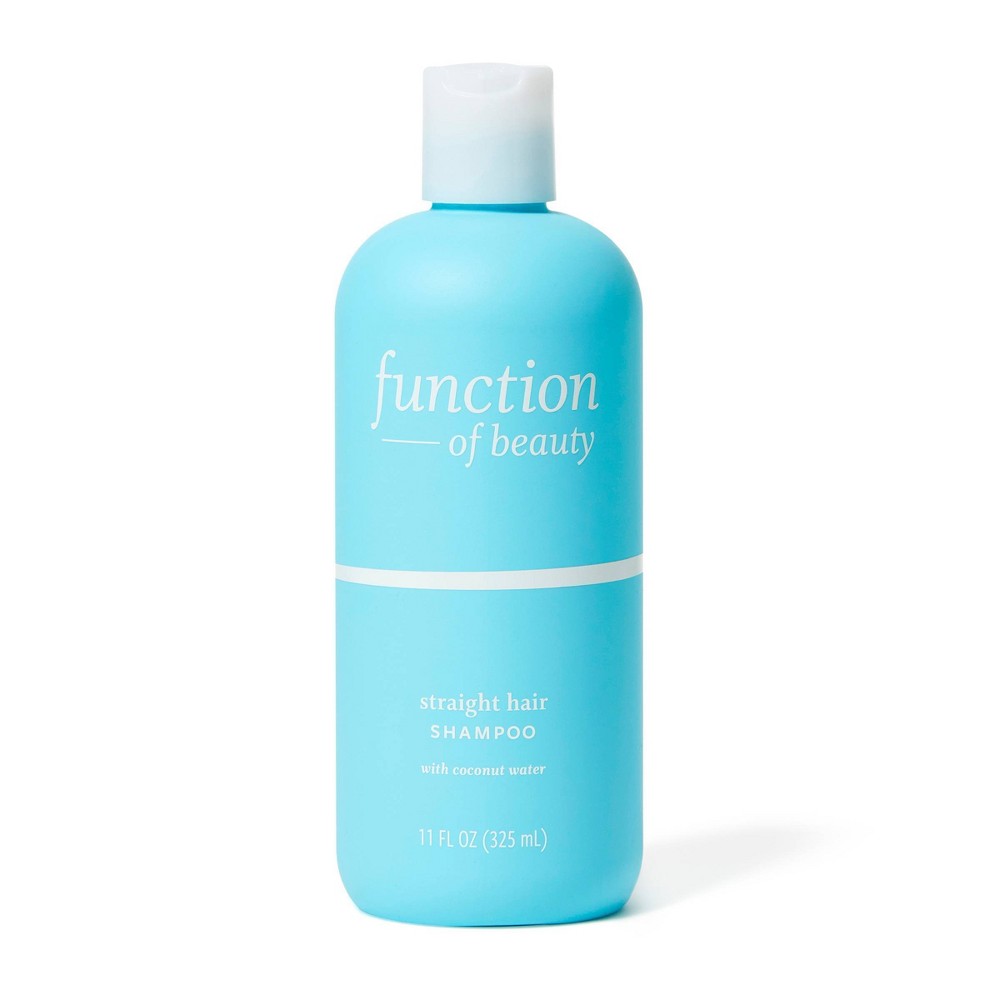
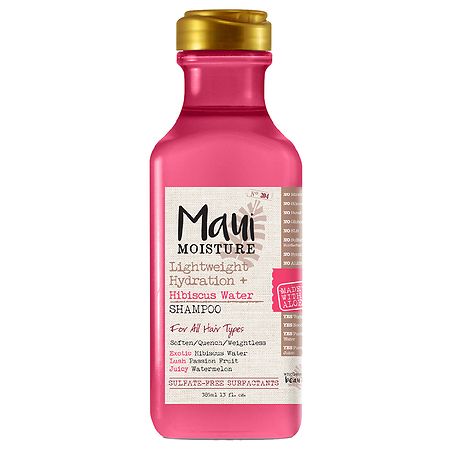
Function of Beauty Custom Straight Hair Shampoo Base with Coconut Water - 11 fl oz: Deep Hydration, Paraben-Free, Sulfate-Free
Analysis updated July 2026 · How Scout scores
At a glance
Summary
This shampoo is free from sulfates and parabens, which is beneficial for hair and scalp health. It includes gentle surfactants like sodium lauroyl methyl isethionate and sodium methyl cocoyl taurate, as well as hydrating ingredients like coconut fruit juice. However, the presence of phenoxyethanol, sodium chloride, non-water-soluble silicones, and synthetic fragrance detracts from its overall safety and cleanliness, impacting its score.
Key ingredients 37
cocos nucifera (coconut) fruit juiceVery Good
Coconut fruit juice is rich in nutrients and provides hydration to the hair. It is known for its conditioning properties and ability to improve hair texture. It is a natural ingredient that is beneficial for hair health.
Risks
There are minimal risks associated with coconut fruit juice, though some individuals may have allergies.
Benefits
It provides hydration and conditioning benefits to the hair.
sodium lauroyl methyl isethionateGood
Sodium lauroyl methyl isethionate is a mild surfactant derived from coconut oil. It is known for being gentle on the skin and hair while providing effective cleansing. It is less likely to cause irritation compared to harsher sulfates.
Risks
There are minimal risks associated with this ingredient, though some individuals may experience mild irritation.
Benefits
It provides gentle cleansing without stripping natural oils from the hair.
glycerinGood
Glycerin is a humectant that attracts moisture to the hair and skin. It helps to maintain hydration and improve the texture of hair. It is widely used in personal care products for its moisturizing properties.
Risks
In rare cases, glycerin can cause irritation if used in high concentrations.
Benefits
Glycerin helps to keep hair hydrated and can improve its overall appearance and feel.
sodium methyl cocoyl taurateGood
Sodium methyl cocoyl taurate is a mild surfactant derived from coconut oil. It is known for its gentle cleansing properties and is less likely to cause irritation compared to traditional sulfates. It helps to create a rich lather while being gentle on the hair.
Risks
There are minimal risks associated with this ingredient, though some individuals may experience mild irritation.
Benefits
It provides effective cleansing while being gentle on the hair and scalp.
sodium chlorideGood
Beneficial ingredient — whole-food or functional value in this product class.
Risks
Sodium chloride can cause dryness and irritation to the scalp.
Benefits
It helps to thicken the shampoo formulation.
waterNeutral
Water is a universal solvent and is used as a base in many cosmetic products. It helps to dissolve other ingredients and provides a medium for them to function. It does not have any direct benefits or risks in the context of a shampoo.
Risks
There are no significant risks associated with water in cosmetic formulations.
Benefits
Water helps to hydrate and dissolve other beneficial ingredients in the formulation.
peg-120 methyl glucose dioleateNeutral
PEG-120 methyl glucose dioleate is used as a thickener and emulsifier in cosmetic formulations. It helps to stabilize the product and improve its texture. It is generally considered safe for use in cosmetics.
Risks
There are concerns about PEG compounds potentially being contaminated with harmful impurities.
Benefits
It helps to improve the texture and stability of the shampoo.
cocoamidopropyl hydroxysultaineNeutral
Cocoamidopropyl hydroxysultaine is a mild surfactant and foam booster derived from coconut oil. It is used to enhance the cleansing and foaming properties of shampoos. It is generally considered safe and non-irritating.
Risks
Some individuals may experience mild irritation or allergic reactions.
Benefits
It enhances the foaming and cleansing properties of the shampoo.
sodium methyl isethionateNeutral
Sodium methyl isethionate is a mild surfactant used in personal care products. It is known for being gentle on the skin and hair while providing effective cleansing. It is less likely to cause irritation compared to harsher sulfates.
Risks
There are minimal risks associated with this ingredient, though some individuals may experience mild irritation.
Benefits
It provides gentle cleansing without stripping natural oils from the hair.
lauric acidNeutral
Lauric acid is a fatty acid derived from coconut oil. It is used in shampoos for its cleansing and emulsifying properties. It is generally considered safe for use in cosmetics.
Risks
There are minimal risks associated with lauric acid, though some individuals may experience mild irritation.
Benefits
It helps to cleanse and emulsify the shampoo formulation.
acrylates crosspolymer-4Neutral
Acrylates crosspolymer-4 is used as a thickening agent in cosmetic formulations. It helps to improve the texture and stability of the product. It is generally considered safe for use in cosmetics.
Risks
There are minimal risks associated with this ingredient, though some individuals may experience mild irritation.
Benefits
It helps to improve the texture and stability of the shampoo.
trisodium ethylenediamine disuccinateNeutral
Trisodium ethylenediamine disuccinate is a chelating agent used to improve the stability of cosmetic formulations. It helps to bind metal ions and prevent them from affecting the product's performance. It is generally considered safe for use in cosmetics.
Risks
There are minimal risks associated with this ingredient.
Benefits
It helps to improve the stability and performance of the shampoo.
glycol distearateNeutral
Glycol distearate is used as an opacifying agent and emulsifier in shampoos. It helps to improve the texture and appearance of the product. It is generally considered safe for use in cosmetics.
Risks
There are minimal risks associated with this ingredient.
Benefits
It helps to improve the texture and appearance of the shampoo.
sodium laurateNeutral
Sodium laurate is a surfactant used for its cleansing properties. It helps to remove dirt and oil from the hair. It is generally considered safe for use in cosmetics.
Risks
There are minimal risks associated with sodium laurate, though some individuals may experience mild irritation.
Benefits
It provides effective cleansing for the hair.
methyl gluceth-10Neutral
Methyl gluceth-10 is a humectant and emollient used in cosmetic formulations. It helps to moisturize and soften the hair. It is generally considered safe for use in cosmetics.
Risks
There are minimal risks associated with this ingredient.
Benefits
It helps to moisturize and soften the hair.
caprylyl glycolNeutral
Caprylyl glycol is used as a skin conditioning agent and preservative booster. It helps to improve the texture and stability of cosmetic formulations. It is generally considered safe for use in cosmetics.
Risks
There are minimal risks associated with this ingredient.
Benefits
It helps to improve the texture and stability of the shampoo.
chlorphenesinNeutral
Chlorphenesin is a preservative used to prevent microbial growth in cosmetic products. It is effective but can cause skin irritation in some individuals. It is generally considered safe for use in cosmetics.
Risks
Chlorphenesin can cause skin irritation in some individuals.
Benefits
It helps to preserve the product and extend its shelf life.
polyquaternium-7Neutral
Polyquaternium-7 is a conditioning agent used to improve the texture and manageability of hair. It helps to reduce static and frizz. It is generally considered safe for use in cosmetics.
Risks
There are minimal risks associated with this ingredient.
Benefits
It helps to improve the texture and manageability of hair.
trideceth-6Neutral
Trideceth-6 is an emulsifier used to blend oil and water-based ingredients in cosmetic formulations. It helps to improve the texture and stability of the product. It is generally considered safe for use in cosmetics.
Risks
There are minimal risks associated with this ingredient.
Benefits
It helps to improve the texture and stability of the shampoo.
c11-15 pareth-7Neutral
C11-15 pareth-7 is a surfactant and emulsifier used in cosmetic formulations. It helps to improve the texture and stability of the product. It is generally considered safe for use in cosmetics.
Risks
There are minimal risks associated with this ingredient.
Benefits
It helps to improve the texture and stability of the shampoo.
ethylhexylglycerinNeutral
Ethylhexylglycerin is used as a skin conditioning agent and preservative booster. It helps to improve the texture and stability of cosmetic formulations. It is generally considered safe for use in cosmetics.
Risks
There are minimal risks associated with this ingredient.
Benefits
It helps to improve the texture and stability of the shampoo.
hexylene glycolNeutral
Hexylene glycol is used as a solvent and viscosity agent in cosmetic formulations. It helps to improve the texture and stability of the product. It is generally considered safe for use in cosmetics.
Risks
There are minimal risks associated with this ingredient.
Benefits
It helps to improve the texture and stability of the shampoo.
guar hydroxypropyltrimonium chlorideNeutral
Guar hydroxypropyltrimonium chloride is a conditioning agent derived from guar gum. It helps to improve the texture and manageability of hair. It is generally considered safe for use in cosmetics.
Risks
There are minimal risks associated with this ingredient.
Benefits
It helps to improve the texture and manageability of hair.
hydroxypropyl methylcelluloseNeutral
Hydroxypropyl methylcellulose is used as a thickening agent in cosmetic formulations. It helps to improve the texture and stability of the product. It is generally considered safe for use in cosmetics.
Risks
There are minimal risks associated with this ingredient.
Benefits
It helps to improve the texture and stability of the shampoo.
sodium benzotriazolyl butylphenol sulfonateNeutral
Sodium benzotriazolyl butylphenol sulfonate is used as a UV absorber in cosmetic formulations. It helps to protect the product from degradation due to sunlight exposure. It is generally considered safe for use in cosmetics.
Risks
There are minimal risks associated with this ingredient.
Benefits
It helps to protect the product from UV degradation.
citric acidNeutral
Citric acid is used to adjust the pH of cosmetic formulations. It helps to maintain the stability and effectiveness of the product. It is generally considered safe for use in cosmetics.
Risks
Citric acid can cause mild skin irritation in some individuals.
Benefits
It helps to maintain the stability and effectiveness of the shampoo.
citronellolNeutral
Citronellol is a fragrance component used to provide a floral scent. It can cause skin irritation and allergic reactions in some individuals. It is generally considered safe for use in cosmetics.
Risks
Citronellol can cause skin irritation and allergic reactions.
Benefits
It provides a floral scent to the shampoo.
blue 1Neutral
Blue 1 is a synthetic dye used to provide color to cosmetic products. It is generally considered safe for use in cosmetics. It is widely used in personal care products for its coloring properties.
Risks
Blue 1 can cause mild skin irritation in some individuals.
Benefits
It provides color to the shampoo.
red 33Neutral
Red 33 is a synthetic dye used to provide color to cosmetic products. It is generally considered safe for use in cosmetics. It is widely used in personal care products for its coloring properties.
Risks
Red 33 can cause mild skin irritation in some individuals.
Benefits
It provides color to the shampoo.
phenoxyethanolBad
Phenoxyethanol is a preservative used in cosmetics to prevent microbial growth. It is effective but can cause skin irritation and allergic reactions in some individuals. It is a controversial ingredient due to potential health concerns.
Risks
Phenoxyethanol can cause skin irritation and allergic reactions.
Benefits
It helps to preserve the product and extend its shelf life.
propoxytetramethyl piperidinyl dimethiconeBad
Propoxytetramethyl piperidinyl dimethicone is a silicone used for its conditioning properties. It can cause buildup on the hair, leading to dullness and brittleness over time. It is not water-soluble and can be difficult to remove from the hair.
Risks
It can cause buildup on the hair, leading to dullness and brittleness.
Benefits
It provides conditioning benefits and improves hair manageability.
potassium sorbateBad
Synthetic preservative — flagged in daily-use products.
Risks
Potassium sorbate can cause mild skin irritation in some individuals.
Benefits
It helps to preserve the product and extend its shelf life.
sodium benzoateBad
Synthetic preservative that can form benzene in the presence of vitamin C.
Risks
Sodium benzoate can cause mild skin irritation in some individuals.
Benefits
It helps to preserve the product and extend its shelf life.
citralBad
Processed additive flagged under Scout's ingredient doctrine.
Risks
Citral can cause skin irritation and allergic reactions.
Benefits
It provides a lemon-like scent to the shampoo.
limoneneBad
Processed additive flagged under Scout's ingredient doctrine.
Risks
Limonene can cause skin irritation and allergic reactions.
Benefits
It provides a citrus scent to the shampoo.
linaloolBad
Processed additive flagged under Scout's ingredient doctrine.
Risks
Linalool can cause skin irritation and allergic reactions.
Benefits
It provides a floral scent to the shampoo.
fragranceVery Bad
Fragrance is used to provide a pleasant scent to cosmetic products. It can cause skin irritation and allergic reactions in some individuals. It is a controversial ingredient due to potential health concerns.
Risks
Fragrance can cause skin irritation and allergic reactions.
Benefits
It provides a pleasant scent to the shampoo.
Get the full breakdown in the Scout appTake Scout shopping
Scan any product to see lab results, healthy alternatives, and your personalized analysis.
Download on theApp Store GET IT ONGoogle PlayAmazon pricing & content
Amazon price as of . Product prices and availability are accurate as of the date/time indicated and are subject to change. Any price and availability information displayed on Amazon.com at the time of purchase will apply to the purchase of this product.
CERTAIN CONTENT THAT APPEARS ON THIS SITE COMES FROM AMAZON. THIS CONTENT IS PROVIDED “AS IS” AND IS SUBJECT TO CHANGE OR REMOVAL AT ANY TIME.