

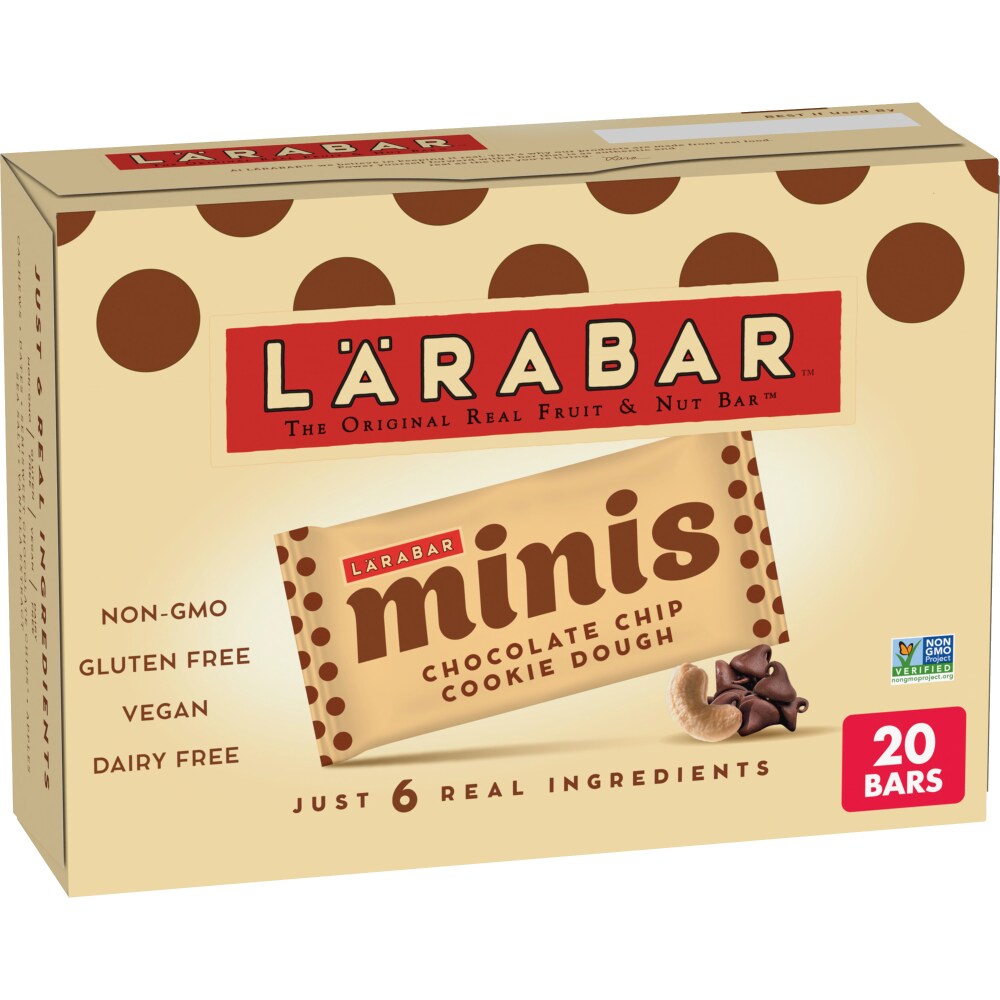

Mini Cookie Dough Bars
Summary
The Mini Cookie Dough Bars contain several beneficial ingredients like almond butter and chickpea flour, which provide healthy fats and protein. However, the product is heavily processed and includes refined sugars and natural flavors, which detract from its nutritional value. The presence of additives and the high level of processing limit its healthiness despite some positive ingredients.
At a glance
Key ingredients 13
Gluten Free Oat FlourGood
Gluten free oat flour is a whole grain flour that provides dietary fiber and essential nutrients. It is minimally processed and retains its natural nutrient profile. Compared to refined flours, it offers better satiety and blood sugar control.
Benefits
Rich in dietary fiber, which supports digestive health and helps maintain stable blood sugar levels.
Almond ButterVery Good
Almond butter is a nutrient-dense spread rich in healthy fats, protein, and vitamins. It is made by grinding almonds, preserving their natural nutrients. Compared to peanut butter, it offers more vitamin E and magnesium.
Risks
Potential allergen for individuals with nut allergies.
Benefits
Provides healthy monounsaturated fats that support heart health and are anti-inflammatory.
Chicory Root FiberGood
Chicory root fiber is a prebiotic fiber that supports gut health by promoting beneficial bacteria growth. It is extracted from the chicory root and used as a natural fiber supplement. Compared to other fibers, it is well-tolerated and can improve digestive health.
Risks
Excessive consumption may cause digestive discomfort in some individuals.
Benefits
Supports digestive health by acting as a prebiotic and improving gut flora balance.
Tapioca SyrupNeutral
Tapioca syrup is a natural sweetener derived from cassava root. It is used as a binding agent and sweetener in various food products. While it is less processed than high fructose corn syrup, it still contributes to added sugars in the diet.
Risks
Contributes to overall sugar intake, which should be moderated.
Benefits
Provides a natural alternative to more processed sweeteners.
Brown SugarBad
Brown sugar is a refined sugar with molasses added for color and flavor. It is processed similarly to white sugar and contributes to added sugar intake. Compared to natural sweeteners, it offers minimal nutritional benefits.
Risks
High consumption can lead to increased risk of obesity, diabetes, and dental issues.
Benefits
Provides a rich flavor profile that enhances the taste of baked goods.
Chickpea FlourGood
Chickpea flour is a high-protein, gluten-free flour made from ground chickpeas. It is minimally processed and retains its natural nutrients. Compared to wheat flour, it offers more protein and fiber.
Benefits
Rich in protein and fiber, supporting muscle health and digestion.
Cane SugarBad
Cane sugar is a refined sugar that contributes to added sugar intake. It is processed to remove impurities and molasses, resulting in a pure sucrose product. Compared to whole food sweeteners, it lacks nutritional benefits.
Risks
Excessive intake can lead to health issues such as obesity and metabolic syndrome.
Benefits
Provides sweetness and energy but lacks significant nutritional benefits.
Chocolate ChipsNeutral
Chocolate chips are made from unsweetened chocolate, cane sugar, cocoa butter, and vanilla extract. They provide flavor and texture to baked goods. While they contain some antioxidants, they also add sugar and fat.
Risks
Contains added sugars and fats, which should be consumed in moderation.
Benefits
Contains antioxidants from cocoa that may offer health benefits.
Clarified ButterNeutral
Clarified butter is butter that has been heated to remove water and milk solids, leaving pure butterfat. It is used for its rich flavor and high smoke point. Compared to regular butter, it is lactose-free and suitable for high-heat cooking.
Risks
High in saturated fats, which should be consumed in moderation.
Benefits
Provides a rich flavor and is suitable for those with lactose intolerance.
Egg WhitesGood
Egg whites are a high-quality protein source with minimal fat and cholesterol. They are separated from the yolk and used for their protein content. Compared to whole eggs, they offer protein without added fats.
Benefits
Excellent source of high-quality protein supporting muscle growth and repair.
Natural FlavorBad
Natural flavor is a catch-all term for flavoring agents derived from natural sources. It is highly processed and lacks transparency regarding its specific components. Compared to whole food ingredients, it offers no nutritional benefits.
Risks
May contain undisclosed allergens or additives.
Benefits
Enhances flavor without adding calories, but lacks nutritional value.
Sea SaltGood
Unrefined sea salt — a minimally processed, natural source of sodium and essential trace minerals, and a legitimate whole-food seasoning. Treated as a positive ingredient.
Risks
Excessive sodium intake can lead to hypertension and cardiovascular issues.
Benefits
Provides essential minerals and enhances flavor.
Soy LecithinNeutral
Soy lecithin is an emulsifier derived from soybeans used to stabilize and blend ingredients. It is processed to extract lecithin from soy oil. While it is generally recognized as safe, it is a processed additive.
Risks
May cause allergic reactions in individuals sensitive to soy.
Benefits
Helps maintain product texture and consistency.
Processing
Ultra-Processed Foods
Get the full breakdown in the Scout app
Scan any product to see lab results, healthy alternatives, and your personalized analysis.
Download on theApp Store