
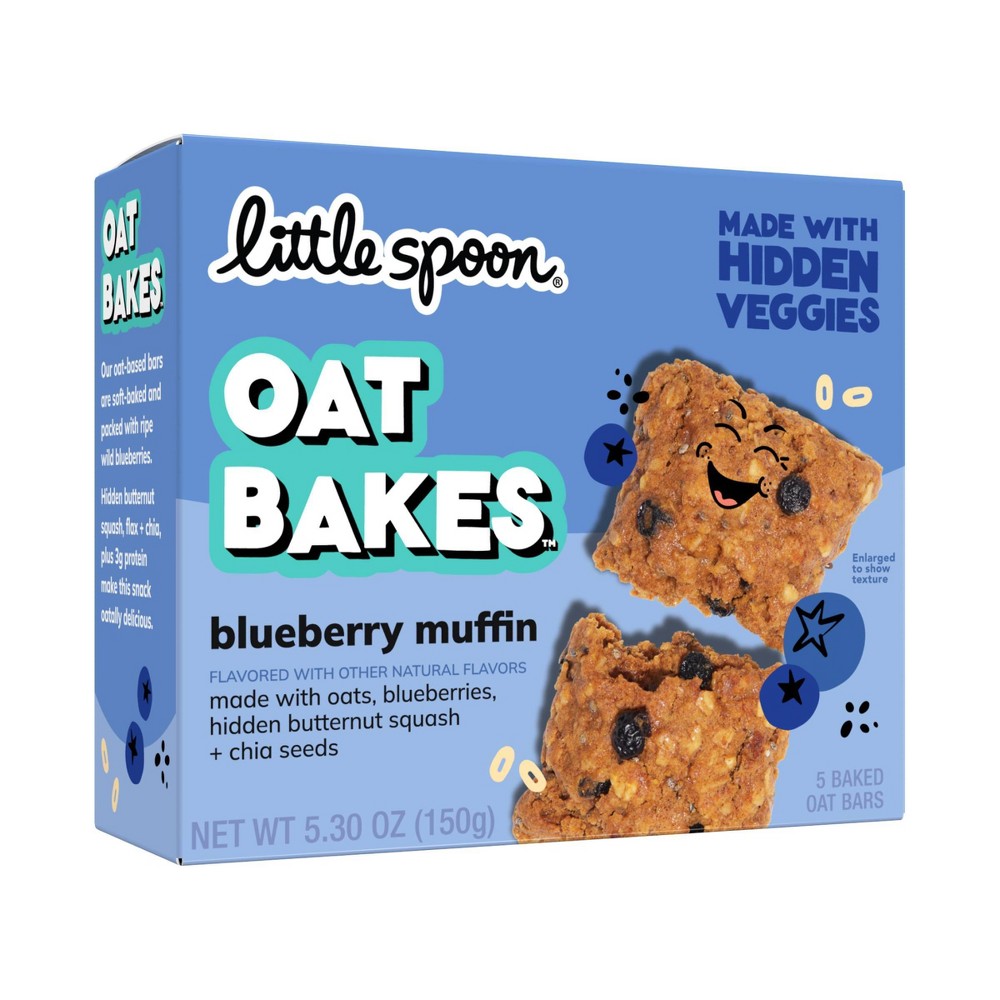


Little Spoon Blueberry Muffin Baked Oat Baked Bar Kids' Snacks - 5.3oz/5ct
Analysis updated August 2026 · How Scout scores
At a glance
Summary
This product contains several beneficial ingredients such as oats, dates, and coconut oil, which contribute to its nutritional value. However, it is classified as ultra-processed due to the presence of natural flavors and sunflower lecithin, which are processed additives. The processing level and the inclusion of these additives limit its overall health score despite the presence of nutrient-dense components.
Key ingredients 17
OatsVery Good
Oats are a whole grain that provide dietary fiber and essential nutrients. They are minimally processed and support heart health. Oats can help regulate blood sugar levels and improve digestion.
Benefits
Rich in beta-glucan, a type of soluble fiber that can lower cholesterol levels and improve heart health.
DatesGood
Dates are a natural sweetener that provide fiber and essential minerals. They are minimally processed and offer a healthier alternative to refined sugars. Dates can support digestive health and provide quick energy.
Risks
High in natural sugars, which can contribute to calorie intake if consumed in excess.
Benefits
Rich in potassium, magnesium, and antioxidants, supporting overall health and energy levels.
Coconut OilGood
Coconut oil is a source of medium-chain triglycerides (MCTs) that can support metabolism. It is minimally processed and provides a stable cooking fat. Coconut oil may support brain health and energy levels.
Risks
High in saturated fats, which should be consumed in moderation to avoid potential heart health issues.
Benefits
Contains MCTs that are easily absorbed and used for energy, potentially aiding in weight management.
Wild Dried BlueberriesGood
Wild dried blueberries are rich in antioxidants and vitamins. They are minimally processed and provide natural sweetness and flavor. Blueberries can support heart health and cognitive function.
Benefits
High in antioxidants like anthocyanins, which may reduce inflammation and support heart health.
Butternut SquashGood
Butternut squash is a nutrient-dense vegetable rich in vitamins A and C. It is minimally processed and adds natural sweetness and fiber. This ingredient supports immune function and eye health.
Benefits
Provides vitamins and fiber, supporting digestive health and immune function.
Hemp FlourGood
Hemp flour is a high-protein, high-fiber ingredient derived from hemp seeds. It is minimally processed and provides essential fatty acids. Hemp flour supports heart health and provides plant-based protein.
Benefits
Rich in omega-3 and omega-6 fatty acids, supporting cardiovascular health.
HoneyGood
Traditional whole-food sweetener with trace enzymes and antioxidants.
Risks
High in sugars, which can contribute to increased calorie intake and potential blood sugar spikes.
Benefits
Contains antioxidants and has antibacterial properties, offering minor health benefits.
Flaxseed MealGood
Flaxseed meal is rich in omega-3 fatty acids and dietary fiber. It is minimally processed and supports heart health and digestion. Flaxseeds can help reduce cholesterol levels and improve gut health.
Benefits
High in lignans and fiber, which may reduce cancer risk and improve digestive health.
Chia SeedsGood
Chia seeds are a nutrient-dense superfood rich in omega-3 fatty acids and fiber. They are minimally processed and support heart health and digestion. Chia seeds can help regulate blood sugar levels and provide sustained energy.
Benefits
Rich in omega-3s and antioxidants, supporting heart health and reducing inflammation.
Vanilla ExtractGood
Beneficial ingredient — whole-food or functional value in this product class.
Benefits
Adds natural flavor and contains minor antioxidants.
Sea SaltGood
Sea salt is a minimally processed source of sodium and trace minerals. It is a natural ingredient that enhances flavor. Sea salt can support electrolyte balance and provide essential minerals.
Risks
Excessive sodium intake can lead to hypertension, but moderate use is generally safe.
Benefits
Provides trace minerals and supports electrolyte balance.
Pea ProteinNeutral
Pea protein is a plant-based protein source that provides essential amino acids. It is less processed than soy protein isolates but may have lower bioavailability compared to animal proteins. Pea protein supports muscle maintenance and repair.
Risks
May not provide as complete an amino acid profile as animal-based proteins.
Benefits
Offers a plant-based protein option for those avoiding animal products.
Oat FiberNeutral
Oat fiber is a source of dietary fiber that supports digestive health. It is minimally processed and adds bulk to the diet. Oat fiber can help regulate bowel movements and improve gut health.
Benefits
Provides insoluble fiber that aids in digestion and promotes regularity.
Baking SodaNeutral
Baking soda is a leavening agent used to help baked goods rise. It is a processed ingredient but used in small amounts. Baking soda is generally recognized as safe when used in cooking.
Risks
Excessive consumption can lead to alkalosis, but this is unlikely in typical food use.
Tapioca SyrupBad
Processed additive flagged under Scout's ingredient doctrine.
Risks
High in sugars, which can contribute to increased calorie intake and potential blood sugar spikes.
Benefits
Provides a quick source of energy due to its carbohydrate content.
Natural FlavorsBad
Natural flavors are a catch-all term for flavoring agents derived from natural sources. They are highly processed and lack transparency in ingredient sourcing. Natural flavors can mask the use of artificial or less desirable ingredients.
Risks
Potential allergens and lack of transparency in sourcing can be concerning for sensitive individuals.
Sunflower LecithinBad
Sunflower lecithin is an emulsifier used to improve texture and shelf life. It is processed and can be derived from genetically modified crops. While it is less concerning than seed oils, it still adds to the processed nature of the product.
Risks
May contain traces of allergens and is a processed additive.
Processing
Ultra-Processed Foods
Get the full breakdown in the Scout appTake Scout shopping
Scan any product to see lab results, healthy alternatives, and your personalized analysis.
Download on theApp Store GET IT ONGoogle Play