
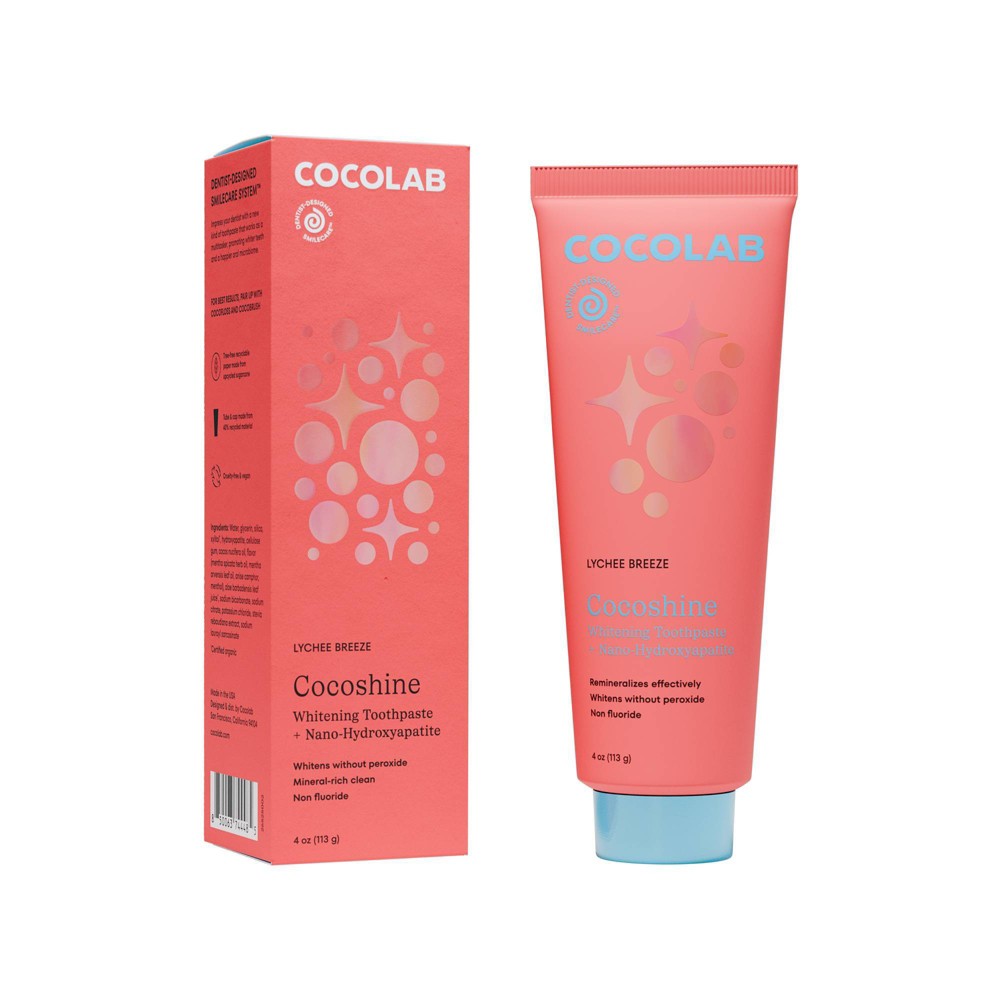

Cocolab Cocoshine Whitening Non-Fluoride Nano Hydroxyapatite Toothpaste - Lychee Breeze - 4oz: Package Quantity 1, Non Travel Size
Analysis updated July 2026 · How Scout scores
At a glance
Summary
This toothpaste contains beneficial ingredients like hydroxyapatite, xylitol, and coconut oil, which support oral health by strengthening enamel and reducing harmful bacteria. However, it includes sodium lauroyl sarcosinate, a synthetic surfactant that may cause irritation for some users. The product is moderately processed, which limits its score despite the presence of mostly natural and effective ingredients.
Key ingredients 14
XylitolVery Good
Xylitol is a sugar alcohol that helps prevent tooth decay by inhibiting the growth of bacteria. It is derived from plants and is often used as a sugar substitute. Its ability to reduce cavity-causing bacteria makes it beneficial in oral care products.
Risks
Excessive consumption may cause digestive discomfort.
Benefits
Reduces the risk of cavities and promotes oral health.
HydroxyapatiteVery Good
Hydroxyapatite is a naturally occurring mineral that helps remineralize and strengthen tooth enamel. It is synthetically produced for use in dental care products. Its similarity to natural tooth enamel makes it highly effective in repairing and protecting teeth.
Benefits
Strengthens and repairs tooth enamel, reducing sensitivity and decay.
GlycerinGood
Glycerin is a humectant that helps retain moisture in the toothpaste. It is usually derived from plant oils and is considered safe for use. It also provides a sweet taste without promoting tooth decay.
Benefits
Helps maintain moisture and provides a pleasant texture in toothpaste.
Coconut OilGood
Coconut oil is known for its antimicrobial properties, which can help reduce harmful bacteria in the mouth. It is minimally processed and retains its natural beneficial compounds. Its use in toothpaste can contribute to improved oral hygiene.
Benefits
Provides antimicrobial benefits and supports oral health.
Aloe Barbadensis Leaf JuiceGood
Aloe vera juice is known for its soothing and anti-inflammatory properties. It is extracted from the aloe plant and used in various health and beauty products. In toothpaste, it can help soothe gums and reduce irritation.
Benefits
Soothes gums and provides anti-inflammatory benefits.
WaterNeutral
Water is a neutral base used to dissolve other ingredients. It is typically purified to ensure safety and quality. In toothpaste, it helps to create the desired consistency.
See more about Water →SilicaNeutral
Anti-caking mineral — inert and unabsorbed.
Benefits
Effective in cleaning teeth and removing surface stains.
Cellulose GumNeutral
Cellulose gum is a thickening agent that helps stabilize the toothpaste formula. It is derived from plant fibers and is widely used in food and personal care products. It contributes to the smooth texture of the toothpaste.
See more about Cellulose Gum →Sodium BicarbonateNeutral
Standard formulation ingredient — neither beneficial nor harmful at typical use.
Benefits
Whitens teeth and neutralizes oral acids.
Sodium CitrateNeutral
Sodium citrate is used as a buffering agent to maintain the pH balance of the toothpaste. It is a salt derived from citric acid and is commonly used in food and personal care products. It helps stabilize the formula without significant health impacts.
See more about Sodium Citrate →Potassium ChlorideNeutral
Potassium chloride is used to help reduce tooth sensitivity by blocking nerve signals. It is a naturally occurring mineral salt that is processed for use in dental products. Its inclusion in toothpaste can provide relief for sensitive teeth.
Benefits
Helps reduce tooth sensitivity and provides relief.
Stevia Rebaudiana ExtractNeutral
Standard formulation ingredient — neither beneficial nor harmful at typical use.
Benefits
Provides sweetness without contributing to cavities.
Sodium Lauroyl SarcosinateBad
Sodium lauroyl sarcosinate is a surfactant used to create foam and improve the spreadability of toothpaste. It is synthetically produced and may cause irritation in some individuals. Its potential to cause irritation makes it a concern for sensitive users.
Risks
May cause irritation or allergic reactions in sensitive individuals.
Benefits
Improves the texture and spreadability of toothpaste.
FlavorBad
Processed additive flagged under Scout's ingredient doctrine.
Risks
Potential for allergic reactions if sensitive to specific flavor compounds.
Benefits
Enhances the taste and user experience of the product.
Get the full breakdown in the Scout appTake Scout shopping
Scan any product to see lab results, healthy alternatives, and your personalized analysis.
Download on theApp Store GET IT ONGoogle PlayAmazon pricing & content
Amazon price as of . Product prices and availability are accurate as of the date/time indicated and are subject to change. Any price and availability information displayed on Amazon.com at the time of purchase will apply to the purchase of this product.
CERTAIN CONTENT THAT APPEARS ON THIS SITE COMES FROM AMAZON. THIS CONTENT IS PROVIDED “AS IS” AND IS SUBJECT TO CHANGE OR REMOVAL AT ANY TIME.