
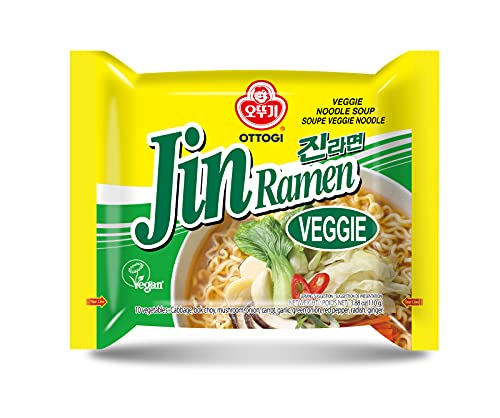


Jin Veggie Ramen
Analysis updated July 2026 · How Scout scores
At a glance
Summary
This veggie ramen contains a mix of beneficial ingredients like ginger, green onion, and sesame seeds, which contribute to its nutritional profile. However, the presence of palm oil, a less healthy fat, and the processed nature of the product limit its overall healthiness. The product's processing level and the inclusion of modified starches also contribute to a moderate score.
Key ingredients 16
Seasoned Garlic SauceGood
Seasoned garlic sauce adds flavor and aroma to dishes, often containing garlic, oil, and spices. Garlic has potential health benefits, including anti-inflammatory and antioxidant properties. The quality of the sauce depends on the specific ingredients used.
Risks
Potential for high sodium content depending on the formulation.
Benefits
Garlic is known for its potential health benefits, including supporting heart health and immune function.
GingerGood
Ginger is a spice known for its anti-inflammatory and digestive benefits. It is used in various cuisines for its distinct flavor and potential health benefits. Fresh ginger is more potent than dried forms.
Benefits
May aid digestion and reduce nausea, with anti-inflammatory properties.
Green OnionGood
Green onion, also known as scallion, is a vegetable used for its mild onion flavor and nutritional benefits. It is rich in vitamins A and C and provides antioxidants. Fresh green onions offer more nutrients compared to cooked forms.
Benefits
Rich in vitamins and antioxidants, supporting overall health.
Egg YolkGood
Egg yolk is a nutrient-dense food containing vitamins, minerals, and healthy fats. It is a source of choline, which is important for brain health. While high in cholesterol, moderate consumption is generally considered safe for most people.
Risks
High cholesterol content may be a concern for individuals with specific dietary restrictions.
Benefits
Provides essential nutrients and healthy fats, supporting brain and eye health.
Sesame SeedGood
Sesame seeds are a good source of healthy fats, protein, and minerals like calcium and magnesium. They are often used in cooking for their nutty flavor and nutritional benefits. Toasted sesame seeds offer enhanced flavor and aroma.
Risks
Allergic reactions can occur in individuals with sesame allergies.
Benefits
Rich in healthy fats and minerals, supporting bone health and providing antioxidant benefits.
Crushed Red PepperGood
Crushed red pepper adds heat and flavor to dishes and contains capsaicin, which may have metabolic benefits. It is used in small amounts to enhance the taste of food. Capsaicin is known for its potential to boost metabolism and reduce inflammation.
Risks
May cause irritation in sensitive individuals or when consumed in large amounts.
Benefits
Contains capsaicin, which may support metabolism and provide anti-inflammatory effects.
Mung Bean SproutsGood
Mung bean sprouts are a low-calorie, nutrient-rich food that provides vitamins, minerals, and antioxidants. They are commonly used in Asian cuisine for their crunchy texture and health benefits. Fresh sprouts offer more nutrients compared to cooked ones.
Risks
Potential risk of bacterial contamination if not properly washed or cooked.
Benefits
Rich in vitamins and antioxidants, supporting immune health and digestion.
Sesame Chili OilGood
Sesame chili oil combines the flavors of sesame and chili peppers, providing both taste and potential health benefits. Sesame oil is rich in healthy fats, while chili peppers contain capsaicin. The oil is often used in moderation to enhance flavor.
Risks
Potential for high calorie content if consumed in large amounts.
Benefits
Rich in healthy fats and capsaicin, supporting heart health and metabolism.
Modified Tapioca StarchNeutral
Modified tapioca starch is used as a thickening agent and stabilizer in processed foods. It is derived from cassava root and undergoes chemical modification to enhance its properties. While it is generally safe, it lacks significant nutritional benefits.
Benefits
Provides texture and stability to food products without significant nutritional benefits.
Potato StarchNeutral
Potato starch is used as a thickener and stabilizer in various food products. It is derived from potatoes and is gluten-free, making it suitable for those with gluten intolerance. It provides no significant nutritional benefits.
Benefits
Gluten-free and provides texture to food products.
Wheat GlutenNeutral
Wheat gluten is a protein found in wheat that provides elasticity and chewiness to dough. It is a common allergen for those with celiac disease or gluten sensitivity. It is a concentrated source of plant-based protein.
Risks
Can cause adverse reactions in individuals with gluten intolerance or celiac disease.
Benefits
Provides a source of protein and improves the texture of baked goods.
NarutomakiNeutral
Narutomaki is a type of fish cake used in Japanese cuisine, often as a garnish in ramen. It is made from processed fish paste and has a distinctive pink swirl. While it adds visual appeal, it offers limited nutritional benefits.
Risks
Contains processed fish, which may be a concern for those with seafood allergies.
Benefits
Adds visual appeal and a unique texture to dishes.
ChashuNeutral
Chashu is a type of braised pork belly commonly used as a topping in ramen. It is flavorful and provides protein and fat. The nutritional profile depends on the preparation method and portion size.
Risks
High in saturated fat and sodium, which may be a concern for heart health if consumed in excess.
Benefits
Provides protein and enhances the flavor of dishes.
Wheat FlourBad
Refined grain flour stripped of bran and germ.
Risks
May contribute to blood sugar spikes and is a common allergen for those with gluten sensitivity.
Benefits
Provides energy and is a source of carbohydrates necessary for bodily functions.
Palm OilBad
Palm oil is a widely used vegetable oil that is high in saturated fats. Its production is associated with environmental concerns such as deforestation. While it is stable at high temperatures, it is less healthy compared to unsaturated fats.
Risks
High saturated fat content may contribute to heart disease if consumed in excess.
Benefits
Provides a stable cooking oil that is resistant to oxidation at high temperatures.
Yeast ExtractBad
Concentrated glutamate source — MSG-adjacent flavor enhancer.
Risks
May cause reactions in individuals sensitive to glutamates.
Benefits
Enhances flavor and provides a rich umami taste to foods.
Processing
Processed Foods
Get the full breakdown in the Scout appTake Scout shopping
Scan any product to see lab results, healthy alternatives, and your personalized analysis.
Download on theApp Store GET IT ONGoogle PlayAmazon pricing & content
Amazon price as of . Product prices and availability are accurate as of the date/time indicated and are subject to change. Any price and availability information displayed on Amazon.com at the time of purchase will apply to the purchase of this product.
CERTAIN CONTENT THAT APPEARS ON THIS SITE COMES FROM AMAZON. THIS CONTENT IS PROVIDED “AS IS” AND IS SUBJECT TO CHANGE OR REMOVAL AT ANY TIME.