
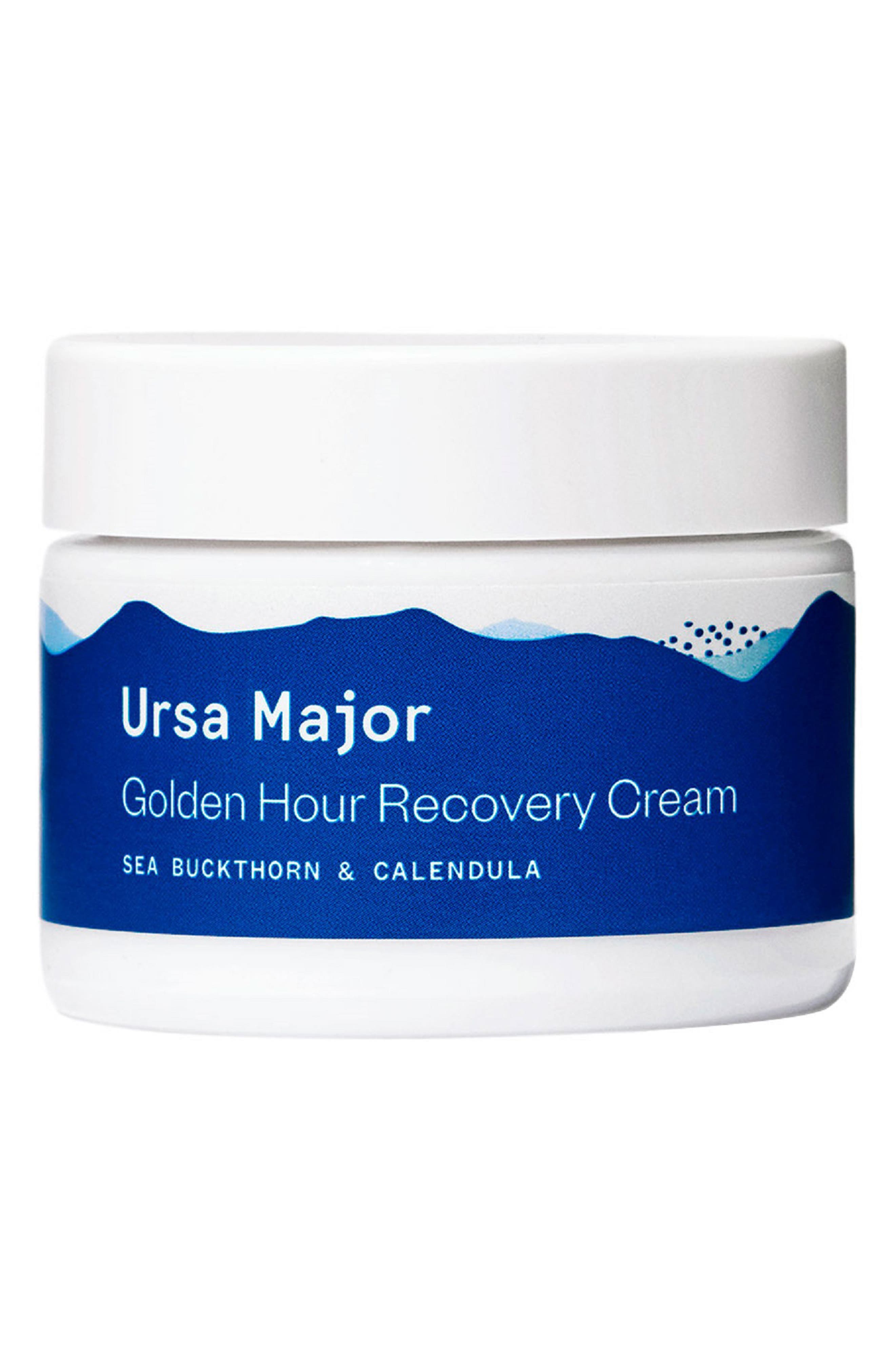

Ursa Major Golden Hour Face Moisturizer 1.57oz
At a glance
Summary
This face moisturizer contains a variety of beneficial natural ingredients such as sunflower seed oil, aloe vera, and meadowfoam seed oil, which are known for their moisturizing and skin-soothing properties. The product is minimally processed and free from harmful synthetic chemicals, making it a safe choice for most skin types. The inclusion of natural extracts and oils enhances its skin-conditioning benefits without the presence of synthetic fragrances or preservatives.
Key ingredients 29
helianthus annuus (sunflower) seed oilVery Good
Sunflower seed oil is rich in linoleic acid, which helps to maintain the skin barrier and reduce transepidermal water loss. It is a natural emollient that softens and soothes the skin. It is well-tolerated by most skin types.
Risks
Rarely, it may cause allergic reactions in individuals sensitive to sunflower seeds.
Benefits
It provides essential fatty acids and antioxidants, promoting skin health and hydration.
limnanthes alba (meadowfoam) seed oilVery Good
Meadowfoam seed oil is a stable, long-chain fatty acid oil that provides excellent moisturizing properties. It forms a protective barrier on the skin, locking in moisture. It is non-greasy and suitable for all skin types.
Risks
There are no significant risks associated with meadowfoam seed oil.
Benefits
It provides long-lasting hydration and helps to maintain skin elasticity.
aloe barbadensis (aloe vera) leaf juiceVery Good
Aloe vera leaf juice is known for its soothing and hydrating properties. It contains vitamins, minerals, and antioxidants that promote skin healing and reduce inflammation. It is widely used in skincare for its beneficial effects.
Risks
Rarely, it may cause allergic reactions in sensitive individuals.
Benefits
It soothes irritated skin and provides deep hydration, enhancing skin health.
ribes nigrum (black currant) seed oilVery Good
Black currant seed oil is rich in gamma-linolenic acid (GLA) and antioxidants, which help to nourish and protect the skin. It has anti-inflammatory properties and supports skin barrier function. It is suitable for sensitive and dry skin types.
Risks
There are no significant risks associated with black currant seed oil.
Benefits
It provides essential fatty acids and antioxidants, promoting skin health and reducing inflammation.
helianthus annuus (sunflower) seed oil unsaponifiablesVery Good
Sunflower seed oil unsaponifiables are rich in sterols and tocopherols, which provide antioxidant and skin-conditioning benefits. They help to improve skin elasticity and hydration. It is considered safe and beneficial for all skin types.
Risks
There are no significant risks associated with sunflower seed oil unsaponifiables.
Benefits
It enhances skin elasticity and provides antioxidant protection.
tocopherolVery Good
Tocopherol, or Vitamin E, is a powerful antioxidant that helps to protect the skin from free radical damage. It supports skin healing and improves moisture retention. It is widely used in skincare for its protective and nourishing properties.
Risks
There are no significant risks associated with tocopherol in cosmetic formulations.
Benefits
It provides antioxidant protection and enhances skin hydration and healing.
hippophae rhamnoides (sea buckthorn) fruit extractVery Good
Sea buckthorn fruit extract is rich in vitamins, antioxidants, and essential fatty acids, which help to nourish and rejuvenate the skin. It has anti-inflammatory properties and supports skin repair. It is suitable for all skin types, especially dry and mature skin.
Risks
There are no significant risks associated with sea buckthorn fruit extract.
Benefits
It provides essential nutrients and antioxidants, promoting skin health and repair.
calendula officinalis (calendula) flower extractVery Good
Calendula flower extract is known for its soothing and healing properties. It helps to calm irritated skin and supports skin repair. It is considered safe and beneficial for sensitive and damaged skin.
Risks
There are no significant risks associated with calendula flower extract.
Benefits
It soothes and heals the skin, reducing inflammation and promoting repair.
glyceryl stearate citrateGood
Glyceryl stearate citrate is an emulsifier that helps to blend oil and water components in formulations. It is derived from natural sources and is considered safe for use in cosmetics. It also acts as a skin conditioning agent.
Risks
There are minimal risks associated with this ingredient, as it is generally non-irritating.
Benefits
It improves the texture and stability of the product, enhancing its moisturizing properties.
glyceryl caprylateGood
Glyceryl caprylate is a skin-conditioning agent and emulsifier derived from glycerin and caprylic acid. It helps to stabilize formulations and has antimicrobial properties. It is considered safe and non-irritating.
Risks
There are minimal risks, as it is generally well-tolerated.
Benefits
It provides antimicrobial benefits and helps to maintain the product's stability.
glycerinGood
Glycerin is a humectant that attracts moisture to the skin, helping to keep it hydrated. It is a well-known ingredient in skincare for its moisturizing properties. It is safe and effective for all skin types.
Risks
There are no significant risks associated with glycerin in cosmetic formulations.
Benefits
It enhances skin hydration and improves the skin's barrier function.
populus tremuloides (aspen) bark extractGood
Aspen bark extract is used for its natural preservative properties and skin-soothing benefits. It contains salicylates, which have mild exfoliating effects. It is considered safe for use in cosmetics.
Risks
Individuals sensitive to salicylates may experience mild irritation.
Benefits
It provides natural preservation and gentle exfoliation, promoting smoother skin.
galactoarabinanGood
Galactoarabinan is a polysaccharide derived from the larch tree, used for its film-forming and moisture-retaining properties. It enhances the skin's appearance by reducing fine lines. It is considered safe and non-irritating.
Risks
There are minimal risks, as it is generally well-tolerated.
Benefits
It improves skin texture and provides a smooth, hydrated appearance.
cardiospermum halicacabum flower/leaf/vine extractGood
Cardiospermum extract is known for its anti-inflammatory and soothing properties. It helps to calm irritated skin and reduce redness. It is considered safe and effective for sensitive skin.
Risks
There are minimal risks, as it is generally well-tolerated.
Benefits
It soothes and calms irritated skin, reducing inflammation and redness.
rosmarinus officinalis (rosemary) leaf extractGood
Rosemary leaf extract is known for its antioxidant and antimicrobial properties. It helps to protect the skin from environmental stressors and supports skin health. It is considered safe and beneficial for most skin types.
Risks
Rarely, it may cause irritation in individuals sensitive to rosemary.
Benefits
It provides antioxidant protection and helps to maintain skin health.
santalum spicatum (sandalwood) wood oilGood
Sandalwood oil is known for its soothing and anti-inflammatory properties. It helps to calm irritated skin and provides a pleasant fragrance. It is considered safe and beneficial for most skin types.
Risks
Rarely, it may cause irritation in individuals sensitive to sandalwood.
Benefits
It soothes and calms the skin, providing a pleasant aroma and reducing inflammation.
rosa damascena (rose) flower oilGood
Rose flower oil is valued for its soothing and hydrating properties. It contains antioxidants that help to protect the skin and improve its appearance. It is considered safe and beneficial for most skin types.
Risks
Rarely, it may cause irritation in individuals sensitive to rose oil.
Benefits
It provides hydration and antioxidant protection, enhancing skin radiance.
citrus aurantium amara (neroli) flower oilGood
Neroli flower oil is known for its calming and rejuvenating properties. It helps to improve skin elasticity and provides a pleasant fragrance. It is considered safe and beneficial for most skin types.
Risks
Rarely, it may cause irritation in individuals sensitive to citrus oils.
Benefits
It enhances skin elasticity and provides a calming aroma, promoting relaxation.
cymbopogon martinii (palmarosa) leaf oilGood
Palmarosa leaf oil is known for its hydrating and balancing properties. It helps to regulate oil production and provides a pleasant fragrance. It is considered safe and beneficial for most skin types.
Risks
Rarely, it may cause irritation in individuals sensitive to palmarosa oil.
Benefits
It balances skin hydration and provides a pleasant aroma, enhancing the sensory experience.
aqua/water/eauNeutral
Water is a universal solvent and is used as a base in many cosmetic formulations. It helps to dissolve other ingredients and provides hydration. It is generally considered safe and non-irritating.
Risks
There are no significant risks associated with water in cosmetic formulations.
Benefits
Water provides hydration and helps in the application of the product.
cetearyl alcoholNeutral
Standard formulation ingredient — neither beneficial nor harmful at typical use.
Risks
It is generally safe, but in rare cases, it may cause mild irritation in sensitive individuals.
Benefits
It enhances the product's texture and provides moisturizing benefits.
caprylhydroxamic acidNeutral
Standard formulation ingredient — neither beneficial nor harmful at typical use.
Risks
There are minimal risks, as it is generally well-tolerated.
Benefits
It enhances the product's shelf life and maintains its safety by preventing microbial contamination.
cetyl palmitateNeutral
Cetyl palmitate is an ester used as an emollient and thickening agent in cosmetics. It helps to improve the texture and spreadability of products. It is considered safe and non-irritating.
Risks
There are minimal risks, as it is generally well-tolerated.
Benefits
It enhances the product's texture and provides a smooth application.
octyldodecanolNeutral
Octyldodecanol is a fatty alcohol used as an emollient and solvent in cosmetic formulations. It helps to improve the texture and feel of products. It is considered safe and non-irritating.
Risks
There are minimal risks, as it is generally well-tolerated.
Benefits
It provides a smooth application and enhances the product's texture.
sodium phytateNeutral
Sodium phytate is a chelating agent used to stabilize cosmetic formulations. It helps to prevent the degradation of active ingredients. It is considered safe and non-irritating.
Risks
There are minimal risks, as it is generally well-tolerated.
Benefits
It enhances the stability and efficacy of the product by preventing ingredient degradation.
sodium anisateNeutral
Sodium anisate is a preservative derived from anise, used to prevent microbial growth in formulations. It is considered safe and effective at low concentrations. It is non-irritating and suitable for sensitive skin.
Risks
There are minimal risks, as it is generally well-tolerated.
Benefits
It helps to maintain the product's safety and shelf life by preventing microbial contamination.
sclerotium gumNeutral
Sclerotium gum is a natural thickening agent derived from fermentation. It helps to improve the texture and stability of cosmetic formulations. It is considered safe and non-irritating.
Risks
There are minimal risks, as it is generally well-tolerated.
Benefits
It enhances the product's texture and provides a smooth application.
xanthan gumNeutral
Xanthan gum is a natural thickening agent used to stabilize and improve the texture of cosmetic formulations. It is derived from fermentation and is considered safe and non-irritating.
Risks
There are minimal risks, as it is generally well-tolerated.
Benefits
It enhances the product's texture and stability, providing a smooth application.
citric acidNeutral
Citric acid is used to adjust the pH of cosmetic formulations and has mild exfoliating properties. It is derived from citrus fruits and is considered safe at low concentrations. It is non-irritating for most skin types.
Risks
In high concentrations, it may cause irritation, but it is generally used in safe amounts.
Benefits
It helps to maintain the product's pH balance and provides mild exfoliation.
Get the full breakdown in the Scout appTake Scout shopping
Scan any product to see lab results, healthy alternatives, and your personalized analysis.
Download on theApp Store GET IT ONGoogle PlayAmazon pricing & content
Amazon price as of . Product prices and availability are accurate as of the date/time indicated and are subject to change. Any price and availability information displayed on Amazon.com at the time of purchase will apply to the purchase of this product.
CERTAIN CONTENT THAT APPEARS ON THIS SITE COMES FROM AMAZON. THIS CONTENT IS PROVIDED “AS IS” AND IS SUBJECT TO CHANGE OR REMOVAL AT ANY TIME.