
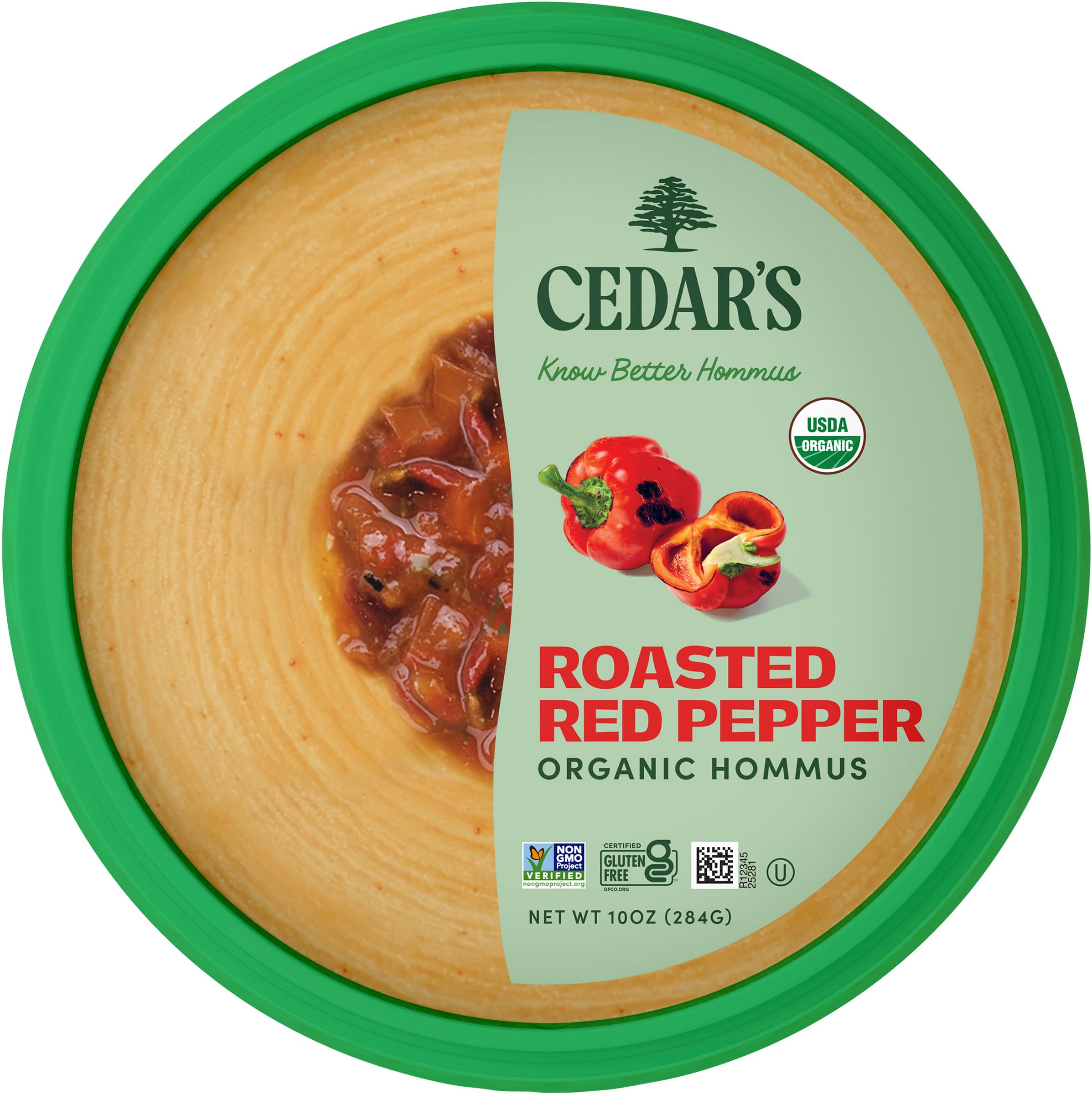


Roasted Red Pepper Hummus
Summary
This roasted red pepper hummus contains beneficial ingredients like chickpeas, extra virgin olive oil, and tahini, which provide healthy fats and protein. However, the presence of seed oils such as canola, soybean, and sunflower oil, which are high in omega-6 fatty acids and can promote inflammation, significantly impacts its healthiness. Additionally, the use of preservatives like potassium sorbate and sodium benzoate, along with its processed nature, further reduces its overall score.
At a glance
Key ingredients 13
ChickpeasGood
Chickpeas are a rich source of plant-based protein and fiber, supporting digestive health and satiety. They contain essential nutrients like folate, iron, and phosphorus. Their low glycemic index helps in maintaining stable blood sugar levels.
Benefits
Rich in protein and fiber, aiding in digestion and providing essential nutrients.
Extra virgin olive oilVery Good
High-quality monounsaturated fat with anti-inflammatory properties. Contains antioxidants that support heart health. Cold-pressed extraction preserves beneficial compounds.
Benefits
Rich in monounsaturated fats that support heart health and provide anti-inflammatory properties. Contains antioxidants like vitamin E and polyphenols that may reduce oxidative stress.
Canola oilVery Bad
Canola oil is a seed oil high in omega-6 fatty acids, which can promote inflammation if consumed in excess. It is often highly processed and refined, which may reduce its nutritional value. Compared to healthier oils like olive oil, it lacks beneficial antioxidants.
Risks
High omega-6 content may promote inflammation when consumed in excess.
Soybean oilVery Bad
Soybean oil is a seed oil that is high in omega-6 fatty acids, potentially leading to inflammation. It is typically highly processed, which can involve chemical solvents. Compared to oils like olive oil, it lacks beneficial monounsaturated fats.
Risks
High omega-6 content may promote inflammation when consumed in excess.
Sunflower oilVery Bad
Sunflower oil is a seed oil high in omega-6 fatty acids, which can contribute to inflammation. It is often refined, which may strip away beneficial nutrients. Compared to oils like olive oil, it lacks beneficial monounsaturated fats.
Risks
High omega-6 content may promote inflammation when consumed in excess.
Roasted red bell pepperGood
Roasted red bell peppers are rich in vitamins A and C, supporting immune function and skin health. The roasting process enhances their flavor without significantly reducing their nutritional value. They provide antioxidants that may help reduce oxidative stress.
Benefits
Rich in vitamins and antioxidants, supporting immune function and reducing oxidative stress.
TahiniGood
Tahini is made from ground sesame seeds and is a good source of healthy fats, protein, and minerals like calcium and magnesium. It provides lignans, which have antioxidant properties. Its nutrient profile supports bone health and cardiovascular function.
Benefits
Provides healthy fats, protein, and minerals, supporting bone health and cardiovascular function.
GarlicGood
Garlic is known for its potential health benefits, including antimicrobial and anti-inflammatory properties. It contains allicin, which may help reduce blood pressure and cholesterol levels. Its use in cooking enhances flavor and provides health benefits.
Benefits
Contains allicin, which may help reduce blood pressure and cholesterol levels.
Sea saltGood
Unrefined sea salt — a minimally processed, natural source of sodium and essential trace minerals, and a legitimate whole-food seasoning. Treated as a positive ingredient.
Risks
Excessive sodium intake can lead to high blood pressure and cardiovascular issues.
Benefits
Provides trace minerals and enhances flavor.
Citric acidNeutral
Citric acid is a natural preservative and flavor enhancer. It is commonly used in food products to maintain freshness and add a tangy taste. It is generally recognized as safe when used in food products.
Benefits
Acts as a preservative and flavor enhancer, maintaining freshness and adding tanginess.
Smoked paprikaGood
Smoked paprika adds a rich, smoky flavor to dishes and contains antioxidants like capsaicin. It is made from smoked and dried peppers, preserving its nutritional content. Its use enhances flavor without adding significant calories.
Benefits
Contains antioxidants and enhances flavor with minimal calories.
Potassium sorbateNeutral
Potassium sorbate is a common preservative used to extend shelf life by inhibiting mold and yeast growth. It is generally recognized as safe in small quantities. Its use helps maintain product freshness.
Benefits
Helps maintain product freshness by inhibiting mold and yeast growth.
Sodium benzoateNeutral
Sodium benzoate is a preservative used to prevent spoilage and extend shelf life. It is effective in acidic foods and is generally recognized as safe in small amounts. Its use helps maintain product quality over time.
Benefits
Prevents spoilage and extends shelf life, maintaining product quality.
Processing
Processed Foods
Get the full breakdown in the Scout app
Scan any product to see lab results, healthy alternatives, and your personalized analysis.
Download on theApp Store