
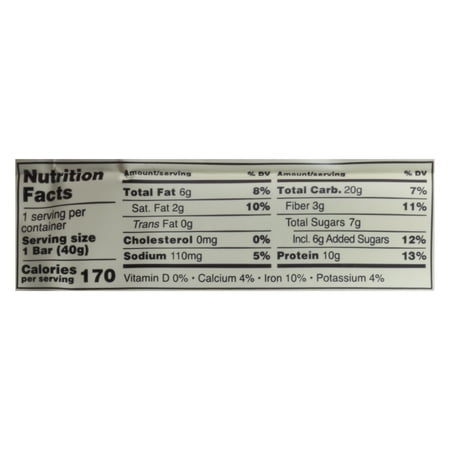


Mezcla - Prot Bar Peru Cocoa Peanut Butter - Case Of 15-1.4 Oz
Summary
This protein bar contains beneficial ingredients like organic dark chocolate, peanut butter, and prebiotic fibers, which contribute to its nutritional value. However, it is considered ultra-processed due to the presence of natural flavors and vegetable glycerine, which are highly processed additives. The overall formulation is relatively clean, but the processing level and presence of these additives slightly reduce its healthiness score.
At a glance
Key ingredients 14
Pea CrispsNeutral
Pea crisps are made from pea protein and rice starch, providing a plant-based protein source. They are minimally processed and offer a gluten-free alternative to traditional grains. However, they lack the complete amino acid profile found in animal-based proteins.
Benefits
Provides a source of plant-based protein and fiber, supporting muscle maintenance and digestive health.
Organic Dark ChocolateGood
Organic dark chocolate is made from organic cane sugar, chocolate liquor, cocoa butter, and vanilla powder, offering antioxidants and a rich flavor. The organic certification indicates fewer pesticides and synthetic fertilizers used in production. It can enhance mood and provide cardiovascular benefits.
Risks
Excessive consumption may lead to high sugar intake and caloric surplus.
Benefits
Rich in flavonoids, which have been linked to improved heart health and reduced inflammation.
Tapioca SyrupNeutral
Tapioca syrup is a natural sweetener derived from cassava root, often used as a substitute for corn syrup. It is less processed than high fructose corn syrup but still contributes to sugar intake. It provides a mild sweetness without altering the flavor profile significantly.
Risks
May contribute to increased blood sugar levels if consumed in large quantities.
Benefits
Offers a gluten-free alternative to other sweeteners, suitable for those with gluten sensitivities.
Peanut ButterGood
Peanut butter is a nutrient-dense spread made from ground peanuts, providing healthy fats, protein, and essential vitamins. It is minimally processed and can support heart health due to its monounsaturated fat content. It also offers a good source of plant-based protein.
Risks
Potential allergen for individuals with peanut allergies.
Benefits
Rich in protein and healthy fats, supporting satiety and muscle maintenance.
Vegetable GlycerineNeutral
Vegetable glycerine is a sugar alcohol used as a sweetener and humectant, derived from plant oils. It is generally recognized as safe and provides moisture retention in food products. It has a low glycemic index, making it suitable for diabetics.
Risks
Excessive consumption may cause digestive discomfort such as bloating or diarrhea.
Benefits
Helps maintain moisture in food products, enhancing texture and shelf life.
Pea ProteinNeutral
Pea protein is a plant-based protein source derived from yellow peas, offering a hypoallergenic alternative to soy and dairy proteins. It is less processed than some other protein isolates and provides a moderate amino acid profile. However, it lacks certain essential amino acids found in animal proteins.
Benefits
Supports muscle growth and repair, especially for those following a plant-based diet.
Prebiotic Soluble Tapioca FiberGood
Prebiotic soluble tapioca fiber is a dietary fiber that supports digestive health by promoting beneficial gut bacteria. It is derived from tapioca starch and is minimally processed. It can aid in maintaining regular bowel movements and improving gut health.
Risks
Excessive intake may lead to digestive discomfort.
Benefits
Promotes gut health by acting as a prebiotic, supporting the growth of beneficial bacteria.
Tapioca Syrup SolidsNeutral
Tapioca syrup solids are a dehydrated form of tapioca syrup, used as a sweetener and bulking agent. They are less processed than some other sweeteners but still contribute to sugar intake. They provide a mild sweetness without significantly altering the flavor profile.
Risks
May contribute to increased blood sugar levels if consumed in large quantities.
Benefits
Offers a gluten-free alternative to other sweeteners, suitable for those with gluten sensitivities.
Organic Quinoa CrispsGood
Organic quinoa crisps are made from organic quinoa, providing a source of complete protein and essential amino acids. The organic certification indicates fewer pesticides and synthetic fertilizers used in production. They offer a crunchy texture and are a gluten-free grain alternative.
Benefits
Rich in protein and fiber, supporting muscle maintenance and digestive health.
PeanutsGood
Peanuts are a nutrient-dense legume providing healthy fats, protein, and essential vitamins. They are minimally processed and can support heart health due to their monounsaturated fat content. They also offer a good source of plant-based protein.
Risks
Potential allergen for individuals with peanut allergies.
Benefits
Rich in protein and healthy fats, supporting satiety and muscle maintenance.
Tapioca FiberGood
Tapioca fiber is a dietary fiber derived from cassava root, supporting digestive health. It is minimally processed and acts as a prebiotic, promoting beneficial gut bacteria. It can aid in maintaining regular bowel movements and improving gut health.
Risks
Excessive intake may lead to digestive discomfort.
Benefits
Promotes gut health by acting as a prebiotic, supporting the growth of beneficial bacteria.
Coconut OilNeutral
Coconut oil is a plant-based oil high in saturated fats, often used for its flavor and texture in food products. It is less processed than many seed oils and provides medium-chain triglycerides (MCTs). However, its high saturated fat content may raise cholesterol levels if consumed in excess.
Risks
High saturated fat content may contribute to increased cholesterol levels if consumed in large amounts.
Benefits
Contains MCTs, which may support energy metabolism and weight management.
Natural FlavorBad
Natural flavor is a catch-all term for flavoring agents derived from natural sources, but the exact composition is often undisclosed. It is highly processed and can contain a variety of chemical compounds. The lack of transparency in its composition raises concerns about potential allergens and additives.
Risks
Potential allergens and undisclosed additives may pose health risks for sensitive individuals.
Sea SaltGood
Unrefined sea salt — a minimally processed, natural source of sodium and essential trace minerals, and a legitimate whole-food seasoning. Treated as a positive ingredient.
Risks
High sodium intake may lead to increased blood pressure and cardiovascular issues.
Benefits
Contains trace minerals that may support electrolyte balance.
Processing
Ultra-Processed Foods
Get the full breakdown in the Scout app
Scan any product to see lab results, healthy alternatives, and your personalized analysis.
Download on theApp Store