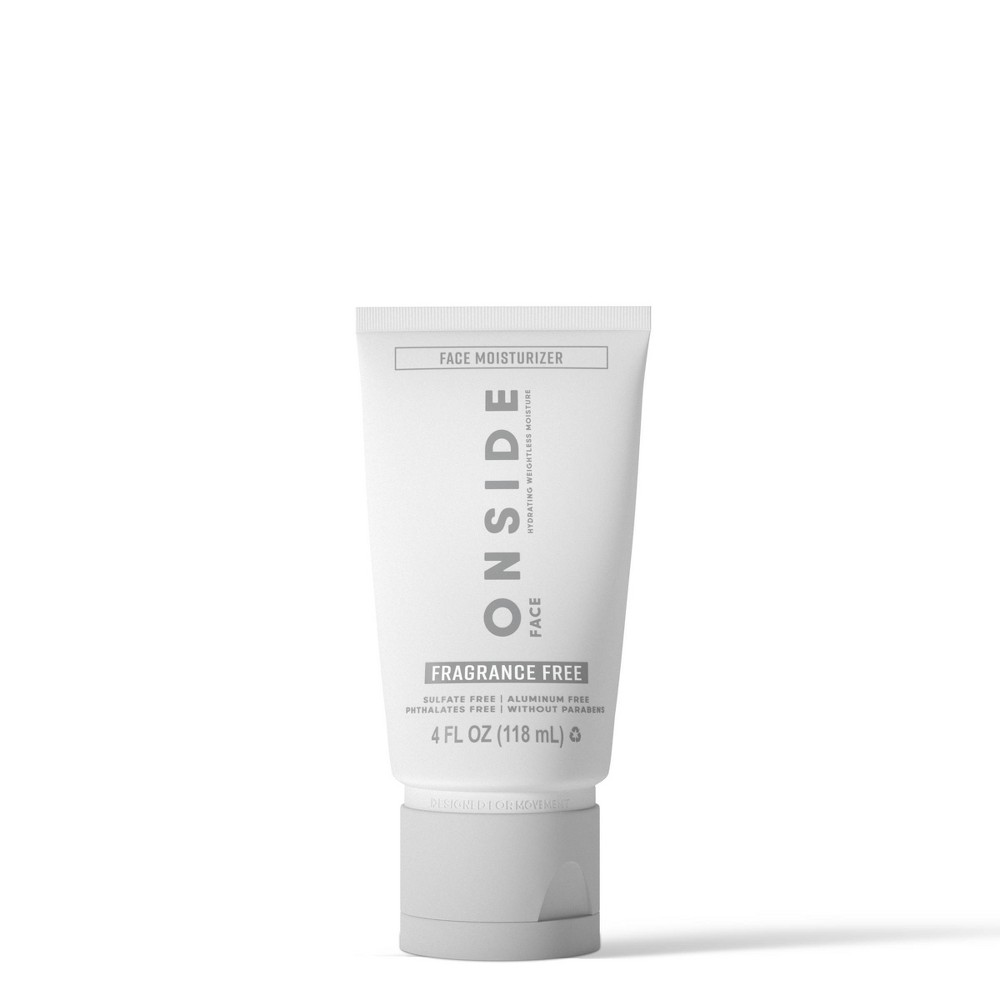
Onside Face Moisturizer - Fragrance Free - 4 fl oz: Paraben-Free, Sulfate-Free, For Combination Skin, Cream
Near you
Target is carried at Target stores. Find one within 25 miles.
At a glance
Summary
This moisturizer contains beneficial ingredients like glycerin, niacinamide, and ceramides, which are known for their hydrating and skin barrier-strengthening properties. However, the presence of phenoxyethanol, a preservative that can cause irritation in some individuals, slightly lowers the score. The product is mostly safe with a few synthetic components, but it avoids major harmful chemicals and has a clean label. Its plastic packaging can shed microplastics into the product and lowers its score.
Key ingredients 25
Ceramide APVery Good
Ceramide AP is a type of ceramide that helps to strengthen the skin barrier and retain moisture. It is beneficial for improving skin hydration and resilience. It is well-tolerated by most skin types.
Risks
There are minimal risks associated with Ceramide AP.
Benefits
Ceramide AP helps to strengthen the skin barrier and retain moisture.
Hyaluronate SodiumVery Good
Hyaluronate Sodium, a form of hyaluronic acid, is known for its excellent moisture-retaining properties. It helps to hydrate the skin and improve its elasticity. It is well-tolerated by most skin types and is highly beneficial for maintaining skin hydration.
Risks
There are minimal risks associated with Hyaluronate Sodium.
Benefits
Hyaluronate Sodium helps to hydrate the skin and improve its elasticity.
GlycerinGood
Glycerin is a humectant that attracts moisture to the skin, helping to keep it hydrated. It is widely used in skincare for its ability to improve skin barrier function. It is considered safe and beneficial for most skin types.
Risks
There are minimal risks associated with glycerin, though it may cause irritation in very rare cases.
Benefits
Glycerin helps to hydrate the skin and improve its barrier function.
NiacinamideGood
Niacinamide is a form of Vitamin B3 that is known for its anti-inflammatory and skin-brightening properties. It helps to improve skin elasticity and reduce redness and blotchiness. It is well-tolerated by most skin types.
Risks
There are minimal risks, though it may cause mild irritation in very sensitive skin.
Benefits
Niacinamide improves skin elasticity and reduces redness and blotchiness.
Ceramide NPGood
Ceramide NP is a lipid that helps to restore the skin barrier and retain moisture. It is beneficial for maintaining skin hydration and improving barrier function. It is well-tolerated by most skin types.
Risks
There are minimal risks associated with Ceramide NP.
Benefits
Ceramide NP helps to restore the skin barrier and retain moisture.
WaterNeutral
Water is a common solvent used in cosmetics to dissolve other ingredients. It helps in the application and absorption of the product. It does not provide any direct benefits or risks.
Risks
There are no significant risks associated with water in cosmetics.
Benefits
Water helps in the application and absorption of the product.
Cetearyl AlcoholNeutral
Cetearyl Alcohol is a fatty alcohol used as an emollient and thickener in cosmetics. It helps to stabilize and improve the texture of the product. It is generally considered safe and non-irritating.
Risks
There are minimal risks, though it may cause irritation in sensitive individuals.
Benefits
Cetearyl Alcohol helps to stabilize and improve the texture of the product.
Sorbitan OlivateNeutral
Sorbitan Olivate is an emulsifier derived from olive oil, used to blend ingredients together. It helps to improve the texture and consistency of the product. It is generally considered safe and non-irritating.
Risks
There are minimal risks associated with Sorbitan Olivate.
Benefits
Sorbitan Olivate helps to improve the texture and consistency of the product.
Xanthan GumNeutral
Xanthan Gum is a thickening agent used to stabilize emulsions in cosmetics. It helps to improve the texture and consistency of the product. It is generally considered safe and non-irritating.
Risks
There are minimal risks associated with Xanthan Gum.
Benefits
Xanthan Gum helps to stabilize emulsions and improve product texture.
Polyacrylic AcidNeutral
Polyacrylic Acid is a synthetic polymer used as a thickening agent in cosmetics. It helps to improve the texture and stability of the product. It is generally considered safe but can be irritating to sensitive skin.
Risks
It may cause irritation in sensitive skin.
Benefits
Polyacrylic Acid helps to improve the texture and stability of the product.
Edetate DisodiumNeutral
Edetate Disodium is a chelating agent used to bind metal ions, improving product stability. It helps to prevent deterioration of the product. It is generally considered safe in low concentrations.
Risks
There are minimal risks, though it may cause irritation in sensitive individuals.
Benefits
Edetate Disodium helps to improve product stability by binding metal ions.
Undecylenoyl GlycineNeutral
Undecylenoyl Glycine is an amino acid derivative used for its antimicrobial properties. It helps to protect the skin from bacteria and fungi. It is generally considered safe and non-irritating.
Risks
There are minimal risks associated with Undecylenoyl Glycine.
Benefits
Undecylenoyl Glycine helps to protect the skin from bacteria and fungi.
Cetearyl GlucosideNeutral
Cetearyl Glucoside is an emulsifier used to blend oil and water-based ingredients. It helps to improve the texture and stability of the product. It is generally considered safe and non-irritating.
Risks
There are minimal risks associated with Cetearyl Glucoside.
Benefits
Cetearyl Glucoside helps to improve the texture and stability of the product.
Sodium Lauroyl LactylateNeutral
Sodium Lauroyl Lactylate is a mild surfactant and emulsifier used to improve the texture of cosmetics. It helps to blend ingredients and enhance skin feel. It is generally considered safe and non-irritating.
Risks
There are minimal risks associated with Sodium Lauroyl Lactylate.
Benefits
Sodium Lauroyl Lactylate helps to improve texture and enhance skin feel.
Aluminum Starch OctenylsuccinateNeutral
Aluminum Starch Octenylsuccinate is used as an absorbent and anti-caking agent in cosmetics. It helps to improve the texture and reduce greasiness. It is generally considered safe but can cause irritation in sensitive skin.
Risks
It may cause irritation in sensitive skin.
Benefits
Aluminum Starch Octenylsuccinate helps to improve texture and reduce greasiness.
Capryloyl GlycineNeutral
Capryloyl Glycine is an amino acid derivative used for its antimicrobial properties. It helps to protect the skin from bacteria and fungi. It is generally considered safe and non-irritating.
Risks
There are minimal risks associated with Capryloyl Glycine.
Benefits
Capryloyl Glycine helps to protect the skin from bacteria and fungi.
Cetyl PalmitateNeutral
Cetyl Palmitate is an emollient used to soften and smooth the skin. It helps to improve the texture and feel of the product. It is generally considered safe and non-irritating.
Risks
There are minimal risks associated with Cetyl Palmitate.
Benefits
Cetyl Palmitate helps to soften and smooth the skin.
Boron NitrideNeutral
Boron Nitride is used as a slip modifier to improve the application of cosmetics. It helps to enhance the texture and feel of the product. It is generally considered safe and non-irritating.
Risks
There are minimal risks associated with Boron Nitride.
Benefits
Boron Nitride helps to improve the application and feel of the product.
CholesterolNeutral
Cholesterol is a lipid used to support the skin barrier and improve hydration. It helps to enhance the texture and moisturizing properties of the product. It is generally considered safe and beneficial for the skin.
Risks
There are minimal risks associated with Cholesterol.
Benefits
Cholesterol helps to support the skin barrier and improve hydration.
HexamethyldisiloxaneNeutral
Hexamethyldisiloxane is a silicone used to improve the spreadability and feel of cosmetics. It helps to enhance the texture and application of the product. It is generally considered safe and non-irritating.
Risks
There are minimal risks associated with Hexamethyldisiloxane.
Benefits
Hexamethyldisiloxane helps to improve spreadability and feel of the product.
Hydroxyethyl CelluloseNeutral
Hydroxyethyl Cellulose is a thickening agent used to stabilize emulsions in cosmetics. It helps to improve the texture and consistency of the product. It is generally considered safe and non-irritating.
Risks
There are minimal risks associated with Hydroxyethyl Cellulose.
Benefits
Hydroxyethyl Cellulose helps to stabilize emulsions and improve product texture.
PhytosphingosineNeutral
Phytosphingosine is a lipid that helps to support the skin barrier and has antimicrobial properties. It helps to improve skin health and reduce inflammation. It is generally considered safe and beneficial for the skin.
Risks
There are minimal risks associated with Phytosphingosine.
Benefits
Phytosphingosine helps to support the skin barrier and reduce inflammation.
Sorbitan MonopalmitateNeutral
Sorbitan Monopalmitate is an emulsifier used to blend oil and water-based ingredients. It helps to improve the texture and stability of the product. It is generally considered safe and non-irritating.
Risks
There are minimal risks associated with Sorbitan Monopalmitate.
Benefits
Sorbitan Monopalmitate helps to improve the texture and stability of the product.
TriethoxycaprylylsilaneNeutral
Triethoxycaprylylsilane is a silicone used to improve the spreadability and adhesion of cosmetics. It helps to enhance the texture and application of the product. It is generally considered safe and non-irritating.
Risks
There are minimal risks associated with Triethoxycaprylylsilane.
Benefits
Triethoxycaprylylsilane helps to improve spreadability and adhesion of the product.
PhenoxyethanolBad
Phenoxyethanol is a preservative used to prevent microbial growth in cosmetics. It is effective but can cause irritation and allergic reactions in some individuals. It is considered safe in low concentrations but has been associated with skin irritation.
Risks
It may cause irritation and allergic reactions in sensitive individuals.
Benefits
Phenoxyethanol helps to prevent microbial growth, extending product shelf life.
Processing
Processed Foods
Get the full breakdown in the Scout appTake Scout shopping
Scan any product to see lab results, healthy alternatives, and your personalized analysis.
Are you Target? Fix an error Get the badge Get tested
Amazon pricing & content
Amazon price as of . Product prices and availability are accurate as of the date/time indicated and are subject to change. Any price and availability information displayed on Amazon.com at the time of purchase will apply to the purchase of this product.
CERTAIN CONTENT THAT APPEARS ON THIS SITE COMES FROM AMAZON. THIS CONTENT IS PROVIDED “AS IS” AND IS SUBJECT TO CHANGE OR REMOVAL AT ANY TIME.