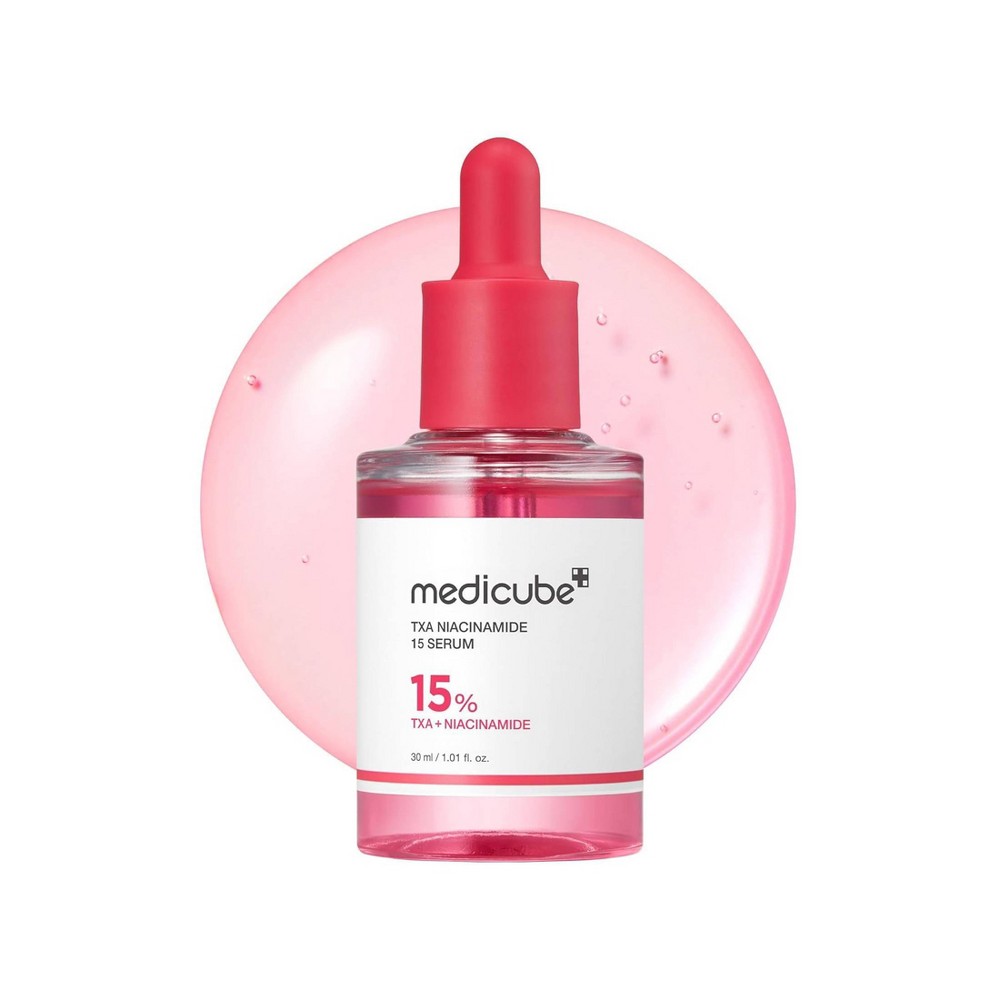
medicube Niacinamide Serum Korean Skincare - 1.01 fl oz: Skin Tone Improvement, Hydrating, Face Application, Suitable for Normal Oily & Dry Skin
At a glance
Summary
This serum contains beneficial ingredients like niacinamide, glycerin, and various forms of hyaluronic acid, which are known for their hydrating and skin-improving properties. However, the presence of synthetic ingredients such as chlorphenesin and disodium EDTA, along with a longer ingredient list, slightly detracts from its overall safety profile. The product is moderately processed, balancing effective skin actives with some synthetic components.
Key ingredients 39
PanthenolVery Good
Panthenol, also known as Provitamin B5, is a moisturizing and soothing agent. It helps in improving skin hydration and reducing irritation.
Risks
There are minimal risks associated with Panthenol.
Benefits
It enhances skin hydration and soothes irritated skin.
Rosa Centifolia Flower OilVery Good
Rosa Centifolia Flower Oil is known for its soothing and moisturizing properties. It helps in calming irritated skin and providing hydration.
Risks
There are minimal risks associated with this natural oil.
Benefits
It soothes and hydrates the skin, providing a calming effect.
GlutathioneVery Good
Glutathione is a powerful antioxidant that helps in reducing oxidative stress and improving skin tone. It is often used in brightening formulations.
Risks
There are minimal risks associated with Glutathione.
Benefits
It provides antioxidant protection and helps in brightening the skin.
Hydrolyzed Hyaluronic AcidVery Good
Hydrolyzed Hyaluronic Acid is a smaller molecule form of hyaluronic acid that penetrates deeper into the skin for enhanced hydration. It helps in maintaining skin moisture and plumpness.
Risks
There are minimal risks associated with Hydrolyzed Hyaluronic Acid.
Benefits
It provides deep hydration and improves skin elasticity.
Hydrolyzed Sodium HyaluronateVery Good
Hydrolyzed Sodium Hyaluronate is a form of hyaluronic acid that provides intense hydration and improves skin texture. It helps in maintaining skin moisture balance.
Risks
There are minimal risks associated with Hydrolyzed Sodium Hyaluronate.
Benefits
It enhances skin hydration and smoothness.
Dimethylsilanol HyaluronateVery Good
Dimethylsilanol Hyaluronate is a modified form of hyaluronic acid that provides long-lasting hydration and improves skin elasticity. It helps in maintaining skin moisture levels.
Risks
There are minimal risks associated with Dimethylsilanol Hyaluronate.
Benefits
It provides long-lasting hydration and enhances skin firmness.
Potassium HyaluronateVery Good
Potassium Hyaluronate is a salt form of hyaluronic acid that provides hydration and improves skin texture. It helps in maintaining skin moisture balance.
Risks
There are minimal risks associated with Potassium Hyaluronate.
Benefits
It enhances skin hydration and smoothness.
Hydroxypropyltrimonium HyaluronateVery Good
Hydroxypropyltrimonium Hyaluronate is a modified form of hyaluronic acid that provides enhanced hydration and improves skin texture. It helps in maintaining skin moisture levels.
Risks
There are minimal risks associated with Hydroxypropyltrimonium Hyaluronate.
Benefits
It provides enhanced hydration and improves skin smoothness.
Sodium Hyaluronate CrosspolymerVery Good
Sodium Hyaluronate Crosspolymer is a cross-linked form of hyaluronic acid that provides long-lasting hydration and improves skin elasticity. It helps in maintaining skin moisture levels.
Risks
There are minimal risks associated with Sodium Hyaluronate Crosspolymer.
Benefits
It provides long-lasting hydration and enhances skin firmness.
Sodium Hyaluronate DimethylsilanolVery Good
Sodium Hyaluronate Dimethylsilanol is a modified form of hyaluronic acid that provides long-lasting hydration and improves skin elasticity. It helps in maintaining skin moisture levels.
Risks
There are minimal risks associated with Sodium Hyaluronate Dimethylsilanol.
Benefits
It provides long-lasting hydration and enhances skin firmness.
Sodium Acetylated HyaluronateVery Good
Sodium Acetylated Hyaluronate is a modified form of hyaluronic acid that provides enhanced hydration and improves skin texture. It helps in maintaining skin moisture levels.
Risks
There are minimal risks associated with Sodium Acetylated Hyaluronate.
Benefits
It provides enhanced hydration and improves skin smoothness.
NiacinamideGood
Niacinamide is a form of Vitamin B3 that is known for its anti-inflammatory properties and ability to improve skin tone and texture. It helps in reducing redness and blotchiness, making it a popular choice for sensitive skin.
Risks
In rare cases, high concentrations may cause mild irritation.
Benefits
Niacinamide improves skin elasticity, enhances the barrier function, and reduces the appearance of fine lines.
GlycerinGood
Glycerin is a humectant that attracts moisture to the skin, helping to keep it hydrated. It is widely used in skincare for its moisturizing properties.
Risks
There are minimal risks associated with glycerin; it is generally safe for all skin types.
Benefits
Glycerin helps maintain the skin's moisture balance and prevents dryness.
Tranexamic AcidGood
Tranexamic Acid is known for its ability to reduce hyperpigmentation and improve skin tone. It is often used in products targeting dark spots and melasma.
Risks
Potential for irritation in sensitive skin types if used in high concentrations.
Benefits
It effectively reduces the appearance of dark spots and evens out skin tone.
ArbutinGood
Arbutin is a natural skin-lightening agent that inhibits melanin production. It is used to treat hyperpigmentation and age spots.
Risks
May cause irritation in sensitive skin if used excessively.
Benefits
Arbutin helps in reducing pigmentation and brightening the skin.
AdenosineGood
Adenosine is known for its anti-aging properties and ability to improve skin smoothness. It helps in reducing the appearance of wrinkles.
Risks
There are minimal risks associated with adenosine.
Benefits
It promotes collagen production and improves skin elasticity.
Melia Azadirachta Leaf ExtractGood
Melia Azadirachta Leaf Extract, also known as Neem, is known for its antibacterial and anti-inflammatory properties. It is used to soothe and protect the skin.
Risks
There are minimal risks associated with this natural extract.
Benefits
It helps in reducing inflammation and protecting the skin from environmental stressors.
Melia Azadirachta Flower ExtractGood
Melia Azadirachta Flower Extract is derived from the Neem tree and is known for its soothing and antioxidant properties. It helps in calming irritated skin.
Risks
There are minimal risks associated with this natural extract.
Benefits
It provides antioxidant protection and soothes the skin.
BetaineGood
Betaine is a natural osmolyte that helps maintain skin hydration and balance. It is used for its moisturizing and soothing properties.
Risks
There are minimal risks associated with Betaine.
Benefits
It helps in maintaining skin moisture and reducing irritation.
Ferulic AcidGood
Ferulic Acid is a powerful antioxidant that helps protect the skin from free radical damage. It is often used in anti-aging formulations.
Risks
There are minimal risks associated with Ferulic Acid.
Benefits
It enhances the stability of other antioxidants and provides protection against environmental stressors.
Hyaluronic AcidGood
Hyaluronic Acid is a powerful humectant that attracts and retains moisture in the skin. It helps in maintaining skin hydration and plumpness.
Risks
There are minimal risks associated with Hyaluronic Acid.
Benefits
It provides intense hydration and improves skin texture.
Sodium HyaluronateGood
Sodium Hyaluronate is a form of hyaluronic acid that penetrates the skin to provide deep hydration. It helps in maintaining skin moisture and plumpness.
Risks
There are minimal risks associated with Sodium Hyaluronate.
Benefits
It provides deep hydration and improves skin elasticity.
Acetyl Tetrapeptide-5Good
Acetyl Tetrapeptide-5 is known for its ability to reduce puffiness and improve skin elasticity. It is often used in formulations targeting under-eye bags and dark circles.
Risks
There are minimal risks associated with Acetyl Tetrapeptide-5.
Benefits
It reduces puffiness and improves skin firmness.
Hexapeptide-9Good
Hexapeptide-9 is a peptide known for its anti-aging properties and ability to improve skin texture. It helps in reducing the appearance of fine lines and wrinkles.
Risks
There are minimal risks associated with Hexapeptide-9.
Benefits
It promotes collagen production and improves skin smoothness.
Palmitoyl Tripeptide-5Good
Palmitoyl Tripeptide-5 is a peptide that stimulates collagen production and improves skin elasticity. It helps in reducing the appearance of wrinkles.
Risks
There are minimal risks associated with Palmitoyl Tripeptide-5.
Benefits
It enhances skin firmness and reduces the appearance of fine lines.
WaterNeutral
Water is a common solvent used in skincare products to dissolve other ingredients. It helps in the application and absorption of the product. It does not provide direct skincare benefits but is essential for formulation.
Risks
There are no significant risks associated with water in skincare products.
Benefits
Water helps in the even distribution of active ingredients on the skin.
Butylene GlycolNeutral
Butylene Glycol is used as a solvent and conditioning agent in skincare products. It helps improve the texture and spreadability of the product.
Risks
Some individuals may experience mild irritation or allergic reactions.
Benefits
It enhances the penetration of other ingredients and provides a smooth application.
Diethoxyethyl SuccinateNeutral
Diethoxyethyl Succinate is used as a skin conditioning agent. It helps improve the texture and feel of the skin.
Risks
There are no significant risks associated with this ingredient.
Benefits
It provides a smooth and soft feel to the skin.
ChlorphenesinNeutral
Chlorphenesin is a preservative used to prevent the growth of bacteria and fungi in cosmetic products. It helps maintain product integrity.
Risks
May cause mild irritation or allergic reactions in some individuals.
Benefits
It extends the shelf life of the product by preventing microbial contamination.
C12-14 Alketh-12Neutral
C12-14 Alketh-12 is a surfactant and emulsifier used to stabilize formulations. It helps in mixing oil and water components.
Risks
There are minimal risks associated with this ingredient.
Benefits
It improves the consistency and stability of the product.
EthylhexylglycerinNeutral
Ethylhexylglycerin is used as a skin conditioning agent and preservative enhancer. It helps improve the efficacy of preservatives.
Risks
May cause mild irritation in sensitive skin.
Benefits
It enhances the antimicrobial efficacy of other preservatives and conditions the skin.
Xanthan GumNeutral
Xanthan Gum is a thickening agent used to stabilize and thicken formulations. It helps in achieving the desired consistency of the product.
Risks
There are no significant risks associated with Xanthan Gum.
Benefits
It provides a smooth texture and helps in the even application of the product.
CarbomerNeutral
Carbomer is used as a thickening and stabilizing agent in cosmetic formulations. It helps in controlling the viscosity of the product.
Risks
May cause mild irritation if used in high concentrations.
Benefits
It provides a gel-like consistency and enhances the product's texture.
1, 2-HexanediolNeutral
1, 2-Hexanediol is used as a solvent and preservative in cosmetic formulations. It helps in improving the texture and stability of the product.
Risks
May cause mild irritation in sensitive skin.
Benefits
It enhances the preservation and texture of the product.
CyanocobalaminNeutral
Cyanocobalamin is a form of Vitamin B12 used in skincare for its potential antioxidant properties. It helps in protecting the skin from oxidative stress.
Risks
There are minimal risks associated with Cyanocobalamin.
Benefits
It provides antioxidant protection and supports skin health.
Coccinia Indica Fruit ExtractNeutral
Coccinia Indica Fruit Extract is used for its potential antioxidant and soothing properties. It helps in protecting the skin from environmental damage.
Risks
There are minimal risks associated with this natural extract.
Benefits
It provides antioxidant protection and soothes the skin.
Corallina Officinalis ExtractNeutral
Corallina Officinalis Extract is derived from red algae and is used for its potential antioxidant properties. It helps in protecting the skin from oxidative stress.
Risks
There are minimal risks associated with this natural extract.
Benefits
It provides antioxidant protection and supports skin health.
Pentylene GlycolNeutral
Pentylene Glycol is used as a solvent and humectant in skincare products. It helps in improving the texture and hydration of the product.
Risks
May cause mild irritation in sensitive skin.
Benefits
It enhances the texture and hydration of the product.
Disodium EDTABad
Processed additive flagged under Scout's ingredient doctrine.
Risks
May cause mild irritation in sensitive skin.
Benefits
It enhances the stability and shelf life of the product.
Processing
Processed Foods
Get the full breakdown in the Scout appTake Scout shopping
Scan any product to see lab results, healthy alternatives, and your personalized analysis.
Are you Medicube? Fix an error Get the badge Get tested
Amazon pricing & content
Amazon price as of . Product prices and availability are accurate as of the date/time indicated and are subject to change. Any price and availability information displayed on Amazon.com at the time of purchase will apply to the purchase of this product.
CERTAIN CONTENT THAT APPEARS ON THIS SITE COMES FROM AMAZON. THIS CONTENT IS PROVIDED “AS IS” AND IS SUBJECT TO CHANGE OR REMOVAL AT ANY TIME.