
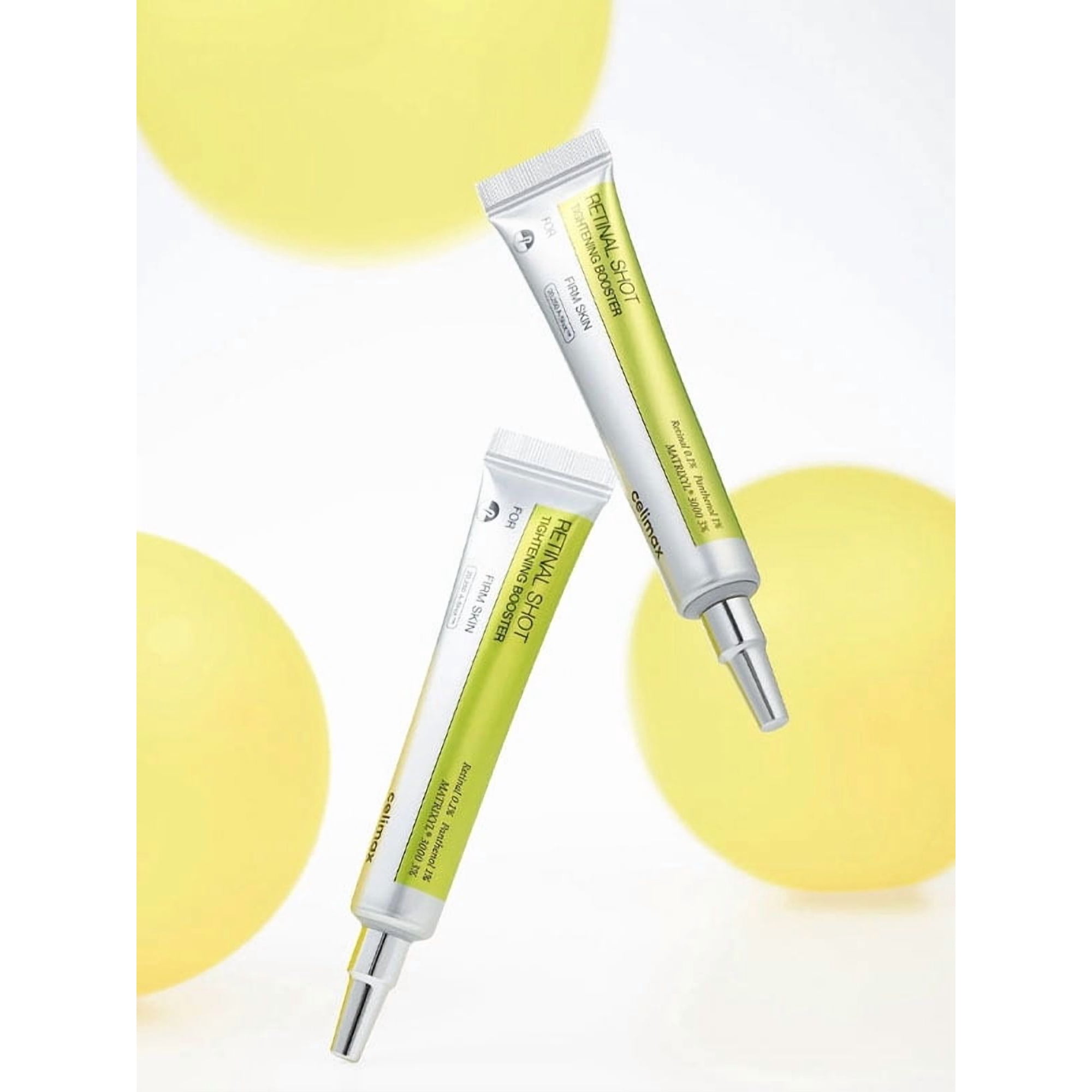

Celimax The-A Retinal Shot Tightening Booster 15ml 15 Ml
Analysis updated September 2026 · How Scout scores
At a glance
Summary
This product contains beneficial ingredients such as niacinamide, panthenol, and glycerin, which are known for their moisturizing and skin-soothing properties. However, the presence of synthetic polymers and emulsifiers like dimethicone and acrylate copolymers, while generally safe, indicate a moderate level of processing. The absence of harsh surfactants, parabens, and synthetic fragrances contributes positively to its safety profile.
Key ingredients 32
PanthenolVery Good
Panthenol, also known as Provitamin B5, is a moisturizing and soothing agent. It helps to improve skin hydration and reduce inflammation. It is well-tolerated by most skin types and is a beneficial ingredient in skincare.
Risks
There are minimal risks, though it may cause mild irritation in very sensitive skin.
Benefits
It helps to soothe and hydrate the skin, promoting a healthy skin barrier.
TocopherolVery Good
Tocopherol, also known as Vitamin E, is a powerful antioxidant that helps to protect the skin from environmental damage. It is widely used in skincare products for its anti-aging and moisturizing properties. It is considered safe and beneficial for the skin.
Risks
There are minimal risks, though it may cause mild irritation in very sensitive skin.
Benefits
It helps to protect the skin from oxidative stress and improve skin health.
RetinalVery Good
Retinal is a form of Vitamin A that is known for its anti-aging and skin-renewing properties. It helps to improve skin texture, reduce wrinkles, and promote cell turnover. It is considered a highly effective ingredient in skincare.
Risks
It may cause irritation or sensitivity, especially in high concentrations or with initial use.
Benefits
It helps to improve skin texture, reduce signs of aging, and promote a youthful appearance.
Palmitoyl Tripeptide-1Very Good
Palmitoyl Tripeptide-1 is a peptide that helps to stimulate collagen production and improve skin elasticity. It is considered a beneficial anti-aging ingredient in skincare. It is well-tolerated by most skin types.
Risks
There are no significant risks associated with this ingredient.
Benefits
It helps to improve skin firmness and reduce the appearance of wrinkles.
Palmitoyl Tetrapeptide-7Very Good
Palmitoyl Tetrapeptide-7 is a peptide that helps to reduce inflammation and improve skin elasticity. It is considered a beneficial anti-aging ingredient in skincare. It is well-tolerated by most skin types.
Risks
There are no significant risks associated with this ingredient.
Benefits
It helps to reduce inflammation, improve skin firmness, and promote a youthful appearance.
GlycerinGood
Glycerin is a well-known humectant that attracts moisture to the skin, keeping it hydrated. It is widely used in skincare products for its moisturizing properties. It is considered safe and effective for all skin types.
Risks
There are minimal risks associated with glycerin, though it may cause irritation if used in high concentrations.
Benefits
Glycerin helps to maintain the skin's moisture balance and improves skin barrier function.
Caprylic/Capric TriglycerideGood
Caprylic/Capric Triglyceride is an emollient derived from coconut oil and glycerin. It helps to smooth and soften the skin. It is non-greasy and easily absorbed, making it suitable for all skin types.
Risks
There are no significant risks associated with this ingredient.
Benefits
It provides a lightweight moisturizing effect and enhances the spreadability of the product.
NiacinamideGood
Niacinamide is a form of Vitamin B3 that offers multiple skin benefits, including improving skin tone, reducing inflammation, and enhancing barrier function. It is well-tolerated by most skin types and is a popular ingredient in skincare.
Risks
There are minimal risks, though it may cause mild irritation in very sensitive skin.
Benefits
It helps to brighten the skin, reduce redness, and improve overall skin health.
Cetearyl OlivateGood
Cetearyl Olivate is an emulsifier derived from olive oil. It helps to blend oil and water-based ingredients in formulations. It is considered safe and beneficial for the skin.
Risks
There are no significant risks associated with this ingredient.
Benefits
It helps to improve the texture and stability of the product while providing moisturizing benefits.
Cetearyl GlucosideGood
Cetearyl Glucoside is a natural emulsifier derived from sugar and coconut oil. It helps to stabilize formulations and improve texture. It is considered safe and beneficial for the skin.
Risks
There are no significant risks associated with this ingredient.
Benefits
It helps to maintain the stability of the product and provides a smooth application.
Sorbitan OlivateGood
Sorbitan Olivate is an emulsifier derived from olive oil and sorbitol. It helps to blend ingredients and improve the texture of formulations. It is considered safe and beneficial for the skin.
Risks
There are no significant risks associated with this ingredient.
Benefits
It helps to improve the texture and stability of the product while providing moisturizing benefits.
ArginineGood
Arginine is an amino acid that helps to improve skin hydration and elasticity. It is often used in skincare products for its moisturizing and anti-aging properties. It is considered safe and beneficial for the skin.
Risks
There are no significant risks associated with this ingredient.
Benefits
It helps to improve skin hydration and elasticity, promoting a youthful appearance.
AdenosineGood
Adenosine is a skin-soothing and anti-aging ingredient that helps to improve skin smoothness and reduce the appearance of wrinkles. It is considered safe and beneficial for the skin.
Risks
There are no significant risks associated with this ingredient.
Benefits
It helps to improve skin smoothness and reduce signs of aging.
Ascorbic AcidGood
Ascorbic Acid, also known as Vitamin C, is a powerful antioxidant that helps to brighten the skin and reduce signs of aging. It is widely used in skincare products for its anti-aging and brightening properties. It is considered safe and beneficial for the skin.
Risks
There are minimal risks, though it may cause mild irritation in very sensitive skin.
Benefits
It helps to brighten the skin, reduce signs of aging, and protect against environmental damage.
WaterNeutral
Water is a common solvent used in cosmetics to dissolve other ingredients. It does not provide direct benefits or risks to the skin. It serves as a base for the formulation.
Risks
There are no known risks associated with water in cosmetic formulations.
Benefits
Water helps in the application and absorption of other active ingredients.
Butylene GlycolNeutral
Butylene Glycol is a common humectant that helps retain moisture in the skin. It also acts as a solvent and improves the texture of the product. It is generally considered safe for use in cosmetics.
Risks
In rare cases, it may cause irritation or allergic reactions in sensitive individuals.
Benefits
It helps to keep the skin hydrated and enhances the penetration of other ingredients.
Cetearyl AlcoholNeutral
Cetearyl Alcohol is a fatty alcohol used as an emollient and thickener in cosmetics. It helps to stabilize and improve the texture of formulations. It is generally considered safe and non-irritating.
Risks
It may cause mild irritation in very sensitive skin types.
Benefits
It helps to soften the skin and improve the consistency of the product.
Diisostearyl MalateNeutral
Diisostearyl Malate is an emollient that provides a smooth and silky feel to the skin. It is often used in lip products for its moisturizing properties. It is considered safe for use in cosmetics.
Risks
There are no significant risks associated with this ingredient.
Benefits
It helps to improve the texture and feel of the product on the skin.
1, 2-HexanediolNeutral
1, 2-Hexanediol is a synthetic preservative and moisture-binding agent. It helps to stabilize formulations and enhance the shelf life of products. It is generally considered safe for use in cosmetics.
Risks
It may cause mild irritation in sensitive individuals.
Benefits
It helps to maintain the stability and effectiveness of the product.
PolypropylsilsesquioxaneNeutral
Polypropylsilsesquioxane is a silicone-based ingredient that provides a smooth, silky feel to the skin. It is used to improve the texture and spreadability of products. It is considered safe for use in cosmetics.
Risks
There are no significant risks associated with this ingredient.
Benefits
It enhances the application and feel of the product on the skin.
Hydroxyethyl Acrylate/Sodium Acryloyldimethyl Taurate CopolymerNeutral
This copolymer is used as a thickening agent and stabilizer in cosmetic formulations. It helps to improve the texture and consistency of products. It is considered safe for use in cosmetics.
Risks
There are no significant risks associated with this ingredient.
Benefits
It helps to enhance the texture and stability of the product.
CarbomerNeutral
Carbomer is a synthetic polymer used as a thickening and stabilizing agent in cosmetics. It helps to improve the texture and consistency of formulations. It is considered safe for use in cosmetics.
Risks
There are no significant risks associated with this ingredient.
Benefits
It helps to enhance the texture and stability of the product.
Xanthan GumNeutral
Xanthan Gum is a natural thickening agent used to stabilize and improve the texture of cosmetic formulations. It is considered safe for use in cosmetics. It helps to enhance the consistency and application of products.
Risks
There are no significant risks associated with this ingredient.
Benefits
It helps to improve the texture and stability of the product.
EthylhexylglycerinNeutral
Ethylhexylglycerin is a preservative and skin-conditioning agent. It helps to enhance the effectiveness of other preservatives and improve skin feel. It is considered safe for use in cosmetics.
Risks
There are no significant risks associated with this ingredient.
Benefits
It helps to maintain the stability and effectiveness of the product.
Sorbitan IsostearateNeutral
Sorbitan Isostearate is an emulsifier used to blend ingredients and improve the texture of formulations. It is considered safe for use in cosmetics. It helps to stabilize and enhance the consistency of products.
Risks
There are no significant risks associated with this ingredient.
Benefits
It helps to improve the texture and stability of the product.
Sodium LactateNeutral
Standard formulation ingredient — neither beneficial nor harmful at typical use.
Risks
There are no significant risks associated with this ingredient.
Benefits
It helps to improve skin hydration and maintain moisture balance.
Hydrolyzed SpongeNeutral
Hydrolyzed Sponge is used as a skin-conditioning agent in cosmetics. It helps to improve the texture and feel of the skin. It is considered safe for use in cosmetics.
Risks
There are no significant risks associated with this ingredient.
Benefits
It helps to improve the texture and feel of the skin.
Polysorbate 20Neutral
Polysorbate 20 is an emulsifier and surfactant used to blend ingredients and improve the texture of formulations. It is considered safe for use in cosmetics. It helps to stabilize and enhance the consistency of products.
Risks
There are no significant risks associated with this ingredient.
Benefits
It helps to improve the texture and stability of the product.
LecithinBad
Processed additive flagged under Scout's ingredient doctrine.
Risks
There are no significant risks associated with this ingredient.
Benefits
It helps to improve skin hydration and texture, promoting a healthy skin barrier.
Dimethicone/Vinyl Dimethicone CrosspolymerBad
Processed additive flagged under Scout's ingredient doctrine.
Risks
There are no significant risks associated with this ingredient.
Benefits
It enhances the application and feel of the product on the skin.
Disodium EDTABad
Processed additive flagged under Scout's ingredient doctrine.
Risks
There are no significant risks associated with this ingredient.
Benefits
It helps to maintain the stability and effectiveness of the product.
GlucoseBad
Processed additive flagged under Scout's ingredient doctrine.
Risks
There are no significant risks associated with this ingredient.
Benefits
It helps to improve skin hydration and maintain moisture balance.
Processing
Processed Foods
Get the full breakdown in the Scout appTake Scout shopping
Scan any product to see lab results, healthy alternatives, and your personalized analysis.
Download on theApp Store GET IT ONGoogle PlayAmazon pricing & content
Amazon price as of . Product prices and availability are accurate as of the date/time indicated and are subject to change. Any price and availability information displayed on Amazon.com at the time of purchase will apply to the purchase of this product.
CERTAIN CONTENT THAT APPEARS ON THIS SITE COMES FROM AMAZON. THIS CONTENT IS PROVIDED “AS IS” AND IS SUBJECT TO CHANGE OR REMOVAL AT ANY TIME.